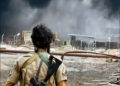



UNITED NATIONS,— The United Nations Security Council voted Thursday and lifts sanctions on Syrian interim President Ahmed al-Sharaa and Interior Minister Anas Khattab, also known as Abu Ahmad Hudoud, according to diplomats at the world body.
The U.S.-drafted resolution passed with 14 votes in favor and one abstention from China.
The move marks a significant shift in the international approach toward Syria, following Washington’s months-long campaign urging the Council to ease restrictions.
The action comes ahead of al-Sharaa’s scheduled meeting with U.S. President Donald Trump at the White House on Monday.
Officials told reporters the measure ends travel bans, asset freezes, and arms embargoes previously imposed on the two Syrian officials.
The United States had pushed for the change as part of what President Trump called a “new phase of cooperation” with Damascus.
“I think he’s doing a very good job,” Trump said Thursday, referring to al-Sharaa. “It’s a tough neighborhood, and he’s a tough guy, but we’ve made a lot of progress with Syria.”
The decision follows the ouster of longtime Syrian President Bashar al-Assad last December after 13 years of civil war.
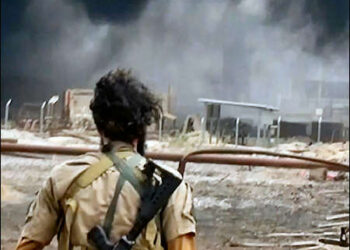
Ahmed al-Sharaa, , who is also known by the name Abu Mohammed al-Golani, has a long and violent record as an Islamist militant leader.
He was involved with al-Qaeda and ISIS before creating the al-Nusra Front, an Islamist extremist group responsible for widespread bloodshed in Syria.
In 2016 the group later rebranded as Hayat Tahrir al-Sham (HTS) in an effort to mask its jihadist roots while continuing to impose its hardline ideology.
Insurgent forces led by the Islamist group Hayat Tahrir al-Sham (HTS) took control in a rapid military campaign.
The HTS group has been listed under the U.N. Security Council’s sanctions on al Qaeda and Islamic State since May 2014.
U.N. sanctions monitors reported earlier this year they found no “active ties” between al Qaeda and HTS, according to a July report cited by Reuters.
China’s Abstention
China’s U.N. Ambassador Fu Cong said his country abstained because the resolution “did not adequately address” Beijing’s concerns about terrorism and security in Syria.
He emphasized that China remains worried about the presence of the Eastern Turkistan Islamic Movement (ETIM), which includes Uyghur fighters from China and Central Asia.
Fu stated that the resolution “makes it clear that Syria must take decisive actions to combat terrorist acts and respond to threats from foreign terrorist fighters, including ETIM.”
Russia’s Support
Russia’s U.N. Ambassador Vassily Nebenzia said Moscow backed the short resolution because it “reflects the aspirations of the Syrian people themselves.”
Russia, a key ally of Assad during the war, used its veto power more than a dozen times to block Security Council measures targeting Damascus, often with China’s support.
The Council met repeatedly during the conflict to discuss Syria’s humanitarian crisis and the use of chemical weapons.
Following the vote, Syria’s U.N. Ambassador Ibrahim Olabi called the decision “a message of support for Syrian men and women rebuilding their country.”
“The new Syria will be a success story,” Olabi said. “It will demonstrate that cooperation and constructive dialogue remain the best path forward in international relations.”
(With files from Reuters)
Copyright © 2025 iKurd.net. All rights reserved.
Syria: The Hijacking of the Arab Spring: From ISIS to Hayat Tahrir al-Sham
Related posts:
 Syria: A ‘Caliphate’ by Any Other Name — Would Smell the Same
 Stealing Syria
 Sabotaging Syria
 Business with ISIS – Updated
 Syria: The Hijacking of the Arab Spring: From ISIS to Hayat Tahrir al-Sham
 The Islamic State of Syria? (Al Dawla al-Islamiya fi al-Sham)
 Syria: The Truth Lies Buried beneath an Edifice of Lies
 Syria: Revisiting The Caesar Torture Victim Photographs
 The Resurrection (Ba’ath) Party – Before the Iran-Iraq War
 Hostages to Jihad – Austin Tice, The Long Missing American in Syria – Part One