

After Massacre in Malekshahi Country and the Case of Brutal History of Ethnic Repression in Iran
Dr. Amir Sharifi | Exclusive to iKurd.net
Following protests in most cities that began a week ago in bazar against the rising inflation and worsening socio-economic conditions, various cities and provinces including Tehran, Fars, Hamadan, and Lorestan, Kermanshah, and Ilam rose up in peaceful dissent against the destruction that the regime has created throughout the country, particularly in the richest and yet the most impoverished areas in Kermanshah and Ilam.
Despite the regime’s desperate attempts to quell the discontent, the furious protesters call for the fall of the corrupt regime that has brought the country to the brink of destruction and incessant wars. Thus far more than 50 have been killed during protests in the anti-government demonstrations.
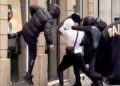
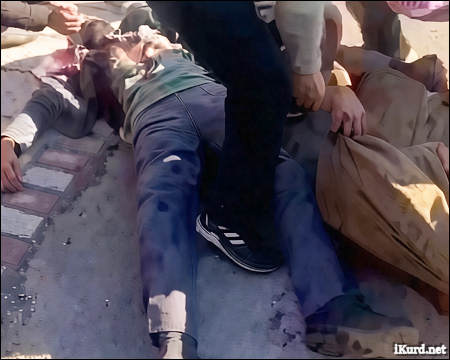
According to human rights posts the massacre in Malekshahai, Ilam occurred on Saturday 3, 2026 when a member of IRGC ( Islamic Revolutionary Guards Corps ) opened fire through a gate at the demonstrators and another from a rooftop shot to kill the unarmed demonstrators.
Although precise figures are not available ,several protesters have been killed, and more than 40 have reportedly been injured according to Hengaw Organization for Human Rights 1a. Kurdistan Human Rights Network has mentioned “ Reza Azimzadeh, Latif Karimi, and Mehdi Emamipour…2 were killed in the debacle. However, it puts the numbers of the injured at 30. This vicious and deliberate attack followed Khamenei’s speech calling protesters “rioters” and “enemies” “who must be put in their place.3 hundreds of people have been arrested and held incommunicado.
The region has been militarized even more . Ilam as a province has been under threat for years . Malekshahi rose up in protest of Zagros Mountain fires and excessive use of water and its subsequent scarcity; the residents of the area were fired on by repressive security forces in 2018, 2021, 2022 during Jina Amini’s movement, and now again 2026.
Ilam has not only been economically impoverished, but the lands have been reclassified and rezoned for political reasons and forms of Ilamite livelihood have been taken away from them. The deplorable condition of residents has received little or no international coverage or internal support.
The expected vitriolic narratives and campaigns against protesters will continue. An example cited by Latif Karimi, a Kurdish man and retired brigadier general, was shot dead by Iranian government forces while among demonstrators. In the aftermath, state institutions moved quickly to twist the story, portraying him as a member of government forces allegedly killed by protesters.
However, his son has publicly rejected this claim, stating that his father was killed directly by government forces.” His son Emad Karimi, in a message on Instagram has said that his father was shot by security forces : “My father’s only ‘crime’ was telling them not to shoot at the people.”.1b
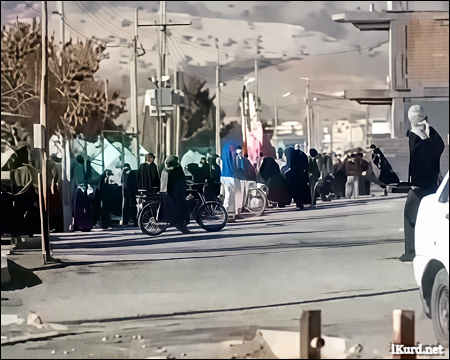
Another video published after the massacre in Malekshahai shows many repressive forces raid a local hospital on January 4, 2026, firing shots to frighten away the visitors in preparation to abduct the dead and the wounded , a crime committed as it is customary by the Islamic Republic of Iran.
One of the videos that has repeatedly emerged in social media and networks to inspire many is how thousands of demonstrators that have gathered to bury and commemorate those killed the day before at a local cemetery, re-echo the battle cry “Death to Khamenei!” and “Death to the Islamic Republic of Iran!”.
For Kurds and other groups throughout successive regimes , it is abundantly clear that human rights have no place in Iran, particularly for ethnic and religious populations.
Brutality is ubiquitous and the general population is subjected to multiple forms of violence ranging from crippling economy, political imprisonment without fair trial, summary arrests, torture, violations of internationally recognized human rights, lack of control by citizens over their lives, lack of cultural and linguistic freedom, further marginalization of women, executions under various pretexts, poverty, environmental and climatic devastation and other forms of abuse, all giving rise the movement of “woman, life, freedom” in Sept 2022.
The regional and international momentum of this movement brought the regime to its knees. The movement led by women, despite its socio-political and cultural dramatic and transformative impacts, was brutally repressed. Nevertheless, resistance to state terrorism and imposition of mandatory veiling and other forms of oppression and exclusion have persisted.
The UN special rapporteur on human rights, Mai Sato 4 in an x posting has said that “reports indicate growing confrontation between protesters and security forces” and warned the violent response witnessed during the 2022-2023 movement “must not be repeated”.
However, the authoritarian regime is repeating and standing in defiance to all humanitarian and human rights principles . Human rights organizations have reported that approximately 1500 had been executed in Iran, representing a surge in the past 30-year record of flagrant violations of human rights. As expected, executions among the Kurds proportionally constitute a large percentage.
Ilam like other Kurdish areas in Eastern Kurdistan (Rojhelat) has been subject to direct or structural persecution and denial of identity and hence the protest has been concentrated in these areas, aspiring to reach the dimensions and scale of Jina Amini’s movement, the most significant and widespread challenge to the survival of the Islamic Republic of Iran and its apartheid gender system.
The fact of the matter is the residents of Ilam like the city of Kermanshah have been subjected to excessive militarization and brute repression more notably during uprisings; this repression is symbolically remembered in the mourning ceremony held at the local cemetery for two brothers: Rasoul and Reza kadouriyan who were killed to curb the recent popular protests in Kermanshan and throughout Iran.
The video shows a funeral ritual in which women scratch their faces and beat their chests and men their heads in bereavement to the solemn rhythm of drums and Kurdish flute as a eulogy is recited in tribute to honour the memory of the slain young brothers laid to rest in the city cemetery amid intensified militarization by the security forces.
The regime has widened inequality and intensified repression throughout Iran under the corrupt theocratic dictatorship that has crossed all boundaries when it comes to human rights abuses. However, the case of ethnic and religious minorities shows the depth of the discourse of domination in the regime’s policies against their very existence .
Malekshahi is an example of this brutal massacre and the official exclusionary ideology. However, despite the need for regional and international solidarity, a discordant dissent throughout Iran remains vibrant and promising as protesters call for a complete regime change and social justice.
The Islamic Republic like its predecessor, under the guise of cultural diversity, has pursued a coercive and assimilationist policy towards Kurds and other ethnic and religious groups; the Kurdish people sacrifice themselves to both oust the Islamic Republic of Iran and to seek a genuine alliance of democratic forces to recognize and legitimize their denied dignity and distinct identity.
Only through such a defensible process, real progress can be made. The democratic forces should act now. A new ideological realignment is required to recognize the pluralistic rights of different groups rather than paying lip service to intrinsic rights and fear of division rather than embracing diversity. It is indeed “violence not democracy that erodes human collective rights” 5
Sources
1-1a and 1 b -Hengaw Organization for Human Rights ( Jan 4, 2026) Latif Karimi shot dead in Ilam: authorities seek to distort reality. https://hengaw.net/em/news/2026/01/article-31 | https://hengaw.net/en
2-Kurdistan Human Rights Network( Jn 4, 2026) Three killed , over 30 injured in IRGC attack on protesters in Malekshahai,
https://kurdistanhumanrights.org/en/
3-Al Jazeera News ( 2025, Jan 3) Iran’s Khamenei says rioters ‘must be put in their places’ amid protests.
https://www.aljazeera.com/
4-Sato, Mai (@drmaisato ) (2026, Jan 2).Day Six of Demonstrations across Iran: X 2 Jan . 2026 //x.com/ drmaisato
5-Thompson, R. H. (1997). Ethnic minorities and the case for collective rights. American anthropologist, 99(4), 786-798.
Dr Amir Sharifi, a lecturer at California State University, Department of Linguistics, Long Beach.
The opinions are those of the writer and do not necessarily represent the views of iKurd.net or its editors.
Copyright © 2026 iKurd.net. All rights reserved
Related posts:
 Business with ISIS – Updated
 The Mustashar and the Jash – A View from the Position of ‘Iraqi National Unity’ on the ‘Descendants of Treason’
 The Resurrection (Ba’ath) Party – Before the Iran-Iraq War
 Four Kurdish protesters killed in Iran’s Kurdistan: rights groups
 What makes a good NATO ally? The Case of Turkey
 Reflections on the Current State of Protests in Iran
 The Suffocation of Iraq Kurdistan
 The Sun Also Rises in Western Iran
 The Assassination of Abdurrahman Ghassemlou: No Friends but the Mullahs?
 Iran – Toxic Theocracy – Part I