

Sheri Laizer | Exclusive to iKurd.net
The 35th Anniversary of The Suffering of Halabja
Loss and Deception
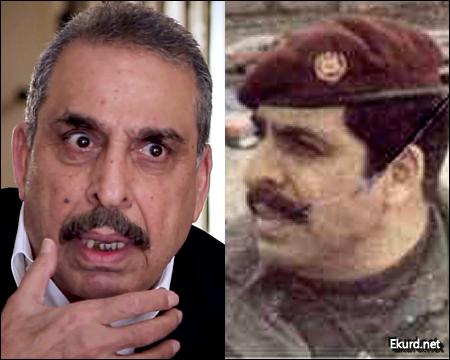
Iraq was not bombing “its own people” as the cover-up has it: an Iranian Republican Guard creation, the Ramazan Base, deployed Iraqi Shi’a and peshmerga from the PUK among Iranian forces. Iran then occupied Halabja. Iran was the target in Halabja as part of the Iran-Iraq war. When the Iraqi President heard what General Nizar al-Kharaji had done, he was livid. He had thought it was Iranian propaganda. Here is the evidence. [19]
In 1989, a year after the tragedy of Halabja, the Iraqi government transported a delegation of about one coachload of international journalists to New Halabja, refusing our demands to be taken to the stricken town of Halabja. In the Baghdad press conference of September 1989 that preceded the state guided trip to Kurdistan, Nizar Hamdoun officially said in response to our question about Halabja that Iraq had responded to Iran’s occupation in self defence. I was among them. I did not succeed in accessing the old Halabja until May 1993 when filming there with the BBC. Our project was an hour-long documentary on the Kurdish struggle: Blood and Belonging, Kurdistan: Dreaming a Nation presented by Michael Ignatieff. Many of Halabja’s survivors had returned and rebuilt their homes and we spoke with them freely without political party escort. Halabja had been brought under local Kurdish control and that of the PUK, maintained by international protection following the 1991 failed uprising with its own devastating consequences. We also visited the graves on the hillside overlooking the town.
As to the terrible events of March 16, 1988 themselves, there was considerable background detail that never seemed to have made its way into the mainstream media nor indeed, the official Kurdish nationalist narrative. This explains in some measure why Halabja has since been marginalized, and generally left unsupported by the PUK and KDP governors to this day.
In 2003, soon after the US-led coup in Iraq a monument was built without any consultation with Halabja’s people and they tore it down. It went back up. Even Colin Powell visited to capitalize on the propaganda flowing from his presence there.
Renowned British historian on the Kurds, my colleague, David McDowall wrote in the 2021 update to his History of the Kurds how “Halabja was used to epitomize the suffering of the Kurdish people but its bereaved citizens resented the way their tragedy had been highjacked for cynical political purposes. [1]
That conduct has continued with budgets marked for Halabja’s redevelopment being diverted to security and under the guise of fighting ISIS etc.
PUK (and KDP) collaboration with the Ramazan Base, IRGC and Badr Brigade

For several years during the Iran-Iraq war, the two main Kurdish nationalist parties had been collaborating with the IRGC-QF commander, Qasem Soleimani, and the Shi’a Iraqi Badr 9 Corps. led by Hadi al-Ameri and Abu Mahdi al-Muhendis. These two Shi’a Iraqi activists in the force liaised between the Kurds and the dissident Iraqi Shi’as within the Badr Brigade and the al-Da’wa Party.
Qasem Soleimani had begun his military career in his twenties at the beginning of the Iran-Iraq war and came to command the Tharallah 41st Division. He had been based in Iranian Kurdistan where he took part in crushing the Kurdish uprising in West Azerbaijan Province. [2] On September 22, 1980, when Iraq invaded Iran Qasem Soleimani joined up as the leader of a company assembled from men in his hometown of Kerman whom he also trained.3 He was reportedly active in most major Iranian operations while mainly based at the southern front4.
The PUK led by Jalal Talabani and deputy, Nawshirwan Mustafa, allied themselves with the IRGC, Qasem himself, and the Badr Brigade early in the Iran-Iraq war.
Abu Mahdi al-Muhendes had become Badr’s leader in 1987 and was also an advisor to the Quds Force. He led Badr alongside Iranian forces attacking Iraqi towns in 1987-1988. He purportedly appeared in several video clips appearing to execute Iraqi soldiers taken captive by the Iranian Army in 1985, during the Iran-Iraq war according to al-araby al-jadeed [5].
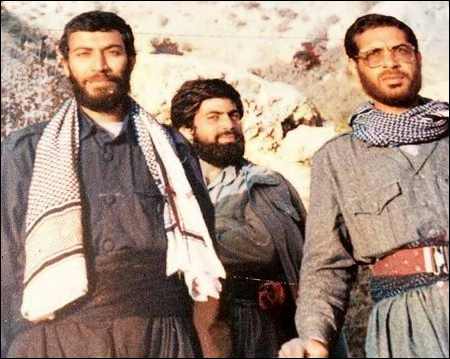
At some stage al-Muhendes moved from the Basra theatre to the Iraqi Kurdish border where he donned peshmerga clothes.
Qasem Soleimani played a part in leading operations well inside Iraq carried out by the Ramadan Base. He established relations with the Iraqi Kurdish leaders, and with the Badr Brigade made up mainly of Shi’a Arabs fighting alongside the Iranians. Iran wanted to take advantage of the Shi’a Iraqis and the Kurdish opposition to Saddam and also used Iraqi POWs in its war with Iraq.
The Badr Brigade had been established in 1982 and comprised two units. The Ahrar Unit made up of the Iraqi POWs and the Shia’s fighting Saddam Hussein formed the Mujaheddin Unit. The Badr Brigade worked closely with the Quds Force to create the Ramadan Headquarters. The commanders led reconnaissance missions and organized operations inside Iraq through having created an axis between the Kurds and Iraqi Shias.
Control and management of the Iranian–allied groups had been handed to the IRGC. All of the various subgroups, including what would become the Nasr Command headed by Reza Seifullah, who was in charge of dealing with the Iraqi Kurds and Shi’a, were merged and the Quds Force was formed, although for years it was not publicly discussed…[6]
Part of the IRGC’s operations outside Iran was carried out under the Ramadan Base (Ramazan Garrison) responsible for the Islamic regime’s links to the KDP and PUK. One of the Ramadan Headquarters senior commanders and its chief of staff in the 1980s was IRGC Brigadier General Iraj Masjedi, who went on to become Iran’s ambassador to Iraq after the overthrow of Saddam Hussein’s government in 2003. He maintained relations with the Kurdish parties and Iraqi officials in the new Shi’a dominated government. He was also responsible for overseeing the Shi’a shrines in Iraq after regime change, said to be a ”vast Iranian civilian infiltration network in Iraq; a system where many of its officials are commanders without the uniform of the IRGC.” [7]
Under the command of Mohammad Baqer Zolqadr, one of the missions of the Ramazan HQ was to conduct guerrilla operations on Iraqi soil through coordination with the Kurdish forces. The IRGC’s relationship with the Kurds had become particularly important during the first half of 1987, after Iranian fighters had suffered heavy losses when failing to capture Basra. The Ramazan HQ allowed the IRGC to shift the fighting northward so that the southern sector could regroup:
“By late March 1987, the IRGC’s top commander, Mohsen Rezaei, wanted to use the Ramazan HQ as a launching point to move the war into northern Iraq by mobilizing and enabling Iraqi dissident groups to threaten Kirkuk’s oil economy. This new strategy included sending arms to the Ramazan HQ by way of another brigade like the Badr Brigade …with the aim of developing and consolidating Iran’s influence among these groups so that Iran could conduct its military operations in the region within the framework of a civil war. [8]
The IRGC sent many of its commanders (including Qasem Soleimani) who had already proven himself in fighting rebels in Kurdish areas of Iran to the Ramazan HQ because they had experience with guerrilla combat dubbed as irregular warfare. Soleimani also attacked MeK bases like Camp Ashraf in Iraq. His Shi’a Iraqi ally, Abu Mahdi al-Muhendes was also attacking Iraqi forces in the south and then moved north to operate with the Kurdish peshmerga, disguising himself in Peshmerga uniform.
IRGC Brigadier General Mohammad Reza Naqdi, who was later appointed as commander of the Basij militia was also a Ramazan base commander in this period. [9]
Ayatollah Khomeini continued support to the Iraqi Kurds against the Ba’ath government, after crushing its own Kurdish rebellion. “The IRGC’s publications have explicitly pointed to the IRGC’s Ramazan Headquarters (HQ) as the focal point for the effort to influence Kurdish dissidents in Iraq and other anti-Baathist groups, such as the Badr Brigades.” [10]
1986 Operation Wahdat, Kirkuk
Between 1986 and March 1988, the PUK, the Iranians and the Shi’a Iraqi groups took control of an area inside the Iraqi border running from Penjwin to Halabja. Many deserters from both armies were also sheltering in this area.
The PUK had worked with the IRGC to plan attacks under the Ramazan Base between 11-12 October 1986 in the Kirkuk area, attacking Kirkuk to weaken the government’s hold. The jointly agreed mission was called Operation Fath 1 (meaning Conquest, in Arabic and in Kurdish, Wahdat). Economic and military targets were attacked. The Fath/Wahdat operations also aimed to weaken Iraq’s southern front by diverting the concentration of Iraqi forces to the north. The Kirkuk operation was the first of a series that would follow. The IRGC forces and PUK Peshmerga fighters, “conducted a well-planned infiltration and a surprise attack against important industrial and military infrastructures in the Kirkuk area. Several facilities of the Kirkuk Oil Refinery, Petroleum Production Unit Number 1, Kirkuk Thermal Power Station, three SAM sites, Jambur, Jabal Bur, and Shwaru oil and gas separation facilities at south Kirkuk, an eavesdropping, signals intelligence and parasite site at Saqqezli, Darman military base, and a train station were destroyed, and headquarters of the Iraqi Army I Corps, 8th Division, Iraqi Intelligence Service, and MeK came under fire. [1] … IRGC field commanders had planned to destroy the Kirkuk Refinery using C4 explosives, but it was decided by top commanders to reduce the mission to attack from the nearby hills, since corpses of Iranian forces on the ground could be used by Iraqi government for propaganda purposes. The 150 tonnes of military equipment and their 300 IRGC operators were transferred from Iran to Kirkuk behind enemy lines in a covert operation lasting for 40 days. [11]
1987: Iraqi, Iranian and local military developments around Halabja
A very detailed paper was produced after the sequence of events at Halabja compiled from witness testimony, that is still circulating online despite its author having allegedly been killed because it was critical of the two main nationalist Kurdish parties. The paper concerns the buildup to – and reasons for – the attack on Halabja in the latter stages of the Iran-Iraq war.
It observed how early in 1987 there had been three main armed forces in Halabja as well as the Iraqi army, the armed Kurdish tribal groups, the Home Guard and the mercenaries. It had observed how the war had strengthened the tribal identities. “The government set about trying to integrate deserters back into the armed state forces by paying clan leaders (big land owners who had become capitalists) 50,000 Dinar per month’ giving them weapons and cars to round up deserters from their own clan and put them under military discipline. There was very fierce competition between the clan armies as the leaders vied for more “recruits” and thus more money from the government. This led to many gun fights on the streets, and even in cafés and shops. When people spoke about “war” in Halabja they meant the wars between the clan armies, and between the latter and the deserters, not the war between Iran and Iraq.”
The same detailed background paper noted that the largest force was that of the Home Guard but they had neither uniforms nor many weapons. Deserters joined it to get over the legislation demanding any deserter had to carry ID showing they had joined the army and thus legalising desertion after the fact. Saddam Hussein had spoken about a “Right to Desert.”
Next came the mercenaries operating as if under state sanction but with corruption and brutal excess forcing deserters into the Home Guard by checking their ID cards. Any male without ID faced being killed by them. “They were paid 1000 Dinars for bringing someone to a police station alive, and 500 Dinar for their head. They killed a lot of poor people just to get money. “
These ruthless killers could even cut off a victim’s head and present it to the police station claiming it was an Iranian IRGC fighter they had killed on the border. After the attack on Halabja scores of them moved to Iran and continued working for Iran. “There were very close links between the leaders of the clan armies, the bounty hunters, Kurdish nationalist organisations and local businessmen.”
Back on May 13, 1987, there had been an uprising in Halabja. Armed fighters with the Communist Party had taken over the mosques and used the loudspeakers on the minarets to organise a revolt against the Iraqi government. Many attending the meeting ignored the Imams decrying Communism and were well armed through having been in the clan forces. The Iraqi Army had come into Halabja with orders to shoot them if need be but instead urged the rebels to disperse. When people refused, many soldiers are said to have joined forces with them instead, as also happened three years later during the 1991 Kurdish uprising. The local police and army withdrew, only able to move about in tanks or by joining with the armoured divisions operating in the region. Fighting between Iraqi forces, the Iranians and their supporters was ongoing and the latter, supported by the PUK peshmergas were nearing Halabja itself. Iranian artillery bombed the town with a number of fatalities.
“After this attempt at rebellion, the Iraqi government and Jordanian forces attacked and rounded up suspects. Many were killed. During 1987, some 45 villages in the vicinity of Halabja were destroyed and many individual houses that had been left standing after aerial bombardment were rigged with mines and explosives by ground troops following up on the Air Force strikes. Their inhabitants had fled into Halabja. The population went up to 110,000 people in this same period. Most of the males were deserters trying to fight back. They gained support from the Communist Party trying to restore their bad name from their collaboration with the Iraqi government under Zaim Karim Qasim after the massacre of the Hashemite royals. [12]
“Every day Iraqi helicopters came to tell people to be calm saying Halabja would not be destroyed.” The government closed the mosques and cut off their electricity to stop then being used like they were in Halabja. The governor of Suliamani then visited Halabja and addressed the population saying: “Halabja is one of the cities in Iraq which has made many sacrifices throughout history. President Hussein himself has a special concern for Halabja and the people who spread rumours about Halabja being destroyed are your enemies and enemies of the state.”
Rebellions continued in other towns in the area with the same consequences. Twenty km from Halabja the town of Sirwan was destroyed with bombs and rockets dropped by the Iraqi Air Force after deserters and some fighters with the Communists seized the area using weapons taken from the tribal forces.
Tribal leaders and army officers were secretly moved to Sulaimani. The Iraqi Army suspected a plan was afoot. The poor were still trying to escape across the border to Iran but were still being sent back by the peshmerga.
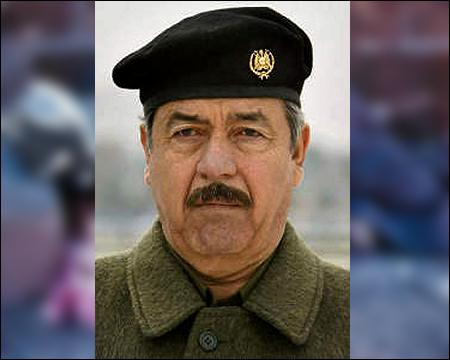
Photo: Iraqi TV/iKurd.net
Halabja was then bombed for three days between 13-15 March by Iran allied with the Badr force and was then occupied by the IRGC. The Peshmerga helped direct the Iranian bombing hoping they would conquer the Iraqi forces. They then helped the Iranians and Shi’a Iraqis to keep the people in the town while helping their own families to get across to Iran. The IRGC forces took control of government buildings in Halabja, including the hospital that was empty. That evening the people had packed to leave for Iran and were already heading for the mountains. [13]
Iraqi General Ra’ad al-Hamdani said of this period that everyone knew Halabja was going go to be attacked – the Kurds, the Iranians and the Iraqis. Chemical Ali, General Ali Hassan al-Majid, was in control of the northern sector and General Khazraji, not Saddam Hussein, gave the orders for the attack. The strikes then happened every ten minutes.
Iraqi General Makki also elaborated in interview with American handlers during the Occupation:
“The corps commanders were the important ones. Seventy-five brigades organized into fifteen divisions and three corps were involved in the Anfal operation against the Kurdish insurgency in the mountains.139 There were 200 battalions of Kurdish volunteers. The air force and the army aviation worked on 95 routes of operation in the mountains at the same time. Each battalion force had three parts: the main direction, right wing, and left wing. Headquarters coordinated the movement of 400,000 troops with 2000 tanks, the air force, and army aviation. It was a very good army.
If the Americans in Tora Bora had done the same, they would have crushed the insurgents and killed bin Laden. The Taliban is like the Kurds. You cannot fight insurgency with technology: you need men. If you sent a large army into Afghanistan for one year, you would crush all the insurgents…Iranians are good at deceiving you and masterful at gaining time. If they want to do something, they will keep doing it unless you show them the ‘red eye.’ (i.e., tough action). They will only stop if you are serious with them. Iraq proposed six ceasefires before Iran would agree to one. “
The Iraqi Intelligence Service and military command were informed of Iran’s battle plans through listening into messages between Iranian embassies having cracked the code they were using. They then moved their forces to the areas the Iranians planned to attack.[6] They were initially equipped with tear gas to use against the enemy, which would be first use of chemical warfare during the conflict. [14] [6]
Saddam Hussein had offered several ceasefire attempts over the years, none of which were accepted by Khomeini. [15] General Abousi confirmed this saying:
- “Iraq wanted to put an end to the war as early as 28 September 1980. Saddam gave a speech that night. We were ordered to stop all combat flights for three days. Iran took advantage of this period and bombed all our bases. Saddam waited approximately 24 hours; then we resumed military operations. When Saddam realized that Iran had refused to end the war, we focused on paralyzing the Iranian economy. Our most important targets were the oil reserves and refineries. We controlled the air and sea… We used napalm in Khorramshahr and Penjwin. The entire strip between Penjwin to Halabja was occupied by Iranians and Peshmerga.
- The Iranians and the Kurds, led by the traitor Jalal Talabani, occupied Halabja. The battles started in January 1988 and continued until the entire region was occupied on 14 March 1988. We noticed unusual Iranian movements. They moved 70 percent of their troops in the center and 60 percent of the troops in Fao north with the intention of occupying the oilfield region of Kirkuk. The Iraqis and General Khairallah, in particular, devised a smart deception operation; Adnan Khairallah appeared on television mobilizing the troops in Kirkuk [while our troops mobilized around Fao].
- “We withdrew small units from other sectors. Iran expected an attack on Halabja. Even our own troops expected an attack on Halabja because we deceived them as well. Iraqi command prohibited any movement near Fao. The Republican Guard was already there. After Iraqi troops mobilized in the Halabja area, we attacked Fao on 17 April. The air force prepared all of our air bases to use in the Fao campaign. n. The air force did not lose one person in the Fao campaign. It was easy; the Iranian troops fled quickly. It was hard for the Iranians to pull back their troops from Halabja…
“The Kurds often acted as scouts and guides for the Iranian forces in conventional attacks. Much more common, however, was the presence of Iranian agents who organized and directed small groups of Kurdish Peshmerga raiding parties. These were organized into small groups of about 12 Peshmerga. They were capable of operating semi-independently, relying on natural water sources and stashed arms and food. They also received extensive support from the local population and infrastructure. They would carry out insurgent activities such as assassinations of government officials, car bombings of government buildings, and attacks on Iraqi Army troop formations and vehicles. One of their prime targets was the oil and population center of Kirkuk. They launched numerous raids on oil facilities and military posts in the area with some success. They even developed a rocket known as the “Karad” with a range of 20 kilometers in order to strike the city of Kirkuk.” [16]

Peshmerga and Iranians equipped with gas masks during the massacre of Halabja
On the morning of March 16, 1988, when bombs with chemical warheads rained down on Halabja neither the Iranian forces or peshmerga were killed having left the day before or early morning of the massacre. The Peshmerga however, continued to surround the city with some IRGC and Badr 9 ground forces and they wore gas masks.
Aftermath
By the time Iranian television crews went in, also wearing gas masks the peshmerga were still reportedly trying to stop survivors from fleeing. The many thousands who had not been able to escape or who had made the error of hiding in bomb shelters in when the planes dropped their deadly loads lay dead where they had fallen.
Locals that lived to tell their accounts after the massacre accused the peshmerga of looting their homes and taking their girls.
Others ended up in camps in Iran near Hassen, as they did in 1991 after the collapse of the uprising, living under strict conditions imposed by the IRGC. [17]
The various accounts given are not exhaustive but taken cumulatively the truth emerges as to the deception in common wisdom that Halabja was a tragedy that affected the Kurdish nationalist parties or their clans and families. That bitter truth does not lessen the pain of those whose loved ones were sacrificed so inhumanely. [18]
May they be ever remembered.
1 See David McDowall, A Modern History of the Kurds, 4th edition, I.B.Tauris, 2021, p. 614, N174
2 https://military-history.fandom.com/wiki/Qasem_Soleimani#cite_note-filkins-24
3 https://military-history.fandom.com/wiki/Qasem_Soleimani#cite_note-almonitor-eingma-25
4 Ibid.
5 https://www.newarab.com/analysis/fugitive-international-justice-now-militia-leader-iraq#article-0-single-0
6 https://www.rferl.org/a/iran-quds-force-soleimani-explainer/30366930.html
7 https://www.ncr-iran.org/en/publications/special-reports/the-iranian-regimes-irgc-quds-force-1980s-present/
8 P. 48 https://www.jcs.mil/Portals/36/Documents/History/Monographs/Iran_study_complete.pdf
9 Ibid.
10 Ibid.
11 https://en.wikipedia.org/wiki/Operation_Fath_1
12 See, The Rehabilitation of Abd al Karim Qasim. https://ikurd.net/iraq-comes-full-circle-2023-02-23
13 https://srpc.ca/resources/Documents/CJRM/vol09n3/pg178.pdf p. 2/4 from the account of physicians
14 Farrokh, Kaveh (2011). Iran at War: 1500–1988. Osprey Publishing.
15 Bishop, Farzad; Cooper, Tom. “Fire in the Hills: Iranian and Iraqi Battles of Autumn 1982”
16 P.224 of the following paper at link: https://web.archive.org/web/20131029201227/http:/fmso.leavenworth.army.mil/documents/PF-Iran-Iraq.pdf
17 The main thrust of the account and its running order derives from the information put together by pro-CP authors in 1989 at the following site Published in Wildcat no.13, summer/autumn 1989
18 https://srpc.ca/resources/Documents/CJRM/vol09n3/pg178.pdf
19 Interview with CIA analyst, John Nixon, Debriefing the President: The Interrogation of Saddam Hussein, Penguin Books, 2016, p.169-173
Sheri Laizer, a Middle East and North African expert specialist and well known commentator on the Kurdish issue. She is a senior contributing writer for iKurd.net. More about Sheri Laizer see below.
The opinions are those of the writer and do not necessarily represent the views of iKurd.net or its editors.
Copyright © 2023 iKurd.net. All rights reserved
Related posts:
 Kirkuk – Wars of Deception And Elections
 Iran’s Grip on Kirkuk
 The Mustashar and the Jash – A View from the Position of ‘Iraqi National Unity’ on the ‘Descendants of Treason’
 The Resurrection (Ba’ath) Party – Before the Iran-Iraq War
 Iraq in the Shadow of Khomeinism – Part I: Baghdad And Erbil Under Threat
 The Assassination of Abdurrahman Ghassemlou: No Friends but the Mullahs?
 The Suffocation of Iraq Kurdistan
 Saddam Hussein was a Friend to the West
 Iraq: Revenge and Corruption
 Saddam Hussein’s Enemies: Paving the Road to the Invasion of Iraq