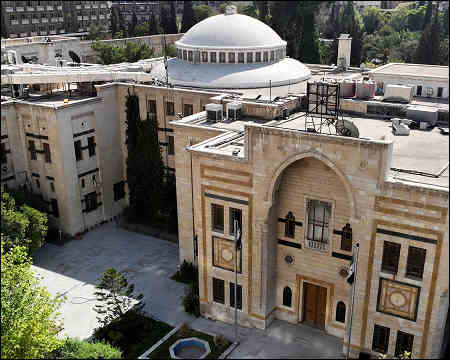
DAMASCUS,— Syria is set to select members of its first parliament since the fall of Bashar al-Assad, but the process is already under sharp criticism as heavily controlled and lacking democratic standards.
The 210-seat assembly, due to be announced Sunday, will be dominated by allies of interim leader Ahmed al-Sharaa.
According to the electoral committee, Sharaa himself will appoint 70 members, or one-third of the chamber. The remaining members are to be chosen by local committees that were, in turn, appointed by the electoral commission, which Sharaa established.
Sharaa, who also goes by the name Abu Mohammed al-Golani, rose to power after Islamist forces led by his coalition removed Assad from power in December, ending more than 13 years of civil war and more than five decades of one-family rule in Syria.
His background includes a long history with militant groups. He was once linked to al-Qaeda and ISIS, later founding al-Nusra Front, which eventually rebranded as Hayat Tahrir al-Sham (HTS).
Excluded Regions
The electoral process excludes major areas of the country not under Damascus’s control, including Sweida, a Druze-majority province in the south that witnessed deadly clashes in July, and the Kurdish-majority northeast in Syrian Kurdistan. Together, those regions account for 32 parliamentary seats that will remain vacant for now.
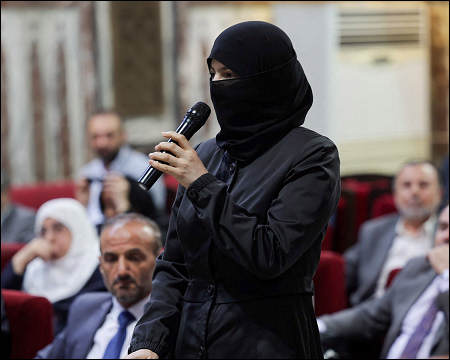
The interim authorities dissolved Assad’s long-standing parliament when they assumed power. Under a temporary constitution announced in March, the new legislature will serve for 30 months and handle lawmaking until a permanent constitution is approved and nationwide elections can be held.
Sharaa has argued that direct elections are not feasible, pointing to the millions of Syrians who lack identity papers after years of displacement and exile during the conflict.
Candidate Pool
More than 1,500 candidates are competing for seats, just 14 percent of them women. Around 6,000 people are reportedly participating in the process nationwide. Rules bar individuals associated with Assad’s former regime and prohibit calls for partition or separatism.
The candidate list includes Henry Hamra, a Syrian-American and the first Jewish contender since the 1940s.
Criticism From Rights Groups
Rights groups and non-governmental organizations have condemned the process, saying it places excessive power in Sharaa’s hands. In a joint statement issued last month, more than a dozen organizations said the structure allows him to effectively engineer a parliamentary majority composed of loyalists. They warned this undermines pluralism and any chance of genuine democratic practice.

“You can call this process many things, but not elections,” said Bassam Alahmad, executive director of Syrians for Truth and Justice, a group based in France that co-signed the statement.
Ordinary Syrians in excluded regions voiced similar concerns. “Elections could have marked a new political start,” said Nishan Ismail, a Kurdish teacher from Syrian Kurdistan (Rojava). “But by marginalizing entire regions, the authorities show that real participation is not respected.”
In Sweida, activist Burhan Azzam said political life had ended in the country under the interim authorities. “The process fails to meet the basic standards of democracy,” he said. The Druze community there has increasingly demanded self-determination for its minority.
Kurdish Demands and Stalled Talks

The Autonomous Administration in Syrian Kurdistan, formally created in 2018, runs the northeast according to principles of democratic confederalism, emphasizing gender equality, secularism and local decision-making. The region has been praised for encouraging women’s participation in in governance and politics.
Talks between Damascus and Kurdish leaders have stalled, largely over demands for decentralization. In September, thousands of people rallied across Syrian Kurdistan to show support for their autonomous administration and renew calls for a decentralized future.
As the first post-Assad parliament takes shape, many observers argue the process could deepen divisions rather than bridge them. Final results are expected Monday.
(With files from AFP | Agencies)
Copyright © 2025 iKurd.net. All rights reserved
Related posts:
 The Resurrection (Ba’ath) Party – Before the Iran-Iraq War
 Stealing Syria
 Syria: Revisiting The Caesar Torture Victim Photographs
 Syria: A ‘Caliphate’ by Any Other Name — Would Smell the Same
 Business with ISIS – Updated
 Syria: The Hijacking of the Arab Spring: From ISIS to Hayat Tahrir al-Sham
 Sabotaging Syria
 Hostages to Jihad – Austin Tice, The Long Missing American in Syria – Part One
 Syria: The Truth Lies Buried beneath an Edifice of Lies
 Turkey: Nato’s Islamic State Member