

Selling the homeland to Arabs is never an act of brotherhood
Hoger Sheikh | Exclusive to iKurd.net
Translated by iKurd.net from Kurdish Awene
An Open Letter to Mr. Massoud Barzani
Although I have sent you two or three open letters before through newspapers, I doubt that you have seen any of them. Perhaps the reason is that those around you do not allow such matters to reach you, or perhaps you personally may not have the interest or opportunity to read this kind of material. I cannot say for certain.
Even so, this time I have decided once again to send you this open letter. Although I would have preferred that only you read it rather than it being published openly, I hope it will not be like knocking on cold iron once again. We have been repeating these things for many years, yet nothing positive has come from them.
Dear Mr. Massoud,
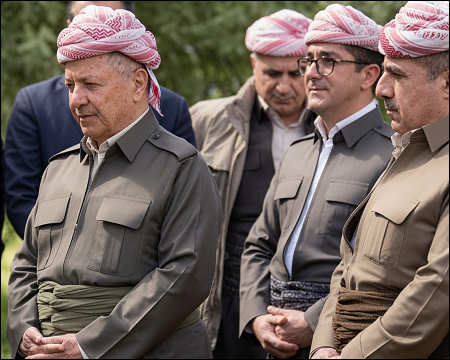
From the time of your respected father and grandfather, and through what history, or what has reached us over time, has shown, you, in particular, have been at the heart of the events, revolutions, and tragedies of your nation since childhood. Your books also show that you are well aware of the details concerning Kurdistan, its occupiers, and the major powers.
You also know very well that all the revolutions of our nation have been carried out for the purpose of preserving our national identity and our homeland. Clearly, this was the desire of our nation, and for this very goal, hundreds of thousands of our people were killed through the Anfal campaign, chemical attacks, executions by hanging, acid pits, and many other crimes.
From the very first congress of the Ba’ath Party, one of its objectives was the destruction and assimilation of the Kurds. What Saddam did was the direct implementation of that goal. They worked toward it step by step.
Until the fall of that regime, vast areas of Kirkuk, Mosul, Diyala, and Kut were Arabized. Even within the three cities of the so-called autonomous region, thousands of villages and small towns were destroyed, because the regime knew that every village was an economically productive unit. At the same time, every village also served as a base for resistance, the revolution, and the Peshmerga.
All of this happened. Yet, until the uprising, Arabs, including security personnel and their associates, did not even dare enter many neighborhoods and alleyways in the cities.
Their fear was so great that, in Sulaimani city, many streets in neighborhoods such as Malikandi, Kaniskan, and Chwarbakh were avoided because they were considered centers of danger.

Until the fall of that regime, vast areas of Kirkuk, Mosul, Diyala, and Kut were Arabized. Even within the three cities of the so-called autonomous region, thousands of villages and small towns were destroyed because the regime knew that every village was an economically productive unit. At the same time, every village also served as a base for resistance, the revolution, and the Peshmerga.
All of this happened. Yet, until the uprising, Arabs, including security personnel and their associates, did not even dare enter many neighborhoods and alleyways in the cities.
Their fear was so great that, in Sulaimani, many streets in neighborhoods such as Malikandi, Kaniskan, and Chwarbakh were avoided because they were considered centers of danger.
But now, unfortunately, the autonomous region, which was once a single administrative unit, has in practice become two separate zones. In both zones, cities have expanded, and the political parties have described this expansion as “development” and “growth.”
However, this urban expansion has also caused the small number of villagers who remained in their hometowns to move into the cities.
One of the main reasons for this was the creation of dependence among villagers by giving them government salaries without meaningful work, making them unemployed, silent salary earners so that during elections they would become obedient followers and guaranteed votes for those in power.
At the same time, Kurdish residents from Kirkuk, Khurmatu, Makhmour, Khanaqin, Jalawla, Kifri, and other areas have been leaving their homes, while others have continued moving into those regions.
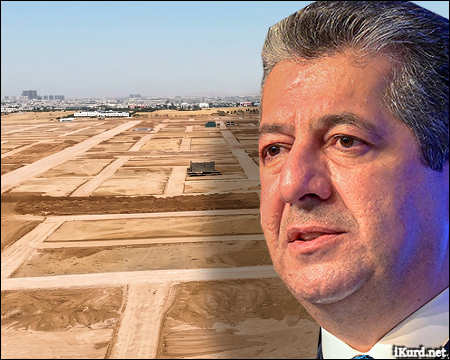
Even more alarming is the construction of hundreds of apartment buildings and housing projects in the name of “investment.” Many of these so-called investors have become millionaires, and some have even become billionaires.
If this continues, they will eventually cover all the land of the Kurdistan Region with houses and apartment buildings.
The media outlets affiliated with the political parties, of which there are hundreds, constantly run advertisements in both Kurdish and Arabic, encouraging people from central and southern Iraq to come to the Kurdistan Region and become owners of apartments and houses.
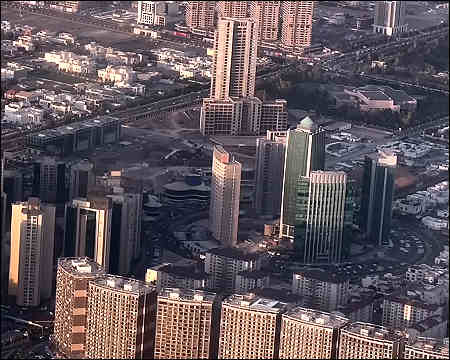
This nonstop race to build apartments and houses and make money from them has reached the point where the number of non-Kurdish residents moving to Erbil, Sulaimani, and Duhok is becoming nearly equal to the Kurdish population.
In fact, if you walk through the streets of these cities today, you hear Arabic almost as much as you hear Kurdish.
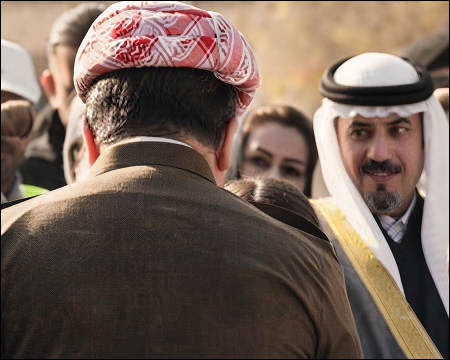
Not only that, but in Sulaimani there are now many shops selling Arab agal headbands and traditional Arab abaya garments.
There are even mosque preachers who deliver sermons about the virtue of wearing the dishdasha, while, in practice, they are helping bury Kurdish culture alive.

Even more unfortunate is that the Kurdistan Regional Government reportedly intends to settle several thousand Kurdish-language teachers from Kirkuk in Erbil by granting them land. Clearly, this would result in the displacement of several thousand Kurdish families from Kirkuk.
Although Article 140 of the Constitution is still mentioned from time to time, it too became a victim of the lack of Kurdish unity.
Instead of implementing Article 140, nine new Arab neighborhoods have been established inside Kirkuk since October 16. The pace of Arabization has now surpassed even what took place during Saddam Hussein’s era.
Sir, even according to the Constitution itself, demographic change is not permitted. Therefore, if those involved in the housing and land sector argue that Iraq belongs to everyone and that people have the right to come and buy property from us, then we should rely on the Constitution itself, specifically Article 23, paragraph (B), which clearly states that changing places of residence must not be intended to alter the demographic composition.
What is happening today, both in Kirkuk and in the Kurdistan Region, has one underlying purpose: changing the demographic makeup of Kurdistan.
The tragedy is that, in this case, it is the Kurds themselves who are encouraging the process.
Personally, I believe in the brotherhood of nations and peoples, but selling a homeland is never an act of brotherhood.
These so-called investment businessmen, whether they realize it or not, should understand that what they are doing falls into the category of selling the homeland.

It is clear that they operate under the protection and influence of Kurdish local authorities, and every authority sells the lands of its cities under the name of investment and development, allowing them to be taken over by profiteers.
Their goal is to make money as quickly as possible. Otherwise, at the very least, they would have come forward with projects to build strategic economic infrastructure in the Kurdistan Region.
My dear friend, if this continues for several more years, southern Kurdistan will become like the outskirts of Mosul, Diyala, and other such areas.
At that point, future generations may become so few in number that they will not even be able to use the word “Kurdistan,” because Kurds will have sold their own land willingly and by their own consent, and others will have purchased it.
In other words, as Sheikh Ghaith Al-Tamimi said in a published video:
“Saddam carried out Arabization by force, so he was not very successful. But now, since there is no longer someone like him in the picture, Kurdish leaders themselves are carrying out the Arabization. At the same time, go to the cities of the Kurdistan Region, restaurants, markets, cafés, and other places, all of them have become Arab.”
Another Arab brother of ours published a comment using very harsh and aggressive language, saying:
“In another two or three decades, the north of our beloved country will become ours…”
Without a doubt, their continued arrival, their ownership of homes, land, businesses, and livelihoods, along with their higher birth rates, will eventually make them an absolute majority.
At that point, they will begin creating problems and finding excuses to act against the Kurds.
There is no doubt that this would be unacceptable to the Kurds, and they would defend themselves. This would eventually lead to war.

Once that happens, the countries that have occupied Kurdistan and the so-called Islamic states, and especially the British government, will begin condemning the Kurds. They will give Arabs full rights and recognize the land as belonging to them. They will then start talking about human rights and United Nations laws.
At that point, the Kurds will be faced with three choices, and all three would lead to destruction:
The first choice: The Kurds surrender, submit, and wait for the goodwill of the newcomers so that they are not oppressed too much.
The second choice: The Kurds leave their homeland and migrate to other countries, living as displaced people and refugees, wandering from place to place like the Roma.
The third choice: Like the Kurds east of the Tigris River 150 years ago, they accept assimilation in order to protect their lives and their families, and they abandon their own language and culture by melting into Arab society.
Mr. Massoud, anyone who does not see this reality should question the correctness of their own way of thinking.
We have our own local authority, and during these 35 years, many actions have been taken that were against our highest national interests.
This includes everything from the decline in the dignity and status of the Kurdish language to the fact that everyone is allowed to make statements on their own, without any limits and without clear red lines against actions carried out in the name of political party interests.
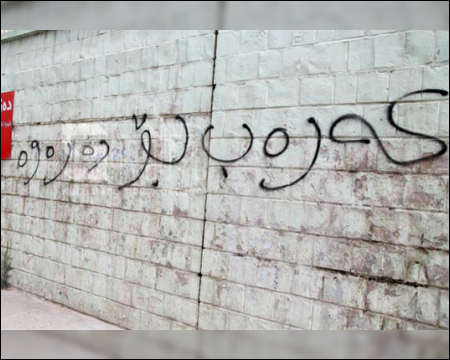
It also includes the constant disputes and conflicts between parties, each moving in different directions, toward Baghdad, foreign countries, and elsewhere, along with the absence of a national agreement that cannot be abandoned under any excuse and that no one should be allowed to violate.
At the same time, we have failed to establish a clear definition of high treason (al-khiyana al-uzma), so that acts of betrayal and selling out the homeland would not be presented falsely as struggle and political activism.
Our ancestors used to say:
“A chicken does not throw dirt on itself; no one else needs to do it.”
What is happening today is something we ourselves are causing.
Therefore, by our own actions, we are giving legitimacy to the occupation of Kurdish land.
This article was originally published in the Kurdish language in Awene Newspaper on July 24, 2026.
The opinions are those of the writer and do not necessarily represent the views of iKurd.net or its editors.
Copyright © 2026 iKurd.net. All rights reserved.
Related posts:
 Kirkuk – Wars of Deception And Elections
 Land Distribution in Kurdistan Is an Unforgivable Crime
 The Resurrection (Ba’ath) Party – Before the Iran-Iraq War
 Iraqi Kurdistan: The Emperors’ New Clothes
 The Mustashar and the Jash – A View from the Position of ‘Iraqi National Unity’ on the ‘Descendants of Treason’
 Iran’s Grip on Kirkuk
 Business with ISIS – Updated
 Iraqi Kurdistan – “Sold Out!” – Part II
 Iraq – The Cynical Swindle
 The Suffocation of Iraq Kurdistan