The Arabization of Iraq’s Kurdistan Region?! – Part V
Salih Zhajlayi | Exclusive to iKurd.net
Translated by iKurd.net from Kurdish Awene
Some Observations on the Article by Arif Qurbani
Some observations on the article written by Mr. Arif Qurbani, which was published on Rudaw website. The writer begins as follows:
“What is currently being done to Arabize the region is more dangerous than the previous two stages because, on the one hand, its geography is different from the Arab border areas. It is a leap over the areas that were previously Arabized and a move into the heart of southern Kurdistan.”
Mr. Arif Qurbani has explained the issue of the Arabization process very well and has highlighted the important, sensitive, and dangerous aspects of the Arabization process for the future of the Kurdistan Region. However, I would like to provide more explanation about the part that I have placed between the parentheses.
First, a Look Back at the Past
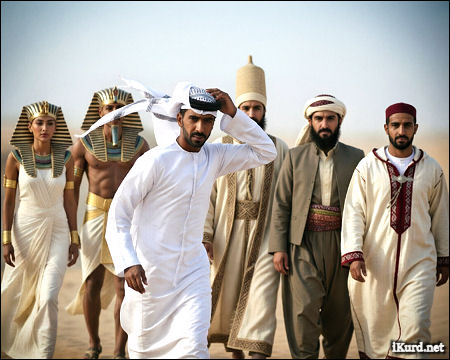
Before the religion of Islam spread, those who spoke Arabic were the people of the Hijaz, which mainly covers what is now Saudi Arabia. After the Hijaz came the people of Yemen and the Gulf countries of today, who at that time were mainly nomadic Arab tribes.
After that came the people of Jordan and parts of southern Syria and southern Iraq who spoke Arabic. Today, Arabs are the majority population of 23 states. North Africa, meaning Libya, Tunisia, Algeria, and Morocco, was not Arab; its people were Amazigh.
However, when Islam emerged and spread, the Islamic conquests, meaning the occupation of other countries, began under the name of Islam. The religion of Islam also spread through the Quran, which was in Arabic. The places that were conquered were also Arabized.
Because we Kurds are part of Iraq, and we are talking about the process of Arabization in Iraq, what has been done to the Kurds in Iraq has also happened, and in some cases has been even worse, in the other neighboring countries of Iraq where Kurds live. Today, the Kurdish population in the four countries among which Kurdistan has been divided is more than 40 million.
Those countries have continuously tried, each in its own way, to eliminate and reduce the size and presence of the Kurdish people by occupying the land on which they live. What has guaranteed the survival of the Kurds in four different countries is that the Kurds were not nomadic and, throughout history, have lived on their own land.
Therefore, it is the land of Kurdistan that has become the true identity of the Kurdish people and the reason for their survival throughout history, despite all the efforts of their enemies to eliminate them.
After that, I want to speak specifically about the Kurds of Iraq and the process of Arabization.
Even before the establishment of the Iraqi state in 1921, and during the rule of Midhat Pasha under the Ottoman Empire in the second half of the nineteenth century, some Arab tribes were moved to the northern part of the Hamrin mountain range and separated from one another, on the grounds that some Arab tribes were hostile toward each other and needed to be kept apart. The beginning of the Arabization process started at that time.
However, after the establishment of the Iraqi state in 1921, the Arabization process began as an organized program and has continued until today.
During the monarchy, it began very slowly and was not very noticeable. It did not attract much attention or create much public reaction. But after the monarchy ended, and especially during Saddam’s era, the Arabization process reached its peak in the occupation of Kurdish lands.
Khanaqin, Koi Sanjaq, Gulan, Badra, Jassan, all of Kirkuk, Makhmur, and all of Mosul were Kurdish lands, and over time they were Arabized. In my opinion, these areas have now become Arab property, unless we Kurds simply stand at a distance and say, “That bread is with that oil.”
For the Patriotic Union, Kirkuk is the Jerusalem of Kurdistan, and for the KDP, it is the heart of Kurdistan. But both sides are lying. They completely sacrificed Kirkuk to their own disagreements and sold it.

Kirkuk itself had returned to the Kurdistan Region, but Massoud Barzani, through the referendum, put Kirkuk and more than half of the territory of Kurdistan under Arab control. He also satisfied Turkey by allowing the position of governor of Kirkuk to be given to a Turkmen.
When the governor was Kurdish, members of the Kirkuk Provincial Council affiliated with the KDP did not attend the council’s meetings. But when the governor became Turkmen, they happily returned.
Now the governor is even asking for Kirkuk to become a member of the municipal organization of the “Union of Turkish World Municipalities.”
Therefore, for this great achievement, we should congratulate Mr. Massoud Barzani.
There is a Kurdish proverb that says, “We went for the beard and did not even get the mustache.”
For many years, we have fought in a revolution and shed a sea of blood to regain the occupied areas, especially Kirkuk. And what happened? We sold Kirkuk with its property deeds.
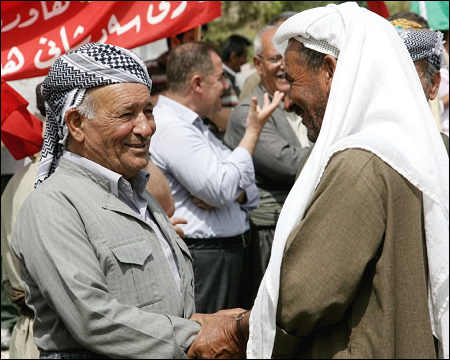
Now we are about to lose Sulaimani, Erbil, and Duhok as well, under the shadow of the clever and patriotic Kurdish politicians who are serving the enemies of the Kurds.
Now your thirst has been quenched and you are at peace. In other words, congratulations on these great achievements of yours.
For some time now, there has been a great deal of discussion in the media about the danger of the Kurdistan Region being Arabized at the hands of the Region’s own officials.
What made me write this article are these few words from Mr. Arif Qurbani’s article, which should be considered extremely important and given serious attention by everyone:
“What is currently being done to Arabize the region is more dangerous than the previous two stages because, on the one hand, its geography is different from the Arab border areas. It is a leap over the areas that were previously Arabized and a move into the heart of southern Kurdistan.”
The Major Danger of This Stage for Southern [Iraqi] Kurdistan Is as Follows:
Throughout history, the Arabization process has been slow and gradual. There has always been a significant distance between the heart of Kurdistan and the Arabized areas.
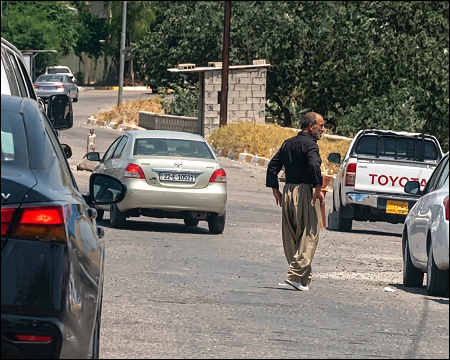
For example, if the Ba’ath government had designated Qara Hanjir as the final point of Arabization, there would still have been a long distance to the city of Sulaimani, and from there into the heart of the villages until reaching the borders of Iran.
The same applies to Erbil and Duhok.
For example, if the central government wanted to come from Qara Hanjir and Arabize Chamchamal as well, it would not be easy for them. It would create problems, public reaction, and conflict.
But what is happening now in the cities of Kurdistan is a disaster. In other words, Arabs are being brought in by the Kurds themselves, and the Kurdish people are giving up Kurdish land.
The process of Arabizing the cities and towns of Kurdistan by allowing Arabs to buy apartments and settle there, simply so that greedy officials and businessmen can become wealthy, means the Arabization of the Kurdistan Region without any noise or resistance.
If the Iraqi government considers the area up to Qara Hanjir to be Arab property, then if things continue as they are now and there is no intervention, within ten years half of Sulaimani will become Arab, and Erbil and Duhok will face an even greater threat.
Ultimately, this means that the Kurdish authorities themselves, by their own hands, their own will, and their own approval, are giving legitimacy to Arabization from Qara Hanjir all the way to Sulaimani.
During the next ten years, from Chamchamal to Takiya and Bazian, hundreds of Arab citizens will settle there, each for one reason or another, and gradually the demographic makeup of the population will change.

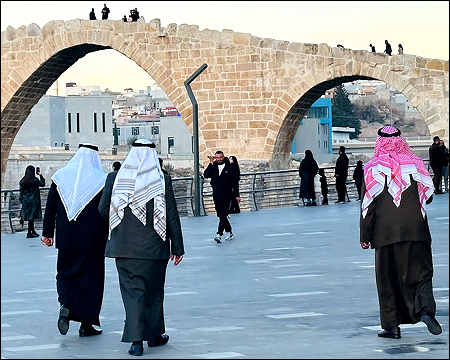
Arabs have also always considered themselves the dominant nation. Instead of trying to learn the Kurdish language, Kurds are expected to learn Arabic. Instead of wearing Kurdish sharwal, Kurds are expected to wear the dishdasha.
In this way, little by little, Arab culture will become dominant over Kurdish culture, and gradually, as time passes, the Kurdistan Region will become Arabized.
Look at what is happening now. Some paid clerics say that criticizing the dishdasha is a red line. There are also many self-selling Kurds who are proud of wearing the dishdasha.
At the same time, I challenge them to travel throughout all the cities of Iraq and see whether they can find even one Arab wearing Kurdish shalwar.
The disaster is much greater than what I have described.
The geographic depth that previously existed between the cities of the Kurdistan Region and the borders of Iran and Turkey is now almost empty, and very few people remain there.
Those places that Kurds once considered their defensive strongholds and their means of survival, and considered the mountains of Kurdistan their greatest friend and refuge, have now largely been emptied because of the bad policies of the Kurdish authorities.
Therefore, the authorities of southern Kurdistan have now created the best conditions for Arabization and the Arabization of the region themselves.
In other words, there is no longer geographic depth from below the cities of Kurdistan toward the Arabized territory, and there is no longer geographic depth from the cities of Kurdistan toward the borders of Iran and Turkey for Kurds to defend themselves and maintain their survival in times of crisis.
Those areas have been emptied and made as if they never existed.

To explain it another way, when Saddam relocated the Kurds living near the borders to large collective camps so that he could control them more easily, those who did not go along with this policy were eventually able to return after the uprising. The areas were rebuilt, and once again they became a source of support and shelter for the Kurds.
But after the uprising, the Kurds themselves created the conditions that caused those areas to become empty.
Therefore, the geographic depth outside the cities toward the borders, which had been the greatest defensive stronghold for protecting and maintaining the survival of the Kurdish people, has been destroyed by the Kurds themselves.
I can say that, even worse, the geographic depth that existed between the cities of the Region and the Arabized areas has also disappeared.
For example: Sulaimani toward Kirkuk, Erbil toward Kirkuk and Makhmur, and Duhok toward Sinjar. That is also disappearing because, from here onward, the door is open: wherever an Arab wants to settle, they can settle.
In very simple terms, the Kurdish authorities have gathered most of the population into the cities and towns and have created favorable conditions for the Iraqi government to carry out the Arabization process very easily through Arab settlement.
Now, if Arab citizens come to Kalar, buy apartments, settle there, open shops, and do business, nobody will stop them.
Another danger to the Arabization of the Kurdistan Region is the birth rate.
Therefore, if we do not start thinking about this now and do not have an appropriate plan, eventually we will disappear among the Arabs.
Salih Zhajlayi, one of the political figures in Sulaimani city, Iraqi Kurdistan, and formerly the Deputy Head of the General Assembly of the Gorran (Change) Movement, is currently working independently in Sulaimani.
This article was originally published in the Kurdish language in Awene Newspaper on August 8, 2026.
The opinions are those of the writer and do not necessarily represent the views of iKurd.net or its editors.
Copyright © 2026 iKurd.net. All rights reserved.
Related posts:
 Kirkuk – Wars of Deception And Elections
 Iran’s Grip on Kirkuk
 The Resurrection (Ba’ath) Party – Before the Iran-Iraq War
 The Mustashar and the Jash – A View from the Position of ‘Iraqi National Unity’ on the ‘Descendants of Treason’
 Who’s Really Arabizing Kurdistan? It’s Not Baghdad – Part I
 Who’s Really Arabizing Kurdistan? It’s Not Baghdad – Part III
 Who’s Really Arabizing Kurdistan? It’s Not Baghdad – Part IV
 Iraq – The Cynical Swindle
 Massoud Barzani, Stop Selling Kurdistan to Arabs
 Land Distribution in Kurdistan Is an Unforgivable Crime