

Building Mosques in Kurdistan: Imitation, Ego, Self-Promotion, and Gain
Salih Zhajlayi | Exclusive to iKurd.net
Translated by iKurd.net from Kurdish Awene
The mosque, from the perspective of Islam, holds a high and sacred status. It is the main center of the Muslim community and a spiritual place for worship. In the mosque, the strongest relationship between a person and God is expressed through prayer, remembrance of God, and recitation of the Quran. Throughout history, mosques have also been centers of learning and education, and they were among the first schools and universities.
However, after the major developments that the world has experienced, and with the separation of religion and state in Christian European countries, religion no longer holds the same position it once had. In Islamic countries, Islamic law is still applied and continues to play a role in legal and governmental matters, especially regarding issues related to women.
But after the Arab Spring and the emergence of many Islamic organizations such as Al-Qaeda, ISIS, the Taliban, the Al-Nusra Front, Hezbollah in Lebanon, Hamas, which is linked to the Muslim Brotherhood movement, and the Houthi movement (Ansar Allah), as well as the Muslim Brotherhood itself, which was founded in Egypt in 1928 by Hassan al-Banna and is considered the parent organization of most Sunni Islamic political parties in the Arab world, with branches in many countries, a new reality emerged.
Today, with the rise of dozens of Islamic political and religious movements, groups, and parties across most Arab countries, the situation in the region has become more complicated. Opportunities for coexistence have declined, many countries have entered civil wars, and economic conditions have worsened.
Some people believe that these groups and parties use religion for political gain, making Islam, in their view, a source of division and conflict. They also argue that major world powers exploit these Islamic parties and groups to serve their own interests, drawing them into conflicts and instability.
How has this situation affected Iraqi Kurdistan Region?
The majority of the region’s population is Muslim, and the countries in which the Kurdish people live are also Islamic countries. Therefore, there are concerns about Kurdish national security in the future. Some critics argue that the most effective way to control and dominate the Kurdish people is through Islam.
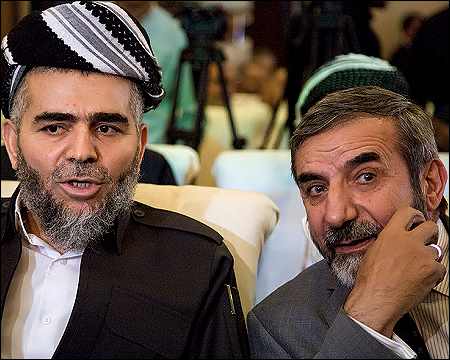
In the Kurdistan Region, Islamic political parties such as the Islamic Movement of Kurdistan (IMK) [Bizûtinewey Îslami], the Kurdistan Islamic Union (KIU) [Yekgrtu], and the Kurdistan Justice Group (KJG) formerly Kurdish Islamic Group KIG (Komal) have emerged, along with Salafi movements. In addition, the family of Sheikh Abdul Karim Karbajnaei has religious lodges and centers in Sulaimani Province and has many followers in southern Iraq and Iran as well.
Supporters of this view believe that these movements and groups have significant negative effects on Kurdish society. They argue that these groups serve the agendas of states that are hostile to the Kurds and seek to weaken national identity by connecting individuals to foreign countries through religious discourse. They believe that true Muslims are those who attend mosques and practice their faith without belonging to political Islamic parties or movements.
What is the role of Islamists and mosques today?
According to this viewpoint, most Islamic groups and parties in the Kurdistan Region, except ordinary worshippers, are connected to foreign countries or outside organizations and operate according to their agendas in exchange for benefits they receive.

In other words, they are accused of using religion as a form of political investment. The Kurdistan Islamic Union KIU is criticized as being an extension of the Muslim Brotherhood. It is also claimed that some of these parties received support from Gulf countries after the 1991 uprising and built large mosques to gain public support, while their assistance often went mainly to their members and supporters.
Some of these groups are accused of focusing on teaching children the Quran at an early age and imposing certain religious practices on them, which critics view as an attempt to influence their thinking. Those who hold these criticisms argue that such practices have weakened social relationships and created divisions among people, whereas in the past mosques brought together different segments of society in a single row for prayer and unity.
Today, it is claimed that some mosques are linked to specific parties or movements and that there are differences in the way prayers and religious rituals are performed from one group to another. Critics argue that these divisions are not based on clear Quranic texts but have contributed to disagreements within Kurdish society and have been used to serve political interests.

These critics further argue that some Islamic parties have succeeded in influencing public awareness to the extent that national identity has weakened among some individuals. They point to donation campaigns for Gaza organized by Islamic organizations and question how the aid is delivered and whether the same organizations would be equally willing to collect donations for Kurds affected by wars and ISIS attacks.
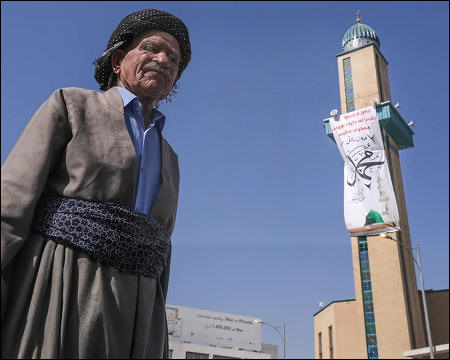
Criticism is also directed at the idea that strong faith requires performing prayers in congregation at the mosque, with opponents arguing that this encourages people to fund the construction of more mosques. It is noted that the number of mosques in the Kurdistan Region has reached approximately 6,300, a figure that supporters of this view consider extremely high relative to the population.

They ask whether the mosque is a center for knowledge and production. Does it produce goods, treat patients, or provide jobs? Why do people donate more money to building mosques than to building schools, when schools are considered a source of scientific and educational progress?
They call for comparing the level of development in Islamic countries with large numbers of mosques to countries with fewer mosques, arguing that having more mosques does not necessarily mean greater progress or more worshippers. In their view, the mosque is a place for worship and prayer, and people can also pray and call upon God in their homes.
These critics believe that enemies of the Kurdish people have used some Islamic movements to influence public awareness. They do not call for eliminating the role of mosques, but they ask the Ministry of Endowments to develop plans that regulate mosque construction according to population needs and prevent uncontrolled expansion.
They also point to mosques built in unsuitable locations within the city of Sulaimani that have caused traffic problems and question the need for several mosques to be built very close to one another.
Reasons for the large number of mosques in the Kurdistan Region, according to this viewpoint:
- The influence of Islamic parties, movements, and groups on society through programs that are believed to weaken Kurdish national unity.
- The desire of some individuals to gain social recognition by building mosques.
- Financial benefits gained by some parties from donation campaigns intended for mosque construction.
- The use of mosque-building projects to obtain tax exemptions or economic advantages.
- Funding from some Gulf countries for mosque construction projects in Kurdistan as part of political or ideological goals.
- The benefit gained by Islamic movements from political disputes between major Kurdish parties, such as the Kurdistan Democratic Party and the Patriotic Union of Kurdistan, and the resulting mutual support and political interests.
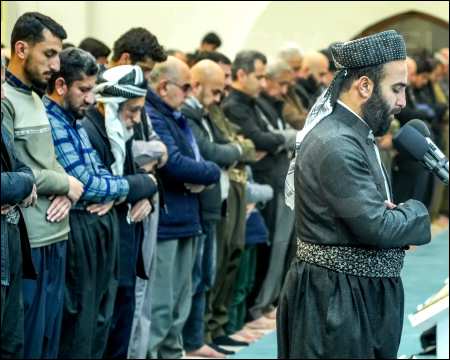
Supporters of this viewpoint also criticize the Salafi movement and some of its leaders, arguing that they have benefited from internal political divisions.
They believe that the issue is not simply the large number of mosques, but what they see as the political use of religion and the long-term social and cultural effects this has on Kurdish society.
In conclusion, this viewpoint raises a question about development priorities. Instead of building new large mosques, would it not be better to direct some of these funds toward hospitals, schools, and centers that treat serious illnesses? The example of Al-Amal Hospital for cancer patients is given, where donations could help provide medicines and treatments that patients need more urgently than additional mosques in areas that already have many of them.
Supporters of this view believe that faith does not depend on the number of mosques and that increasing the number of mosques does not necessarily increase religious commitment, just as having fewer mosques does not mean Islam is declining. They emphasize that exploiting religious feelings for financial or political gain is unacceptable and call on Muslims to think critically and avoid being influenced by any group that uses religion to serve its own interests.
Salih Zhajlayi, one of the political figures in Sulaimani city, Iraqi Kurdistan, and formerly the Deputy Head of the General Assembly of the Gorran (Change) Movement, is currently working independently in Sulaimani.
This article was originally published in the Kurdish language in Awene Newspaper on July 3, 2026.
The opinions are those of the writer and do not necessarily represent the views of iKurd.net or its editors.
Copyright © 2026 iKurd.net. All rights reserved.
Related posts:
 Iraq: Revenge and Corruption
 The 19th Anniversary of the U.S. Invasion of Iraq, 20 March 2022
 Syria: The Hijacking of the Arab Spring: From ISIS to Hayat Tahrir al-Sham
 The Resurrection (Ba’ath) Party – Before the Iran-Iraq War
 Ocalan’s Secular Lens on a “Democratic Islam”
 Business with ISIS – Updated
 Sabotaging Syria
 Turkey is building mosques in Yazidi villages in Syria’s Kurdish Afrin: Human rights organization
 Iraqi Kurdistan builds hundreds of mosques as education, health lag
 Saddam Hussein’s Enemies: Paving the Road to the Invasion of Iraq