

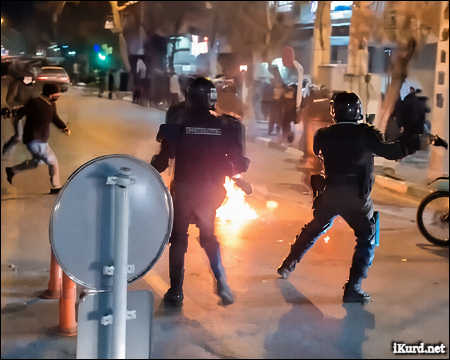
TEHRAN,— Iran’s ongoing unrest has resulted in more than 500 deaths, a rights organization said, as Iranian leaders warned they would strike U.S. military bases if Washington intervenes in support of protesters.
The demonstrations, which began in late December, mark the most sustained challenge to Iran’s ruling clerical system since protests in 2022. U.S. President Donald Trump has said repeatedly that the United States could intervene if Iranian authorities intensify their crackdown.
The Human Rights Activists News Agency, a U.S.-based group that tracks unrest in Iran, said it had confirmed the deaths of 490 protesters and 48 security personnel.
HRANA said more than 10,600 people had been arrested during nearly two weeks of protests, citing information from activists inside the country and abroad.
Iran has not released official casualty figures. Reuters said it was unable to independently verify the numbers provided by HRANA.
A U.S. official told Reuters that Trump planned to meet senior advisers on Tuesday to review potential responses to the situation in Iran. The Wall Street Journal reported that discussions included possible military action, cyber operations, tougher sanctions, and assistance to opposition groups seeking to evade censorship.
Trump told reporters aboard Air Force One that the military was reviewing options. He said he had communicated with Iranian opposition figures and claimed Iranian leaders contacted him on Saturday to discuss negotiations. Trump said talks could take place, without offering further details.
Iran’s Parliament Speaker Mohammad Baqer Qalibaf cautioned Washington against what he described as a strategic mistake. He said that if Iran were attacked, Israel and all U.S. military bases and naval forces would be considered legitimate targets. Qalibaf previously served as a senior commander in the Revolutionary Guards.
The unrest began on December 28 after sharp increases in prices, before evolving into broader opposition to Iran’s clerical leadership, which has governed since the 1979 revolution.
Iranian officials blamed the United States and Israel for fueling the protests. State media said authorities called for nationwide demonstrations on Monday to condemn what they described as terrorist actions directed by Washington and Israel.
Iran has imposed widespread internet restrictions since Thursday, making it difficult to verify information. Trump said on Sunday that he would speak with Elon Musk about restoring access through the Starlink satellite system.
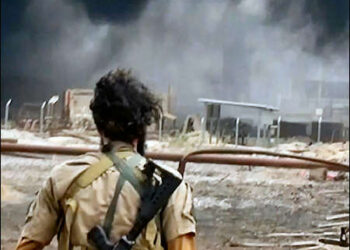
Videos circulating on social media showed large nighttime crowds in Tehran chanting and clapping. In one clip, a man described the crowd as stretching beyond view. Other footage from Mashhad showed smoke rising from street fires, masked protesters, and debris covering roads, with explosions audible. Reuters said it verified the locations of the footage.
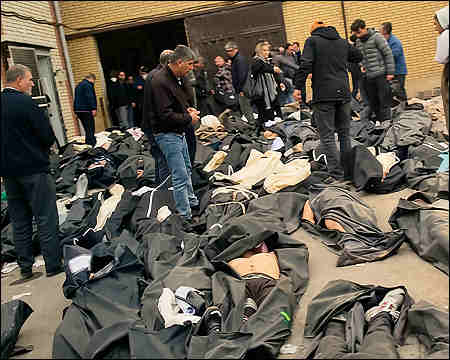
Iranian state television broadcast images from Tehran’s coroner’s office showing rows of body bags, describing the victims as casualties of attacks carried out by armed terrorists. Footage also showed families waiting outside the Kahrizak Forensic Medical Centre in Tehran to identify bodies.
U.N. Secretary General Antonio Guterres said he was shocked by reports of violence and urged Iranian authorities to exercise restraint. In a post on X, he said the rights to free expression, association, and peaceful assembly must be upheld.
Authorities declared three days of national mourning to honor those described by state media as martyrs killed resisting the United States and Israel.
Israeli officials said the country was on high alert amid the possibility of U.S. involvement. Israel and Iran fought a brief war in June 2025, when the United States joined Israeli strikes on Iranian nuclear facilities. Iran responded by launching missiles at Israel and a U.S. base in Qatar.
Iranian leaders have labeled protesters as rioters and terrorists. President Masoud Pezeshkian said in a televised interview that Iran’s enemies were orchestrating unrest and bringing in militants who attacked mosques, banks, and public buildings.
Pezeshkian urged families to prevent young people from joining violent groups. He said the government was prepared to listen to public concerns and address economic issues.
Iran summoned Britain’s ambassador on Sunday over comments attributed to the British foreign minister and an incident involving a protester removing Iran’s flag from its embassy in London and replacing it with a pre-1979 version. Britain’s Foreign Office did not immediately respond to requests for comment.
Alan Eyre, a former U.S. diplomat and Iran analyst, told Reuters the protests were unlikely to overthrow Iran’s leadership. He said the ruling elite appeared unified and there was no organized opposition, though the unrest could weaken the system over time.
State television broadcast funeral ceremonies in western cities including Gachsaran and Yasuj for security personnel killed during the protests. It said 30 security members would be buried in Isfahan, while six others were killed in Kermanshah.
Trump said on social media that the United States was prepared to support Iranians seeking change. An Israeli source said Trump discussed possible intervention with Israeli Prime Minister Benjamin Netanyahu and U.S. Secretary of State Marco Rubio.
Support rallies were held in the United States. In Los Angeles, a rental truck drove into a crowd during a demonstration in the Westwood area, according to KNBC. Police said the driver was detained and those injured were treated at the scene.
Reza Pahlavi, the U.S.-based son of Iran’s former monarch, praised protesters’ actions and urged them to continue demonstrations in a message posted online.
(With files from Reuters)
Copyright © 2026 iKurd.net. All rights reserved.
Related posts:
 The Assassination of Abdurrahman Ghassemlou: No Friends but the Mullahs?
 The Resurrection (Ba’ath) Party – Before the Iran-Iraq War
 The Sun Also Rises in Western Iran
 Saddam Hussein was a Friend to the West
 Four Kurdish protesters killed in Iran’s Kurdistan: rights groups
 Business with ISIS – Updated
 Iran, a Failed Country by Enemies Within
 US and Israel launch wide ranging attack on Iran
 Iran Regime Change Vs. Map Change
 The Suffocation of Iraq Kurdistan