

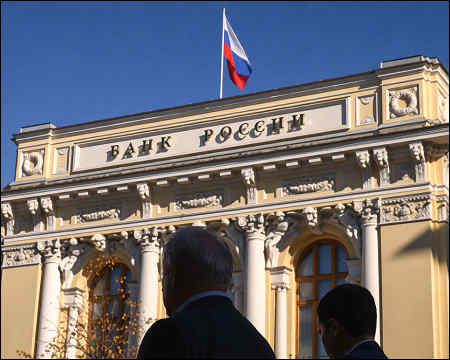
BRUSSELS,— The European Union on Friday agreed to freeze Russian central bank assets held in Europe for an unlimited period, removing a key obstacle to plans aimed at financing Ukraine’s defense and government operations.
EU governments approved the move to keep about 210 billion euros, or roughly $246 billion, in Russian sovereign assets immobilized for as long as necessary.
Until now, the asset freeze required renewal every six months, leaving the policy exposed to internal political disagreements.
European officials said the decision eliminates the risk that one or more member states could block an extension of the freeze, which would have forced the EU to return the funds to Russia.
Hungary and Slovakia have previously expressed skepticism toward sanctions against Moscow.
The European Union froze Russian state assets after Russia launched its full-scale invasion of Ukraine in 2022.
EU leaders view the conflict as a threat to European security and have repeatedly said maintaining financial support for Kyiv is a strategic priority.
The indefinite freeze is intended to support a broader plan to use the assets as backing for a major loan to Ukraine.
Under the proposal, the EU would provide up to 165 billion euros to cover Ukraine’s military expenses and civilian budget needs during 2026 and 2027.
The loan would only be repaid once Russia compensates Ukraine for damage caused by the war. EU officials say this would effectively advance future reparations, making the loan function similarly to a grant.
Belgium has been central to discussions because most of the frozen assets, about 185 billion euros, are held by Euroclear, a Brussels-based securities depository.
Belgian authorities have sought firm guarantees to protect the country from potential legal claims by Russia.
EU leaders are scheduled to meet on December 18 at a European Council summit to finalize the structure of the loan and address outstanding concerns. These include assurances that Belgium would not bear financial responsibility alone if Russian lawsuits succeed.
European Commissioner for Economy Valdis Dombrovskis said the European Commission was working with member states to provide strong legal and financial safeguards.
Denmark, which holds the rotating EU presidency, said progress was being made. Danish Finance Minister Stephanie Lose told reporters that some issues still needed to be resolved but expressed hope that leaders could reach agreement next week.
Germany has emerged as one of the strongest supporters of the plan. European diplomatic sources said Berlin sees no viable alternative and is prepared to offer guarantees worth 50 billion euros.
Ahead of the summit, Ukrainian President Volodymyr Zelensky is expected to travel to Berlin for talks with German Chancellor Friedrich Merz. The German government said additional European, EU, and NATO leaders would join discussions later.
Ukrainian Prime Minister Yulia Svyrydenko welcomed the decision in a statement posted on the social media platform X. She said the move strengthened the legal basis for the reparations-based loan mechanism.
Hungarian Prime Minister Viktor Orban criticized the decision, saying the use of a qualified majority vote would cause lasting damage to the European Union.
Such a vote requires support from at least 15 member states representing 65 percent of the EU population.
Orban said Hungary would seek to restore what he described as a lawful framework.
Russia’s central bank said the EU’s plans were illegal and reserved the right to defend its interests. EU officials dismissed the comments.
The Russian central bank also said it had filed a lawsuit in a Moscow court against Euroclear, accusing the firm of restricting its ability to manage funds and securities.
Euroclear has faced similar legal action since the assets were frozen in 2022.
Separately, the Financial Times reported that Ukraine could join the European Union by January 1, 2027, under proposals discussed in U.S.-mediated talks aimed at ending the war. Several European diplomats said such a timeline would be extremely difficult to achieve.
(With files from Reuters)
Copyright © 2025 iKurd.net. All rights reserved.
Related posts:
 EU to borrow for Ukraine, scrap plan to use Russian frozen assets
 Kurdistan and $5 Billion international loan dilemma
 Did President Putin read Brezhnev’s book on Afghanistan prior to invading Ukraine?
 What makes a good NATO ally? The Case of Turkey
 Trump calls Zelensky ‘a dictator’, tells him to act fast for peace or lose Ukraine
 Ukrainian forces gain ground in Russia’s Kursk region
 The Dangers of Banning Cash: A Threat to Financial Freedom
 The Resurrection (Ba’ath) Party – Before the Iran-Iraq War
 War in Ukraine is a Gateway in Defense of Democracy
 Russia, U.S. agree to work on ending war in Ukraine