

Sara Hussein | Exclusive to iKurd.net
Dubai’s rise is often described as one of the greatest success stories of the modern world. In just a few decades, the city transformed itself from a small trading port into a global center for tourism, finance, luxury living, and international business. Its skyline, filled with iconic skyscrapers, is not simply architecture but a declaration of ambition, stability, and prosperity.
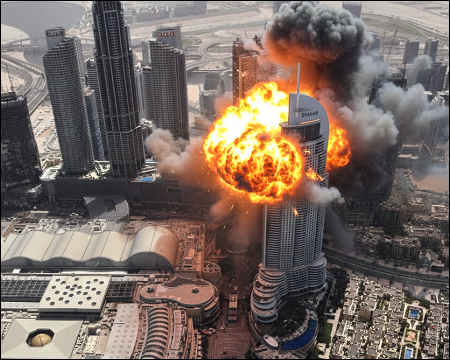
However, this success is also fragile. Even a few missile strikes targeting only skyscrapers, without causing casualties or damaging wider infrastructure, could be enough to end Dubai’s golden era by destroying the one thing the city depends on most: confidence.
Dubai’s economy is built on perception. Investors, tourists, companies, and expatriates choose Dubai not because they must, but because they believe it is safe, stable, and future-proof. The moment missiles strike skyscrapers, even in a limited and controlled scenario, that belief begins to collapse.
The question would no longer be how much damage occurred, but whether Dubai can still guarantee safety in the future. Once doubt enters the global narrative, it spreads faster than facts.
Tourism would be among the first sectors to suffer. Dubai is a discretionary destination. Families, luxury travelers, and international visitors have countless alternatives across Europe, Asia, and North America. Even without casualties, images of damaged skyscrapers would dominate global media.
Tourists would postpone trips, airlines would quietly reduce routes, and major events, exhibitions, and conferences would relocate to cities perceived as safer. Hotels would experience long-term declines in occupancy, not because Dubai lacks attractions, but because perception has shifted. A city built on global confidence cannot afford prolonged hesitation from visitors.
The real estate market would face even deeper consequences. Property investment is the backbone of Dubai’s economy and a major driver of its growth narrative. Foreign buyers, who fuel much of the high-end real estate demand, would immediately pause purchases. Existing investors might rush to exit, fearing further instability.
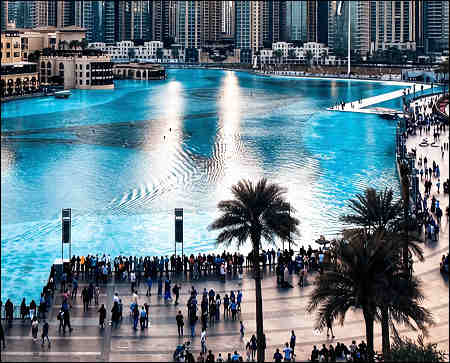
Property prices would fall, luxury towers would struggle to attract buyers, and large-scale projects could be delayed or canceled entirely. Insurance premiums would rise sharply, financing would tighten, and speculative investment would dry up. Once people stop buying property in Dubai, the illusion of endless growth disappears.
Corporate confidence would follow a similar trajectory. Dubai’s success as a business hub depends on predictability, security, and continuity. After missile strikes on skyscrapers, multinational companies would reassess risk exposure. Regional headquarters would quietly move to alternative cities.
Financial institutions would transfer key operations elsewhere. Skilled professionals would hesitate to relocate, and existing talent might seek opportunities abroad. Capital does not wait for reassurance, it moves immediately toward safety. The departure of companies would weaken employment, reduce demand across sectors, and accelerate economic slowdown.
Dubai’s expatriate population would be especially sensitive to these developments. The majority of residents are not citizens and have the ability to leave quickly. Skilled professionals, entrepreneurs, and workers would reassess their long-term plans.
As companies relocate and property values decline, expatriates would take their savings and expertise elsewhere. Construction activity would slow, consumer spending would fall, and service industries would shrink. This would not happen overnight, but as a steady and damaging outflow that erodes the city’s economic foundation.
Internally, Dubai is exceptionally secure. Its law enforcement, surveillance systems, and internal security infrastructure are among the best in the world. Crime rates are low, public order is strong, and internal threats are effectively managed.
This achievement deserves recognition and praise. However, internal security does not protect against external missile threats. A ballistic or aerial strike is not prevented by policing or surveillance. It bypasses domestic security entirely and strikes at symbols of national success.

This exposes a critical vulnerability. Dubai currently lacks a dedicated sky defense network designed to intercept missiles before they reach urban targets like Israel’s Iron Dome. Israel’s model demonstrates how layered interception can protect not just lives, but economic stability and national confidence. Dubai, as a global city in a volatile region, faces similar strategic realities and cannot ignore them.
Dubai also cannot rely on financial influence or diplomatic relationships alone to neutralize all political or regional threats. Economic power does not stop missiles. Stability cannot be outsourced indefinitely.
Long-term security requires proactive investment in defensive capabilities that match the scale and importance of the city. A multi-layered air defense system, similar to the Iron Dome and David’s Sling, would provide protection for critical landmarks, maintain investor confidence, reassure tourists, and preserve the city’s global image.
The destruction caused by missile strikes on skyscrapers would not be measured only in physical damage. Steel and glass can be rebuilt. What cannot be easily rebuilt is trust. Once the skyline becomes a symbol of vulnerability rather than ambition, the psychological damage lingers.
Investors remember losses, tourists remember fear, and corporations remember instability. The global narrative would shift from admiration to caution, and that shift could last for decades.
Dubai would not collapse overnight. There would be no immediate ruin or chaos. But the era of effortless growth, unchecked optimism, and universal confidence would come to an end. Growth would slow, risk premiums would rise, and the city would have to fight harder for every dollar of investment and every visitor. The golden era, defined by momentum and belief, would be over.
In a city built on perception, the loss of belief is the greatest catastrophe of all. Without proactive measures such as a multi-layered air defense system modeled on the Iron Dome, Dubai risks allowing a small external shock to create permanent economic and psychological damage.
The future of the skyline depends not only on ambition and investment, but on the ability to protect the symbols that define the city itself.
Sara Hussein, a Kurdish writer living abroad, she focuses on politics, culture, and religion. She is a contributing writer for iKurd.net.
The opinions are those of the writer and do not necessarily represent the views of iKurd.net or its editors.
Copyright © 2026 iKurd.net. All rights reserved
Related posts:
 Why Dubai Succeeded While Much of the Arab World Fell Behind
 Iraq – The Cynical Swindle
 Iraqi Kurdistan – “Sold Out!” – Part II
 The illusion of modernity: UAE’s crackdown on digital freedoms
 Iraq: Revenge and Corruption
 Nadhim Zahawi: Who Really is The New UK Chancellor?
 Saddam Hussein’s Enemies: Paving the Road to the Invasion of Iraq
 Business with ISIS – Updated
 The Resurrection (Ba’ath) Party – Before the Iran-Iraq War
 Iraq: A State of Surveillance – Databases, Tracking And Corruption