

Dubai’s Lesson: Oil Wealth Alone Was Never Enough
Sara Hussein | Exclusive to iKurd.net
Dubai’s rise did not happen in a vacuum, nor was it a matter of luck. It was the result of early recognition that oil alone could not secure the future. While much of the Arab world enjoyed decades of hydrocarbon wealth, Dubai treated oil as a temporary advantage, not a permanent solution.
The contrast between Dubai’s trajectory and that of many Arab countries today highlights a central truth: success favored those who acted early, opened up, and diversified, while others delayed, restricted, or clung to outdated models.
Dubai succeeded within the UAE largely because it was forced to think differently. With limited oil reserves, the emirate invested aggressively in trade, ports, aviation, tourism, finance, and real estate.
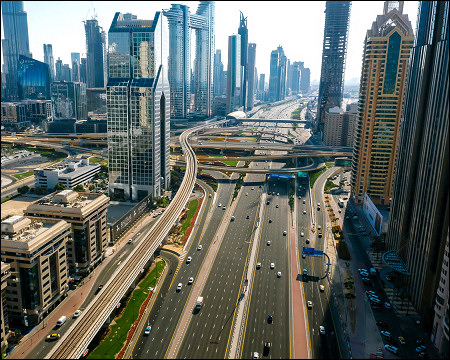
Jebel Ali Port, Emirates Airline, free economic zones, and a globally recognizable skyline were not accidental developments, they were part of a deliberate strategy to integrate Dubai into the global economy. Oil revenues helped start this process, but they were never meant to sustain it.
By contrast, many Arab states relied on oil as a long-term economic crutch. High prices masked inefficiency and discouraged reform. Governments expanded public-sector employment, subsidized consumption, and imported almost everything, from food to manufactured goods, rather than building productive domestic economies. When oil prices fluctuated or populations grew, structural weaknesses became impossible to ignore.
Saudi Arabia illustrates both the cost of delay and the potential of reform. For decades, the kingdom relied almost entirely on oil while maintaining a highly closed social and economic system. That model generated wealth but limited diversification and private-sector growth.

Today, Saudi Arabia is undergoing a historic transformation under Vision 2030, largely driven by the ambitious initiatives of Crown Prince Mohammed bin Salman. The country is opening up to tourists from around the world without limitation, welcoming visitors regardless of nationality, religion, or sexual orientation. It is developing entertainment sectors, reforming labor markets, and building mega-projects that aim to diversify the economy beyond oil.
What Saudi Arabia has achieved so far is a clear demonstration of Mohammed bin Salman’s vision, decisively moving the kingdom closer to the path that Dubai pioneered decades earlier. Yet it also reflects that the old model, based purely on oil dependence, was no longer sustainable.
Qatar presents a different case. Economically, it is extraordinarily wealthy, thanks to natural gas. It has modern infrastructure, a global airline, and international visibility after hosting the World Cup. However, Qatar explicitly promotes Islam as a core pillar of governance and applies Islamic laws more strictly than the UAE.
While this reflects the country’s chosen identity, it also limits its ability to replicate Dubai’s model. Qatar cannot succeed if it acts only as a promoter of strict Islamic religion, which prohibits all forms of entertainment such as alcohol, certain Western clothing, or lifestyle freedoms.
The FIFA World Cup in Qatar illustrated these challenges, a global sporting event that was widely criticized for its restrictions and controversies, highlighting the limits of hosting international events under strict religious constraints. Wealth alone has not translated into a diversified, people-driven economy seen in the UAE or increasingly in Saudi Arabia.
Kuwait, often called the old sick man of the Gulf states, is perhaps the most striking example of missed opportunity. One of the earliest Gulf states to modernize, Kuwait once led the region culturally and intellectually. Today, despite immense oil wealth, the country appears stuck in the past.
Strict Islamic laws, political gridlock, and resistance to reform have stalled development. Tourism is minimal, foreign investment is limited, and ambitious projects are often delayed or canceled. Kuwait continues to rely heavily on oil revenues while importing most goods and services, a model that worked in the past but offers little hope for the future.
Iraq, despite its vast oil wealth, faces deep challenges that prevent it from building a diversified economy. The dominance of Shi’a Islamic laws, combined with the ongoing rivalry between Sunni and Shi’a communities, has limited social openness.
Iranian influence, the presence of multiple militia groups, and entrenched corruption have further prevented Iraq from developing stable institutions and welcoming foreign investment. These issues make it nearly impossible for Iraq to replicate the models of the UAE or Saudi Arabia, where governance, planning, and openness have been key to sustained success. Like Kuwait, Iraq demonstrates that natural resources alone cannot guarantee prosperity without effective governance and social stability.
Bahrain, meanwhile, remains largely isolated like Kuwait, despite repeated statements about wanting to reduce its dependence on oil. Petroleum remains Bahrain’s most exported product, accounting for 60% of export receipts, 70% of government revenues, and 11% of GDP. The country has struggled to diversify its economy meaningfully, and its reliance on oil continues to hinder its ability to modernize and attract global investment.
Oman offers a quieter but instructive contrast. With modest oil resources, Oman focused on stability, cultural preservation, and tourism rooted in natural beauty and heritage. It did not chase spectacle on Dubai’s scale, but it opened itself to the world in a controlled, welcoming way.
As a result, Oman has become a respected destination for Western tourists seeking authenticity. Its experience reinforces the idea that diversification and openness matter more than raw wealth.
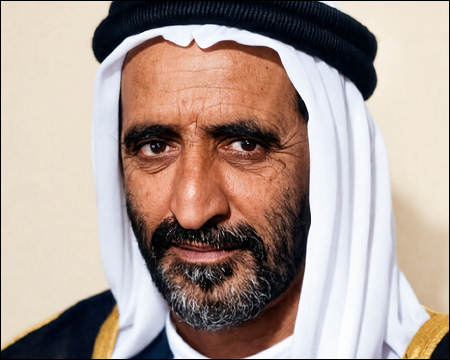
What ultimately set Dubai apart was not money, but mindset. The first answer lies in leadership with a long-term vision. From the earliest days of Sheikh Rashid bin Saeed Al Maktoum, Dubai’s rulers understood a fundamental truth: oil alone would never guarantee prosperity.
Dubai separated economic development from religious enforcement, allowing Islam to remain central to identity without restricting lifestyle, business, or tourism. It welcomed talent regardless of nationality or religion, prioritized efficiency over ideology, and built institutions that rewarded speed and execution. Tourism, entertainment, and global branding were embraced as economic tools, not moral threats.
Today, the lesson is unavoidable. Arab countries can no longer rely on oil to feed growing populations while importing nearly everything they consume. The old social contract, oil revenues in exchange for state employment and subsidies, is breaking down. Youth unemployment, fiscal pressure, and global competition demand new models.
Dubai did not abandon its culture to succeed; it adapted it. It did not reject religion; it prevented it from constraining economic reality. The countries now struggling are not lacking resources, they are lacking urgency.
The choice facing the Arab world is clear. Either learn from Dubai and the UAE, or continue postponing reform until the cost becomes unbearable. The future will not wait, and oil will not save those who refuse to change.
However, despite Dubai’s remarkable success story, the UAE continues to crack down on freedom, including freedom of speech, political expression, and digital rights.
In the Digital Age, this limitation on personal and digital freedoms remains a significant challenge, reflecting the tension between rapid modernization and strict governance controls.
Sara Hussein, a Kurdish writer living abroad, she focuses on politics, culture, and religion. She is a contributing writer for iKurd.net.
The opinions are those of the writer and do not necessarily represent the views of iKurd.net or its editors.
Copyright © 2026 iKurd.net. All rights reserved
Related posts:
 Saddam Hussein’s Enemies: Paving the Road to the Invasion of Iraq
 The Resurrection (Ba’ath) Party – Before the Iran-Iraq War
 Iraq – The Cynical Swindle
 Iraqi Kurdistan – “Sold Out!” – Part II
 The illusion of modernity: UAE’s crackdown on digital freedoms
 Saddam Hussein was a Friend to the West
 Business with ISIS – Updated
 How a Few Missiles Could End Dubai’s Golden Era
 Saudi Arabia to host 2034 FIFA World Cup
 Ocalan’s Secular Lens on a “Democratic Islam”