

Israel now bombing Islamic regime targets in Iranian Kurdistan as part of joint air war with US
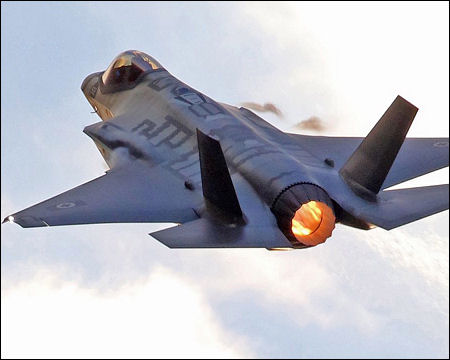
JERUSALEM,—Israel has conducted air strikes in Iranian Kurdistan, western Iran, as part of a coordinated campaign with the United States, targeting sites connected to Iran’s Islamic regime, according to three sources familiar with discussions between Israeli officials and Iranian Kurdish groups.
The strikes are reportedly intended to help Kurdish militias operating near the Iran-Iraq border.
The idea of a potential offensive by Iranian Kurdish forces operating from Iraqi Kurdistan drew attention last week when U.S. President Donald Trump told Reuters it would be “wonderful” if they crossed into Iranian territory.
The Kurdish insurgency could pose serious challenges for Iran, which is already facing U.S.-Israeli air operations.
Reuters previously reported that these militias have been consulting with U.S. officials on whether and how to engage Iran’s security forces.
Israeli Engagement with Iranian Kurdish Groups
Israeli officials have been in discussions with Iranian Kurdish insurgent factions based in Iraqi Kurdistan for about a year, two Kurdish sources with direct knowledge of the armed groups told Reuters.
An Israeli official familiar with the talks described the engagement as “long-term.” All sources requested anonymity.
Israel has not publicly acknowledged involvement with these groups during the current conflict.
According to the sources, the initial aim of the Kurdish factions is to seize territory along the Iran-Iraq border.
One source mentioned specific towns, including Oshnavieh and Piranshahr, as key objectives. The sources said thousands of fighters were gathering on the Iraqi side of the border, preparing for an offensive that could begin within a week, although Reuters could not independently verify these claims.
Independent estimates place the combined strength of the Kurdish militias at between 5,000 and 8,000 fighters.
They are lightly armed, but with support from the U.S. and Israel, they could create significant disruption along the frontier.
The Israeli source noted that Israel does not expect these groups to overthrow the Iranian government, but backing them could weaken Tehran’s control in remote areas and distract the Islamic Revolutionary Guard Corps.
Kurdish Alliance Formation

At the end of last month, six long-standing Iranian dissident Kurdish groups announced a formal alliance, the Coalition of Political Forces in Iran Kurdistan (CPFIK).
This includes the Kurdistan Free Life Party (Partiya Jiyana Azad a Kurdistane), known as PJAK, the Komala of the Toilers of Kurdistan party, the Khabat Organization of Iranian Kurdistan, the Democratic Party of Iranian Kurdistan, or PDKI, Komala Party of Iranian Kurdistan, and the Kurdistan Freedom Party (PAK).
It remains unclear whether these groups will receive support from Kurdish populations in Iraq. Officials in Iraqi Kurdistan have publicly denied any plans to deploy fighters across the border, despite reports of external pressure to participate.
The Israeli source said Iraqi Kurdish authorities had expressed opposition, making it difficult for Iranian Kurdish factions to mobilize without practical support. Trump’s comments on the potential duration of the war have also created hesitation among the militias.
Iran has recently targeted Kurdish armed groups inside Iraq, along with U.S. military bases in the area, and has warned Iraqi Kurdistan against hosting hostile forces along the frontier.
Kurdish Intelligence Support
The three sources said that Kurdish fighters inside Iran are providing intelligence on border areas to both the U.S. and Israel. Israeli analyst Jonathan Spyer told Reuters that Israel aims to “destroy the regime by any means available.”
Danny Citrinowicz, a former Israeli intelligence officer and Iran expert, said an insurgency in Iran currently lacks broad support among Iraqi and Iranian Kurds. “I think they’re all waiting to see if the regime will hold on or not,” he said.
Officials in Turkey and Iraq, wary of separatist movements among ethnic Kurds in their own countries, have also expressed reservations about any insurgency in Iran.
Citrinowicz added that supporting an uprising could backfire on the U.S. and Israel by fueling nationalism within Iran.
Israel has maintained discreet ties with Kurdish groups since the 1960s, including military, intelligence, and economic connections.
The Kurdish sources said the militias coordinate more closely with the U.S., but any cross-border attack would require Israeli and U.S. air support.
At present, the Kurdish groups have not received weapons, but they are expected to request air defense systems, drones, small arms, and artillery support.
Historical cooperation with the U.S. has sometimes been strained, and Iranian Kurdish leaders reportedly worry about being abandoned, citing the experience of Kurdish groups in northern Syria.
Both Iranian Kurdish sources said their long-term goal is to establish a semi-autonomous region within a federal Iran, modeled on the system in Iraqi Kurdistan.
Since its rise to power in 1979, the Islamic regime in Iran has enforced laws and policies that discriminate against Kurds across Iranian Kurdistan in social, political, and economic areas.
Kurds in Iran face restrictions on their religious, cultural, and economic rights. Parents are prohibited from registering certain Kurdish names for their children, while religious minorities with Kurdish populations are subjected to measures intended to stigmatize and isolate them.
The community also experiences barriers in employment, access to adequate housing, and political participation, contributing to long-standing poverty and further marginalization.
Estimates indicate that more than 12 million Kurds live in Iranian Kurdistan.
(With files from Reuters | Agencies)
Copyright © 2026 iKurd.net. All rights reserved.
Related posts:
 The Resurrection (Ba’ath) Party – Before the Iran-Iraq War
 The Assassination of Abdurrahman Ghassemlou: No Friends but the Mullahs?
 The Suffocation of Iraq Kurdistan
 Business with ISIS – Updated
 The Mustashar and the Jash – A View from the Position of ‘Iraqi National Unity’ on the ‘Descendants of Treason’
 Saddam Hussein was a Friend to the West
 Saddam Hussein’s Enemies: Paving the Road to the Invasion of Iraq
 Iraq: Revenge and Corruption
 Iraqi Kurdistan – “Sold Out!” – Part II
 Iraq in the Shadow of Khomeinism – Part I: Baghdad And Erbil Under Threat