

Trump urges Kurdish forces to attack Iran amid US‑Israel war campaign
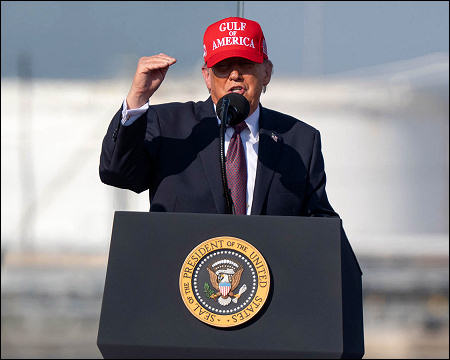
WASHINGTON,— U.S. President Donald Trump has encouraged Iranian Kurdish fighters in Iraqi Kurdistan region to launch attacks against Iran, as part of the broader U.S.-Israel military campaign targeting the Islamic Republic.
Trump told Reuters in an interview Thursday that he would back an offensive by Iranian Kurdish groups into Iran. “I think it’s wonderful that they want to do that, I’d be all for it,” he said, without specifying whether the United States would provide air support to Kurdish forces.
Military analysts note that Kurdish fighters could assist special forces in infiltrating Iran and potentially destabilizing the region.
Since the war between the United States, Israel, and Iran began on February 28, 2025, Tehran has carried out strikes against Iranian Kurdish groups based in autonomous Iraqi Kurdistan.
Iran accuses these groups of acting in the interests of Western nations and Israel.
Several Kurdish factions in Iran advocate for greater autonomy, angering the Islamic Republic, as well as some domestic opponents, including monarchists who insist on protecting the country’s territorial integrity.
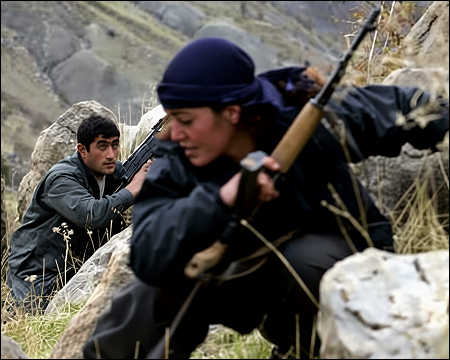
On February 22, several Kurdish-Iranian opposition groups based in Iraqi Kurdistan announced a new political alliance aimed at ending Iran’s Islamic Republic and advancing Kurdish self-determination. Six parties formed the Coalition of Political Forces in Iran Kurdistan (CPFIK).
Experts highlight that, unlike their counterparts in Iraq, Turkey, and Syria, Iranian Kurds have historically experienced less friction with Tehran. Yet they remain among Iran’s few armed and organized opposition groups.
On Friday, Israel said it carried out a wide-ranging series of strikes targeting infrastructure sites in Tehran. Gulf cities were also struck by Iranian attacks as the conflict escalates.
Analysts continue to watch the role of Iranian Kurdish groups, noting that their coordination with foreign forces could influence the wider military campaign.
Discrimination against Kurds in Iranian Kurdistan has persisted since the Islamic regime’s founding in 1979.
Kurds face restrictions in social, cultural, and political life. Certain Kurdish names cannot be registered for newborns, and religious minorities that are mainly Kurdish are subjected to measures that marginalize them.
Kurds also experience obstacles in employment, housing, and political representation, contributing to long-term poverty and social exclusion.
Current estimates place the Kurdish population in Iranian Kurdistan (Rojhelat Kurdistan) at over 12 million.
(With files from AFP | Reuters)
Copyright © 2026 iKurd.net. All rights reserved.
Related posts:
 The Resurrection (Ba’ath) Party – Before the Iran-Iraq War
 The Assassination of Abdurrahman Ghassemlou: No Friends but the Mullahs?
 The Suffocation of Iraq Kurdistan
 The Mustashar and the Jash – A View from the Position of ‘Iraqi National Unity’ on the ‘Descendants of Treason’
 The Sun Also Rises in Western Iran
 Kurds seek self-rule regardless of U.S. action on Iran: PJAK
 Business with ISIS – Updated
 Iran, a Failed Country by Enemies Within
 Iran – Toxic Theocracy – Part I
 Saddam Hussein was a Friend to the West