

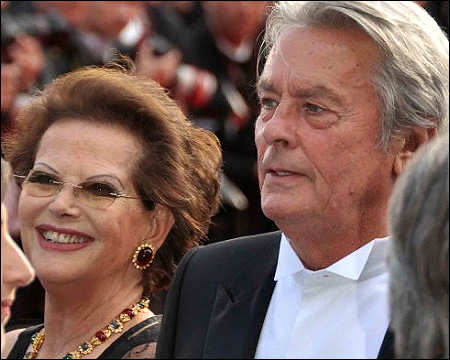
ROME,— Claudia Cardinale, the Tunis-born actress who rose to prominence as one of the most recognizable faces of European cinema in the 1960s, has died at the age of 87, according to French media reports including AFP.
According to her agent Laurent Savry, who confirmed the news to The Associated Press, Cardinale died in Nemours, France, with her children gathered around her.
Cardinale, born in 1938 into a Sicilian family in Tunis, entered the spotlight after winning a beauty competition in 1957. The prize brought her to the Venice Film Festival, which opened the door to an acting career that spanned more than six decades across film and theatre.
In her early years, Cardinale’s heavy Sicilian dialect and French schooling meant her voice was often dubbed in Italian films. Around the same time, she faced personal challenges, including a pregnancy at age 19. She gave birth to her son Patrick in London in 1958 but presented him publicly as her younger brother while her parents helped raise him.
Her breakthrough came in 1963, when she appeared in two landmark films: Federico Fellini’s 8½ and Luchino Visconti’s The Leopard, in which she starred opposite Burt Lancaster.
The two productions were shot simultaneously, forcing her to juggle different hair colors for each role.
Speaking to Britain’s Guardian newspaper in 2013, Cardinale reflected on the contrasting styles of Fellini and Visconti. “He (Fellini) couldn’t film without noise. With Visconti, the opposite. It was like theatre — absolute silence,” she said.
Her rising reputation soon carried her to Hollywood. She took on roles in Blake Edwards’ The Pink Panther and later in Sergio Leone’s western Once Upon a Time in the West in 1968, cementing her position as a global star.
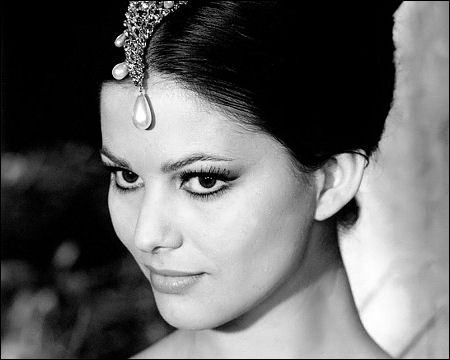
But the following decade brought difficulties. After ending her marriage to producer Franco Cristaldi and beginning a lifelong relationship with director Pasquale Squitieri, with whom she had a daughter, Cardinale found herself sidelined in the Italian film industry.
Reports at the time suggested Cristaldi used his influence to block her from projects, including a role in Visconti’s final picture The Innocent.
“It was a very delicate moment. I found out I had no money in my bank account,” she once said of that period.
Her career was revived when Franco Zeffirelli cast her in the 1977 miniseries Jesus of Nazareth. She later collaborated with European filmmakers such as Werner Herzog and Marco Bellocchio.
Known for her husky voice and independent spirit, Cardinale built a reputation for defying convention. She once met Pope Paul VI wearing a miniskirt, disregarding Vatican protocol.
In later years she divided her time between cinema and stage, winning critical praise for her theatrical work.
Cardinale remained active on screen well into her eighties, appearing in a Swiss television series, Bulle, in 2020.
In recognition of her career, she received a lifetime achievement award at the Berlin Film Festival in 2002. At the ceremony, she described acting as “a marvelous opportunity” to live many lives.
“I’ve been a prostitute, a saint, a romantic, every kind of woman,” she said. “I’ve worked with the greatest directors. They gave me everything.”
A biography published in 2022 was titled Claudia Cardinale. The Indomitable. She spent much of her life in France, where she was close to presidents François Mitterrand and Jacques Chirac.
Her death brings to a close one of the most remarkable chapters in post-war European cinema, remembered for a career that blended glamour, resilience, and artistry.
(With files from Reuters | AFP | AP)
Copyright © 2025 iKurd.net. All rights reserved
Related posts:
 The Resurrection (Ba’ath) Party – Before the Iran-Iraq War
 Brigitte Bardot, French cinema icon and 1960s sex symbol, dies at 91
 A Film Review of The President’s Cake (Le Gâteau du President)
 French cinema icon Alain Delon dies at 88
 Sabotaging Syria
 Italian fashion designer Giorgio Armani dies at 91
 Egyptian actor Hassan Youssef dies at age 90
 Kurdish director Mano Khalil wraps shooting on new film ‘Moments’
 Iraq comes full circle: The rehabilitation of Abd al-Karim Qasim
 Terence Stamp, British star of Superman movies, dies at 87