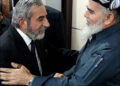



SULAIMANI,— The Komala Party of Iranian Kurdistan, under the leadership of Abdullah Mohtadi, announced Wednesday that it has joined the Coalition of Political Forces in Iran Kurdistan (CPFIK), a new alliance of Iranian Kurdish opposition groups.
The party’s political bureau released a statement confirming its decision.
Komala had previously decided not to join the coalition, but recent developments in the region led the party to change course. The statement emphasized that the escalating situation requires Kurdish parties to act in unity.
“Komala’s Political Bureau has decided to participate in the Coalition of Kurdistan Parties effective immediately,” the statement said.
Abdullah Mohtadi added on X that “this is very good news for the people of Kurdistan, who need to close ranks more than ever.”
On February 22, 2026, five Iranian Kurdish opposition groups announced the formation of the alliance.
The founding members include the Democratic Party of Iranian Kurdistan (PDKI), the Free Life Party of Kurdistan (Partiya Jiyana Azad a Kurdistane) (PJAK), the Kurdistan Freedom Party (PAK), Komala of the Toilers of Kurdistan, and the Organization of Iranian Kurdistan Struggle (Khabat).
The alliance aims to unify Kurdish efforts against the Islamic Republic and advance Kurdish self-rule in Rojhelat Kurdistan.
Komala said it has been actively involved in coalition talks over the past months. The party highlighted its demand for clear guidelines on organizing a “unified Peshmerga force of Kurdistan” and establishing “joint administration of Kurdistan in the transitional phase.”
The statement stressed that current regional tensions “more than ever, require unity, coordination, and joint work,” ending with the slogan, “Down with the Islamic Republic regime of Iran.”
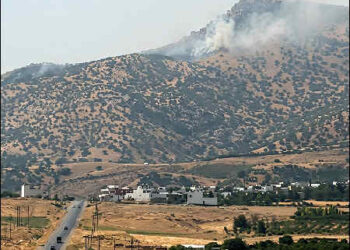
The timing coincides with a series of Iranian strikes on Kurdish opposition bases in Iraqi Kurdistan Region (Bahsur Kurdistan).
Reports suggest the United States is exploring the possibility of deploying Iranian Kurdish armed groups as part of its broader campaign in the region, including cooperation with Israel, with the goal of weakening Iran’s government.
US Secretary of Defense Pete Hegseth told reporters Wednesday that American objectives in the region are not based on supporting any particular force, when asked about backing Kurdish groups.
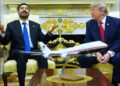
US President Donald Trump reportedly also spoke by phone with Mustafa Hijri, leader of PDKI, whose party operates in Iraqi Kurdistan.
Kurds in Iran have long experienced discrimination. Since 1979, the Islamic Republic has implemented laws that restrict Kurdish social, political, and economic rights. Kurdish cultural and religious freedoms are limited.
Parents are prohibited from registering certain Kurdish names for their children, and religious minorities that are partially or wholly Kurdish are often targeted by government policies.
Employment, housing, and political participation remain limited, causing entrenched poverty and marginalization among the Kurdish population.
More than 12 million Kurds are estimated to live in Iranian Kurdistan.
(With files from Agencies | Komala Party of Iranian Kurdistan | Rudaw)
Copyright © 2026 iKurd.net. All rights reserved.
Related posts:
 The Resurrection (Ba’ath) Party – Before the Iran-Iraq War
 Kurdish dissidents monitor Iran’s vulnerability as war ends
 What makes a good NATO ally? The Case of Turkey
 The Assassination of Abdurrahman Ghassemlou: No Friends but the Mullahs?
 The Suffocation of Iraq Kurdistan
 The Sun Also Rises in Western Iran
 Iranian Kurdish parties unite to defy Islamic republic
 Iraq: Revenge and Corruption
 Iraq in the Shadow of Khomeinism – Part III: Iraq is NOT Iran!
 Turkey: The Psychological War Against the Kurds Through the PKK – Part I