
TABQA,— Kurdish-led forces abandoned Syria’s largest oil field on Sunday as government Islamist troops expanded their control over northern and eastern regions, a monitoring group reported.
The withdrawal marks a major advance for the government in areas formerly held by Kurdish forces and raises concerns over the future of Syria’s northeastern territories.
The Syrian government, seeking to consolidate authority after the removal of Bashar al-Assad in 2024, has intensified efforts to regain control of areas seized by the Kurds during the fight against the Islamic State.
The Kurdish-led administration in Syrian Kurdistan (Rojava), which runs large parts of the northeast, criticized the government’s announcement and said that talks to integrate Kurdish forces into state structures have stalled for months.
Rami Abdel Rahman, head of the Syrian Observatory for Human Rights, told AFP that the Syrian Democratic Forces, or SDF, “withdrew from all areas under their control in the eastern Deir Ezzor countryside, including Al-Omar and Tanak oil fields.”
He said the pullback in Deir Ezzor and Raqa provinces occurred as local tribal fighters, including Arab members of the SDF, moved forward in coordination with government troops.
The Observatory said the areas are now effectively under the control of government forces. Al-Omar, Syria’s largest oil field, also hosted the United States’ biggest military base in the country and had been under Kurdish control since 2017, following the defeat of the Islamic State.
The Kurdish withdrawal from Al-Omar comes after the government announced it had retaken Safyan and Al-Tharwa oil fields in Raqa province.
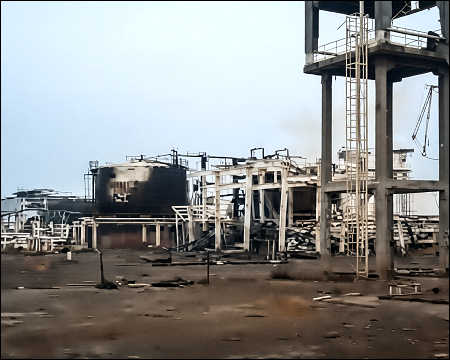
Energy Minister Mohammad al-Bashir described the reclamation of these resources as a step toward “opening the door wide for reconstruction, revitalizing agriculture, energy, and trade.”
In Aleppo, government militants pushed Kurdish forces from two Kurdish neighborhoods after clashes last week and secured new areas east of the city on Saturday.
In Raqa province, they captured Tabqa, located on the southwestern banks of the Euphrates River. The army also announced control over the Euphrates Dam, which houses one of Syria’s largest hydroelectric power stations.
A security source in Tabqa told AFP that army and security units were combing neighborhoods after the SDF pullback. An AFP correspondent saw armored vehicles and tanks deployed throughout the city while security personnel patrolled the streets.
Occasional gunfire came from limited clashes with remaining SDF fighters. Most shops were closed, though some residents ventured outside, lighting fires to stay warm.
Near the dam, Arab residents destroyed a statue honoring a Kurdish woman who fought against IS and died during the battle for Raqa city, once the jihadists’ main stronghold in Syria.
The Syrian government accused the SDF of blowing up two major bridges over the Euphrates. Meanwhile, the Kurdish administration claimed government Islamist forces attacked their fighters on several fronts.
The army countered, saying the SDF had not fully withdrawn from areas east of the river as agreed.
Public institutions in Deir Ezzor province were closed on Sunday, with officials urging residents to remain indoors.
The withdrawal followed a meeting on Saturday between US envoy Tom Barrack and Kurdish SDF leader General Mazloum Abdi in Erbil.
The US Central Command also called on government forces to halt offensive actions between Aleppo and Tabqa. Washington has long supported the Kurds but is also engaging with Syria’s Islamist authorities.
Turkey praised Syria’s operation, while imprisoned PKK leader Abdullah Ocalan described the government offensive as an attempt to undermine peace efforts with Ankara.
In Qamishlo, the main Kurdish city in Syrian Kurdistan, hundreds of residents demonstrated, chanting slogans such as “we will defend our heroes.” Demonstrators, including 48-year-old Muhayeddine Hassan, called for a democracy representing all Syrians. “If Sharaa wants equality, the killing must stop,” he said.
(With files from AFP)
Copyright © 2026 iKurd.net. All rights reserved.
Related posts:
 The Resurrection (Ba’ath) Party – Before the Iran-Iraq War
 Business with ISIS – Updated
 Iraqi Kurdistan – “Sold Out!” – Part II
 Sabotaging Syria
 Iraq – The Cynical Swindle
 Martyrs for Millionaires: The Black-Market Politics behind the Theft of Syria’s Oil
 Syria: A ‘Caliphate’ by Any Other Name — Would Smell the Same
 Syria: The Truth Lies Buried beneath an Edifice of Lies
 Syrian govt militias deploy to former Kurdish-held areas under ceasefire deal
 Turkey: Nato’s Islamic State Member