

The Importance of Consultation and the Role of Advisors in Life and Politics
Salih Zhajlayi | Exclusive to iKurd.net
Translated by iKurd.net from Kurdish Awene
First, let us define consultation: Consultation is the process of exchanging opinions, seeking facts, and receiving recommendations from experts and experienced individuals before taking any step or making any decision.
The importance of consultation in general is reducing mistakes, meaning that it prevents rushed and emotional decisions that may cause serious harm. It broadens perspectives by helping decision-makers view an issue from different angles, such as economic, social, political, and legal perspectives. It helps find the best option by examining the positive and negative aspects of each decision and choosing the best way to solve a problem.
What is the importance of consultation in politics?
Politics is a complex field in which decisions do not affect only one individual. Rather, they determine the fate of a people, a country, or a region. Protecting national security is one of the main roles of consultation because a wrong political decision, such as declaring war or entering into a mistaken alliance, can have serious consequences.
Political and military consultation becomes a safeguard. Consultation also helps leaders understand the balance of power and recognize the interests of regional and global countries so that their decisions do not lead to their isolation. It also gives legitimacy to decisions. When a leader consults different parties before making a decision, that decision is more likely to be accepted by the people and by competing groups.
What is an advisor, and where does the importance of their work lie?
An advisor is a specialist with knowledge and deep experience in a specific field, such as law, economics, international relations, or military affairs. The role of an advisor is not to make decisions, but rather to prepare information, analyze the situation, and present different options to the decision-maker.
The importance of an advisor’s work lies in the following:
First, filling the gap in knowledge. Leaders cannot be experts in every field. Advisors provide them with detailed scientific and technical information that they themselves may not know.
Second, explaining the possible consequences of a decision before it is made. Third, preparing roadmaps and plans. Advisors develop plans and strategies for how decisions can be implemented at the lowest cost and with the greatest benefit.
Therefore, consultation and advisors have great importance and influence in all areas of life, especially in the fields of politics and diplomacy, which have a direct connection with international stability. Here, I would like to ask this question: Do the current Kurdish leaders of Iraqi Kurdistan believe in consultation, or do they only believe in themselves?
Kurdish Leaders Still Stuck in the Tribal Age
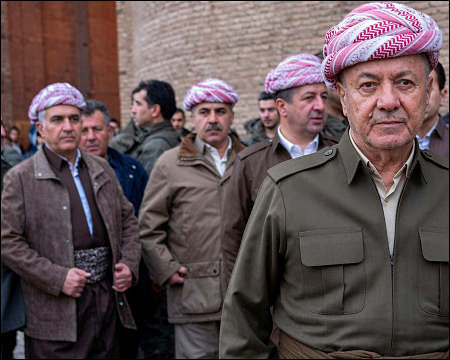
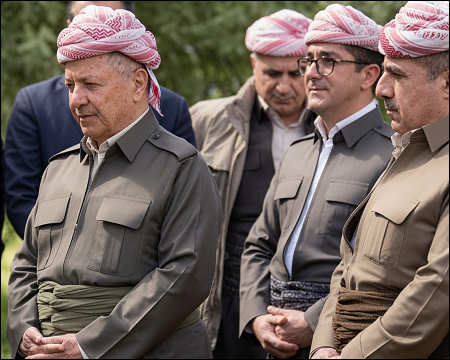
Kurdish leaders have not yet moved beyond the stage of tribes, clans, and tribal identity. Therefore, the concept of institutional and scientific consultation does not exist within the Kurdish political leadership. For this reason, most critical and destiny-shaping decisions are often made personally (individually) or within a very narrow party and family circle.
The reason behind ignoring scientific consultation goes back to the existence of tribal and patriarchal culture. The political culture in the region is still clearly influenced by tribal power and individual charisma. Leaders believe that they themselves know everything, and therefore they consider consulting others an insult to themselves.
Another reason Kurdish leaders do not consult others is related to the fact that Kurdish leaders came from armed struggle in the mountains, where quick decisions and one-sided military commands were common. Therefore, transferring this mentality to the management of a state and government has had negative consequences.
Another incorrect way of thinking among Kurdish leaders has been that they have placed loyalty before expertise. In other words, they have appointed advisors whose only role is to praise their decisions and say, “Whatever you say is correct,” rather than appointing someone who can provide constructive criticism and tell them the difficult truths.
Another weakness of Kurdish leaders is that they have not attempted to establish strong research centers. In developed countries, consultation is provided through institutions and research centers. In the Kurdistan Region, these centers either do not exist or are very limited, and political parties have become the source of consultation.
In short, until now, decision-making power in the Kurdistan Region remains in the hands of individuals and the political bureaus of the parties. The political bureaus of the two ruling parties are representatives of two families, and they implement their orders.
The only way for the Kurds to avoid political and diplomatic failures in the future is to end individual and emotional decision-making and replace it with institutional decision-making based on consultation and professional advice.

To understand that consultation and advisors have no real value in the eyes of Kurdish leaders, consider the following examples. First, Mullah Mustafa Barzani in 1975, based on his own decision and without consulting any other Kurdish leader, ended the September Revolution, even though there were many leaders who wanted to continue the armed struggle.
Second, if consultation and advisors had truly had any importance, August 31 would never have happened, and two separate administrations would never have been created.
Third, if consultation and advisors had any importance for Kurdish leaders, how could Massoud Barzani have made the decision to hold the referendum and then lost 51 percent of Kurdistan’s territory?
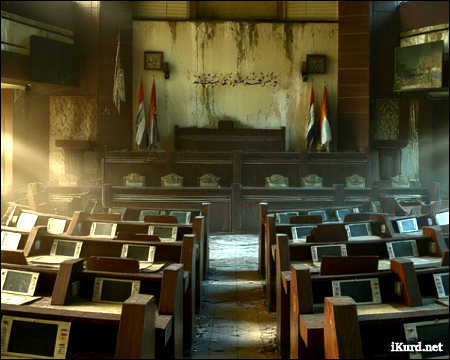
Fourth, if national interests and the future of the Kurdish people had been taken into consideration, and if Kurdish leaders truly cared about the Kurds, they would have listened to all those people who demanded the formation of a government. Nearly two years have passed since the parliamentary elections, yet a government has still not been formed because of the interests of the two ruling parties.
These are only a few examples from a much larger number of cases.
People who are truly political and loyal to their people and nation are those who consult knowledgeable and specialized individuals about every problem, issue, decision, and proposal so that they do not make mistakes, do not take wrong decisions, and do not cause great harm to their people and homeland.
However, this cannot be expected from today’s Kurdish leaders, because until now they have not moved beyond the stage of tribes and clans. For them, continuing the power of tribal leaders and traditional authorities is considered more important and necessary than having an institutional government built on the belief in consultation and professional advice.

The strange thing here is that while neither consultation nor advisors have any real value, importance, or influence among Kurdish leaders, when you look closely, you will find hundreds of people in the offices of Massoud Barzani, the Presidency of the Kurdistan Region, the government, parliament, and ministries who are called “advisors” and receive very large salaries, modern cars, houses, and other privileges.
These people were not appointed as advisors because they are experts or because their advice is actually sought. Rather, there are two reasons behind this. First, positions have been created for them in order to satisfy them. Second, their purpose is to polish the statements of leaders and present them in a better way to the public.
Kurdish leaders need people who defend their statements and support them, not people who inform them about their weaknesses, shortcomings, and the opinions of the people. Those who receive large salaries as advisors to the head of the Kurdistan Democratic Party do not actually convey public opinions.
Some of them have not even seen Massoud Barzani for more than two years. If, God forbid, an advisor wanted to meet Massoud Barzani for a personal matter, not to provide advice, they would need to obtain permission and wait for several months.
Therefore, Kurdish leaders consider themselves so intelligent, knowledgeable, powerful, and politically experienced that, in their view, listening to others and accepting advice from others is a sign of shame and embarrassment. May God have mercy on the Kurdish people living under the shadow of such uninformed leaders.
Salih Zhajlayi, one of the political figures in Sulaimani city, Iraqi Kurdistan, and formerly the Deputy Head of the General Assembly of the Gorran (Change) Movement, is currently working independently in Sulaimani.
This article was originally published in the Kurdish language in Awene Newspaper on July 17, 2026.
The opinions are those of the writer and do not necessarily represent the views of iKurd.net or its editors.
Copyright © 2026 iKurd.net. All rights reserved.
Related posts:
 Iraqi Kurdistan: The Emperors’ New Clothes
 Business with ISIS – Updated
 The Resurrection (Ba’ath) Party – Before the Iran-Iraq War
 Iraqi Kurdistan has better individuals than Massoud Barzani to lead
 The Mustashar and the Jash – A View from the Position of ‘Iraqi National Unity’ on the ‘Descendants of Treason’
 Massoud Barzani between corruption, political crisis, and psychology behind his actions
 The Kurds Will Never Succeed Without Great Leaders
 Who’s Really Arabizing Kurdistan? It’s Not Baghdad – Part II
 Iraqi Kurdistan – “Sold Out!” – Part II
 Barzani brothers spent over $100 million in U.S., OCCRP finds