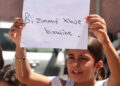



QAMISHLO,— After decades of marginalization under the Assad family’s rule, Kurds in Syrian Kurdistan are seeking to secure the cultural and political gains they have made during the country’s civil war, as a new government takes shape in Damascus.
For years, Kurdish identity was suppressed in Syria. Many Kurds were denied citizenship, and their language and traditions were restricted. But with the withdrawal of Assad government forces from much of the northeast following the 2011 uprising, Kurdish groups took control of the region, establishing a self-administration they call “Rojava Kurdistan,” or “western Kurdistan.”
Now, Kurdish leaders are in talks with Syria’s new authorities, hoping to preserve their autonomy and ensure a decentralized system that allows them to manage their own affairs. However, these efforts are threatened by ongoing conflict with Turkish-backed Islamist mercenary groups that launched an offensive against Kurdish forces in December.
Over the past decade, the Kurdish administration has introduced sweeping changes. Kurdish is now taught in schools, and cultural practices such as celebrating Newroz, the Kurdish New Year, are openly observed. Mothers can give their children Kurdish names without fear of repercussions.

“We have made all these gains. There is no way we will abandon them, even over our bodies and the bodies of our children,” said Amira Ali, a resident of Hassaka whose husband serves in the local Kurdish security force, known as Asayish.
The Kurdish-led Syrian Democratic Forces (SDF), backed by the United States, controls around 25% of Syria. But the region’s future remains uncertain as Kurdish authorities negotiate with Damascus, which is now led by former Islamist rebel factions.
The recent offensive by Turkish-backed Islamist militants, known as the Syrian National Army (SNA), has forced an estimated 100,000 people, mostly Kurds, from their homes, according to local authorities. The clashes have resulted in heavy casualties on both sides.
“We swear to God, displacement has killed us,” said Goulieh Abdu, 70, who has been forced to flee twice in the past two months. She now shelters in a repurposed government compound in Qamishlo after SNA shelling drove her from her home.

In Tel Rifaat, an area now under SNA control, some Arab residents who had been displaced over the years blamed Kurdish forces for their earlier expulsion.
“They took everything,” said Muhammad Kabso, 42, who came back to a damaged home and his once-thriving olive and pomegranate trees reduced to ashes. SNA fighters accuse Kurdish groups of having forcibly displaced Arabs from the region.
Kurdish officials argue they played a crucial role in the battle against the Islamic State (IS). The SDF was instrumental in defeating the group, culminating in the 2019 capture of Baghouz, IS’s last stronghold in Syria.
Thousands of SDF fighters lost their lives in the fight against IS and Turkish-backed forces.
More than 21,000 Kurdish men and women fighters lost their lives battling ISIS and Turkish-backed Syrian Islamist militias.

General Mazloum Abdi, the SDF commander, has called for a secular and decentralized Syrian state, where all citizens are treated equally. He has also demanded the repeal of laws that discriminated against Kurds and other minorities.
“Kurds were persecuted by previous authorities,” Abdi said. “We want a country where all people are recognized as Syrian citizens, not just Syrian Arabs.”
Western governments have urged Syria’s new rulers to respect minority rights, including those of the Kurds. However, Turkey, which sees the SDF as an extension of the Kurdistan Workers’ Party (PKK), has carried out multiple military incursions into Syrian Kurdistan since 2016, capturing swathes of land and displacing hundreds of thousands of people.
The uncertainty surrounding Syria’s new leadership has raised concerns about future Turkish military actions.

While some officials in Damascus have signaled a willingness to engage with the Kurds, others remain aligned with Turkish-backed factions.
As negotiations between Kurdish leaders and Damascus continue, both sides have expressed cautious optimism.
Syrian Foreign Minister Asaad al-Shibani recently shared a message in Kurdish on X, stating, “Together, we will build a nation where equality and justice are upheld for all.”
Despite this, many Kurds remain wary. Streets in Rojava are lined with photographs of fallen Kurdish fighters, a stark reminder of the sacrifices made in the struggle for autonomy.
Amina Hussein, 57, lit incense at her son’s grave, who was killed fighting IS in 2015, and said, “With God’s will, their sacrifice will not be in vain.”
For families displaced by the recent fighting, the future remains uncertain.
“All we have left is our souls. If they want to take that too, then let them,” said Elham Horo, who fled with her children and grandchildren from Tel Rifaat and now shelters in a makeshift camp in Qamishlo.
With Damascus consolidating power and Turkish-backed Islamist mercenaries maintaining pressure, the fate of Syrian Kurdistan hangs in the balance, as Kurds seek to safeguard their hard-fought gains in an increasingly complex political landscape.
(With files from AP)
Copyright © 2025 iKurd.net. All rights reserved
Related posts:
 Business with ISIS – Updated
 Turkey: Nato’s Islamic State Member
 Syria: A ‘Caliphate’ by Any Other Name — Would Smell the Same
 Syria: The West’s ‘Red Line’ Fiction – Think Tanks, Jihadists and the White Helmets
 The SDF–Damascus deal: A gamble over keys to Kurdish homeland
 The Resurrection (Ba’ath) Party – Before the Iran-Iraq War
 Damascus Should Realise That Only Way Forward is Through Talks
 Sabotaging Syria
 Syria: Revisiting The Caesar Torture Victim Photographs
 Turkey: The Psychological War Against the Kurds Through the PKK – Part I