


Serwan Zangana | Exclusive to iKurd.net
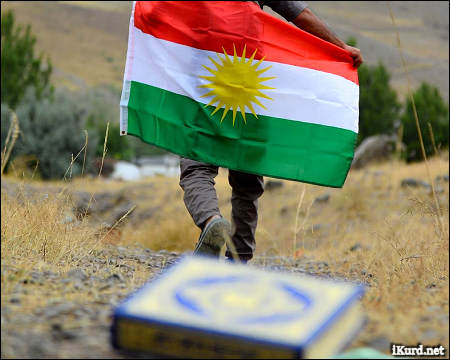
While the majority of Kurds are embracing the religion of Islam, it is important to realize that Islam is not a natural disposition of the Kurds, and that their unity is not necessarily based on one religion.
The history of the Kurds and their civilization is beyond Islam, and thus, unlike the Arabs in the peninsula, who practiced the belief of polytheism and idolatry, the Kurds did not live in a dark era, and indeed, centuries before Islam, they believed in monotheism as they practiced Zoroastrianism, with Ahura Mazda believed to be the only creator of the universe without any partner.
However, realizing that with the revelation of Islam, the life of the Arabs in the peninsula shifted to a brighter side from the era of ignorance (Jahiliyah), the Arab society evolved into a better and more humane environment as the slaves were given the opportunity for freedom, the poor were not oppressed as they were before the revelation, and overall, mercy and toleration were encouraged. But the problem began from the Arab invasions of the region’s nations, and further, to other continents.

The Kurds were not immune from such invasions, and throughout history, the Arabs attempted to undermine the Kurdish identity and dissolve it in the Arab nations. Speaking of the Kurdish nation is one of the most sensitive and forbidden subjects in the Middle East, as it agitates the majority of Arabs across the region.
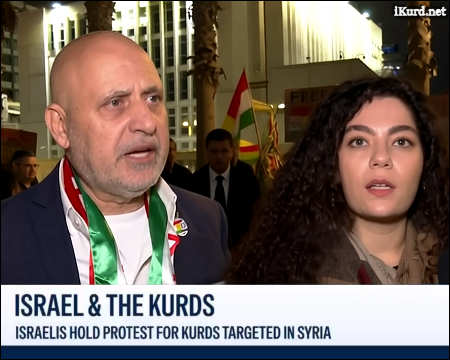
The matter of Kurdistan as a nation is a hot topic and is opposed by the majority of Arab Muslim leaders. In contrast, Israel has been supporting the Kurdish cause and struggle to obtain their ethnic freedom and political identity.
The heinous attacks on the Kurds in Syria by Ahmad al-Sharaa’s Islamic government were never condemned by the Arab and Muslim governments. But the Israeli leaders were vocal about the attacks as they, in fact, denounced Al-Sharaa’s military actions against the minority, including the Kurds.
When the Syrian government forces launched attacks on the Kurds in Aleppo in early January 2026, Israeli Foreign Minister Gideon Saar said, “Attacks by the Syrian regime’s forces against the Kurdish minority in the city of Aleppo are grave and dangerous.” He continued to say that the international community and the West “owe a debt of honor to the Kurds” as they fought the terrorist group Islamic State (ISIS).
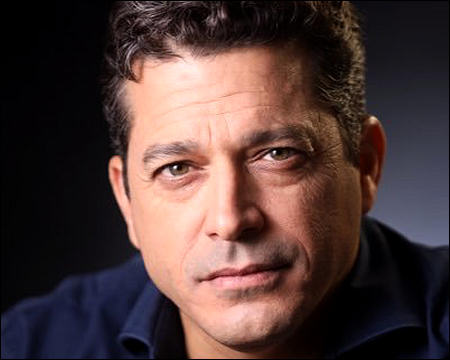
Furthermore, Israel’s Diaspora Affairs Minister Amichai Chikli strongly decried the terrorist acts of Al-Sharaa’s regime against the Kurds as he wrote on X, “The jihadist forces aligned with Erdogan and al-Julani are once again unleashing brutality against Kurds, as well as Druze and Alawite civilians.”
Obviously, in the beginning of the revelation of Islam, the Muslims’ intention and goal in the Arabian peninsula were to reform Arab society and change the Arab community from paganism to submit to Islamic rules and principles. But later, the religion of Islam was completely hijacked by the Arabs and politicized, and hence, bloodshed became part of the Islamic conquests “Al Futuhat Al-Islamiya”. Such actions of “Al-Futuhat Al-Islamiya” and also “Jihad” became pervasive, toxic philosophies of Islam.
However, by surrendering themselves to political Islam and organizing in Islamic political parties, the Kurds will only strengthen the political ideology of Islamic groups and the governments that oppose the Kurdish nation and gradually dilute the Kurdish culture into the Arab-Islamic culture.
The Kurds need to prioritize nationalist ideology over Islamism and prevent the influence of Arabs or other powerful Muslim governments of the region, such as Turkey and Iran.
Rejecting political Islam and the extreme Arab ideology by Kurdish intellectuals is necessary to protect the Kurdish culture from the invasion of chauvinistic and religious cultures that deny Kurdistan as a nation and attempt to amplify the idea of the Islamic Ummah, which is the unity of Islam in one nation. This is a complete hoax and an attempt to erase the Kurdish identity and the belief of establishing the Kurdish nation.
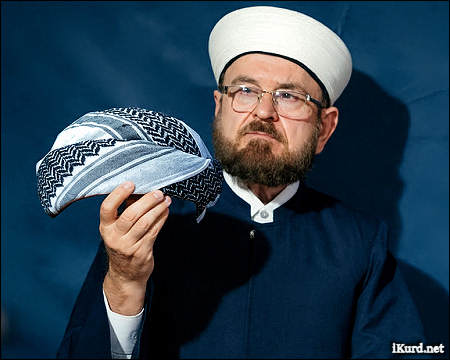
The Kurds must not sacrifice their identity for religion, as, in fact, Islam can be a choice in Kurdish society aside from the nation’s system. The Kurdish Islamic political parties have not been able to send a clear message about the Kurdish struggle, as establishing an Islamic system has been their goal and priority.
And in fact, such an ideology is benefitting Arabs and other non-Arab Muslim nations, such as Turkey and Iran, in bolstering their powers and the illegitimate case against the Kurds.
The Muslim nations in the Middle East have always viewed the Kurds’ independence and their political rights as a security threat, and in fact, to many nations, the establishment of Kurdistan is a geographical risk, which separates Kurdistan regions and unites them in one nation, and hence, in addition to the map changing, it affects those nations’ interests.
Regardless of the corrupt Kurdish political parties, specifically in Iraqi Kurdistan, and the frustration of the people in the region, the existence of nationalist or secular Kurdish parties would keep the Kurdish political identity floating better compared to the Islamic parties, as they allow such an identity to sink and disappear among the Muslims in general.

Learning from history is the key to preventing the recurrence of mistakes, and the Kurds definitely should apply such learning to their struggle. For example, the Kurdish Muslim leader, Salah al-Din al-Ayubbi (1137–1193), who fought for the cause of Islam, defeated the Crusaders, and recaptured Jerusalem, which was a victory for the Muslims only. Al-Ayubbi should not be a prominent leader in Kurdish history as he did not serve the cause of the Kurds.
The Kurds are in need of leaders to serve Kurdish nationalism principles, not the Islamic faith.
Serwan Zangana, a contributing writer for iKurd.net, lives in Virginia, U.S. He serves as a correction officer.
The views expressed are solely those of the author and do not necessarily reflect the opinions of iKurd.net or its editorial team.
Copyright © 2026 iKurd.net. All rights reserved.
Related posts:
 The Resurrection (Ba’ath) Party – Before the Iran-Iraq War
 Ocalan’s Secular Lens on a “Democratic Islam”
 Behind the Veil of Turkey’s ‘Zero Problem’ Policy – A Kurdish Perspective
 The Kurds Between the Holocaust and the Arab Conscience
 A Muslim cannot be a Kurd; a Kurd cannot be a Muslim
 The Absurd Cause For The Faili Kurds Holocausts – Part VIII
 Does Iraq Have a True Identity?
 Why “Arab” should be removed from Middle Eastern state names
 Iraqi Kurdish Islamic parties prioritize religion over national identity: Naqshbandi
 The Syrian Al-Jazeera Province: An Ethnic, Social and Political Study – Book