

Ali Ashouri | Exclusive to iKurd.net
Iran’s political and social situation stands at a critical yet unfinished moment. The signs of crisis are unmistakable, yet the trajectory of developments has not converged toward a stabilized horizon. On the one hand, social struggles are expanding, and diverse forms of protest, strikes, and civil disobedience are visible across cities and provincial towns.
On the other hand, these mobilizations have not yet culminated in the formation of a coherent, reliable democratic alternative. This gap between protest action and political articulation constitutes one of the defining features of the current conjuncture.
Recent protests indicate that social discontent has moved beyond isolated or sectoral demands and has begun to question the totality of the existing order of power. The simultaneous articulation of economic and political demands, alongside the transgression of symbolic red lines, signals a profound erosion of legitimacy. Yet this erosion has not translated into the reconstruction of a viable political horizon. Society is in motion, but this movement has not yet crystallized into a shared language, durable organization, or a clear political vision.
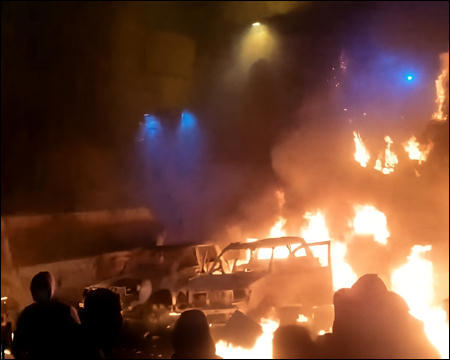
The response of power to this situation reveals the depth of the crisis more clearly than anything else. The Islamic Republic has increasingly resorted to overt violence: street repression, executions, and even attacks on spaces that, in any political order, ought to enjoy a minimum degree of inviolability, such as hospitals (Kurdish area—Ilam).
This level of violence demonstrates that the regime has truly lost its capacity to generate consent and meaning and now relies on the direct application of force upon bodies to preserve itself. Violence here is not a sign of stability; rather, it is a symptom of anxiety and exhaustion within an order that has fundamentally lost its bond with society.
In such a context, the expectation of a ready-made, pre-constructed alternative can itself be a misunderstanding of the logic of politics. In many historical experiences, political alternatives have emerged as products of struggle, not as its preconditions.
Democratic alternatives often take shape through shared experiences of repression, the formation of new solidarities, setbacks, and the continual re-articulation of collective action. From this perspective, the present situation should be understood as one “in the process of becoming,” a situation that has not yet reached its conclusion, and whose very incompleteness carries within it the possibility of transformation.
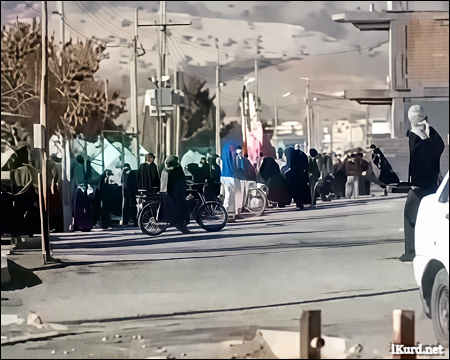
Within this process, the participation of different regions of the country in the protests is of particular significance. Large parts of Kurdistan, as well as areas of Baluchistan and other marginalized regions, have entered into a nationwide constellation of protest.
Historically positioned at the margins of the center, these regions have long been subjected to specific forms of repression, exclusion, and enforced silence. Their integration into a broader protest dynamic has pushed the movement beyond mere geographical dispersion and toward a more qualitative level—one in which diverse experiences of repression can be translated into a shared language of resistance.
The importance of this development lies in the fact that, if the link between center and periphery continues to deepen, it may lay the groundwork for a more democratic horizon. An alternative that emerges from such a process would necessarily be plural, decentralized, and attentive to difference.
Such an alternative understands power not as a singular, centralized entity, but as a network of unequal relations, and responds by generating new forms of social solidarity and collective organization. In this framework, the regime’s naked violence can paradoxically accelerate this process, as it strips the dominant order of its capacity for concealment and intensifies the imperative to name, confront, and resist it.
The current situation in Iran can thus be conceived as a field of tension among expanding struggles, the unrestrained violence of power, and the still-unrealized possibility of a democratic alternative. None of these forces alone will determine the future. What lies ahead is a suspended condition—one that is simultaneously exhausting and enabling.
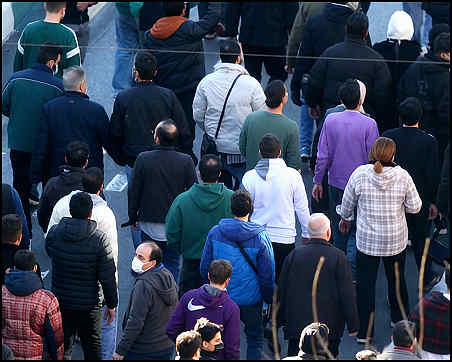
This unfinished character should not be read merely as a sign of weakness or failure. Incompleteness itself can function as a configuration of possibility: an opening for rethinking politics, solidarity, and democracy. If a different future is to emerge, it is unlikely to be imposed from outside or constructed according to obsolete models.
Such a future, if it is to exist at all, can only arise from shared experiences of struggle, newly forged connections, and the gradual reconstruction of collective action. The central question, ultimately, is whether the protest movement will be able to generate its own alternative from within—through this historical incompleteness—or not.
Postscript
Analyzing the role of external forces in relation to Iran requires a distinction between two different levels: diasporic activism and geopolitical intervention. Segments of the opposition abroad—particularly currents associated with Reza Pahlavi—have in recent years sought to revive and reframe the discourse of a return to the former political order (monarchy, in various forms and reinterpretations). These efforts have largely relied on media and political support from external actors, including Israel and specific factions within the United States power structure, while simultaneously maintaining connections with certain forces inside the ruling establishment and with segments of Iran’s social base.
At the international level, U.S. policy toward Iran is shaped by competing political forces within its own power structure, oscillating between pressure, negotiation, and balance-of-power calculations. The roles of China, Russia, and regional actors are likewise defined less by democratic concerns than by economic interests and strategic considerations, all of which directly or indirectly affect responses to Iran’s internal developments.
These external forces, in and of themselves, neither generate democratic possibilities nor carry emancipatory projects. On the contrary, in the absence of an alternative rooted in society itself, they may facilitate the substitution of one political order with another whose objectives and functions are different from—and even opposed to—popular demands. As emphasized in the main text, if a genuine alternative does not emerge from within the protest movement, such forces may impose a political arrangement that reflects their own priorities rather than the collective will of society.
Within this framework, Iranian social action continues to unfold amid external interactions and geopolitical balances. Nevertheless, the formation of durable and meaningful political alternatives ultimately rests primarily on internal collective action, social organization, and the strengthening of endogenous social bonds.
Ali Ashouri, a contributing writer for iKurd.net based in San Diego, California, U.S.
The views expressed are solely those of the author and do not necessarily reflect the opinions of iKurd.net or its editorial team.
Copyright © 2026 iKurd.net. All rights reserved.
Related posts:
 The Resurrection (Ba’ath) Party – Before the Iran-Iraq War
 Iraq: Revenge and Corruption
 The Suffocation of Iraq Kurdistan
 What makes a good NATO ally? The Case of Turkey
 Iraq in the Shadow of Khomeinism – Part III: Iraq is NOT Iran!
 Iran – Toxic Theocracy – Part I
 The Mustashar and the Jash – A View from the Position of ‘Iraqi National Unity’ on the ‘Descendants of Treason’
 The Assassination of Abdurrahman Ghassemlou: No Friends but the Mullahs?
 Iraq in the Shadow of Khomeinism – Part I: Baghdad And Erbil Under Threat
 Iran, a Failed Country by Enemies Within