

ERBIL,— Recent clashes between Syrian government Islamist forces and Kurdish forces in Syrian Kurdistan are being described by Kurdish officials as a “setback” and a “plot” aimed at undermining ongoing peace talks between Turkey and the Kurdistan Workers’ Party PKK.
Zagros Hiwa, spokesperson for the Kurdistan Communities Union (KCK), the PKK’s political wing, told AFP on Tuesday that the attacks against Kurdish areas in Syria were part of a broader conspiracy to derail negotiations rather than isolated security measures.
Hiwa said the situation in Syria and across the Middle East directly impacts Turkey’s peace process. He described the attacks on Kurdish forces as a deliberate “plot” against the negotiations and called them a clear setback for the talks.
Another senior PKK official confirmed this view, saying that policies targeting Kurds in Syrian Kurdistan (Rojava) are incompatible with any serious effort toward peace.
On Saturday, Syrian Islamist authorities and Kurdish forces agreed to extend a fragile truce by 15 days.
The ceasefire followed weeks of clashes in which Kurdish forces lost significant territory to Islamist units aligned with the Damascus government. Kurdish forces withdrew from all Arab-majority areas in northeastern Syria to Syrian Kurdistan, the country’s Kurdish region.
The Syrian Democratic Forces SDF, the de facto army of the semi autonomous region in Syrian Kurdistan that has operated independently of central state control for years.
Turkey maintains close political and security ties with Syria’s new Islamist leadership, which came to power after Bashar al Assad was removed in December 2024.
Damascus has since attempted to reassert control over the country, relying heavily on Ankara for support and coordination.
Analysts say the Damascus government has no independent decision-making power, with all key discussions directed from Ankara
At the same time, Turkey is pursuing renewed efforts to reach a settlement with the PKK after decades of armed conflict.
In 2025, the PKK announced it was ending its four decade insurgency in favor of democratic and political means. Progress has stalled amid ongoing clashes in Syria.
Turkey continues to accuse Syrian Kurdish forces of being linked to the PKK. Kurdish leaders, analysts, and independent observers reject this claim, stating there is no organizational or command connection between the SDF and the PKK.
Kurds make up nearly 30 percent of Turkey’s population of 85 million, yet the state still denies them constitutional recognition. Analysts say Ankara fears that the creation of a Kurdish autonomous region in Syrian Kurdistan could encourage separatist movements within its own Kurdish population.
Hiwa emphasized that the PKK’s commitment to the peace process is strategic, but he also stressed the importance of self defense. “The new strategy does not exclude the urgency of self defense,” he said.
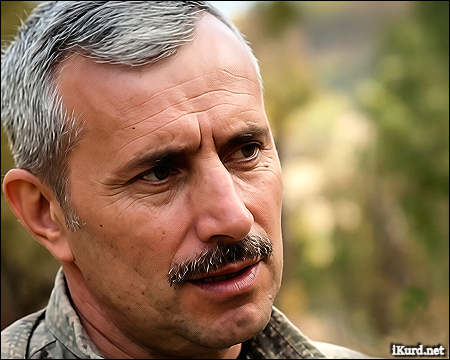
Senior PKK leader Murat Karayilan, speaking to Kurdish Sterk TV, warned Ankara that peace cannot be achieved while Kurds in Rojava Kurdistan are under attack.
His comments, relayed by Mezopotamya news agency, stated that expecting reconciliation with Kurds in Turkey while pursuing policies aimed at eliminating Kurdish structures in Syria is impossible.
Karayilan said genuine peace requires abandoning current policies and making fundamental changes. Last week, he vowed that the PKK would “never abandon” Kurds in Syria and would take all necessary measures to protect them if violence continues.
Some media report that hundreds of Kurds from Iraqi Kurdistan and Turkish Kurdistan have entered to Syrian Kurdistan to join Kurdish forces in defending the region.
(With files from AFP | Agencies)
Copyright © 2026 iKurd.net. All rights reserved.
Related posts:
 What makes a good NATO ally? The Case of Turkey
 Business with ISIS – Updated
 Turkey: The Psychological War Against the Kurds Through the PKK – Part I
 Turkey: Nato’s Islamic State Member
 The Resurrection (Ba’ath) Party – Before the Iran-Iraq War
 Syria: A ‘Caliphate’ by Any Other Name — Would Smell the Same
 PKK calls on Turkey to relax Ocalan’s prison conditions
 The PKK’s Personality Cult: Changing Influences – Part II
 The SDF–Damascus deal: A gamble over keys to Kurdish homeland
 Can Apo Save The Kurds?