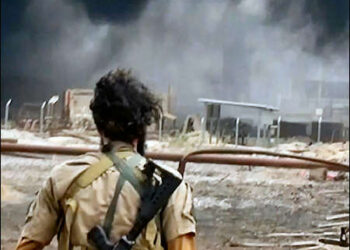



ERBIL,— Drone strikes blamed on Iran hit a camp on Tuesday in Iraqi Kurdistan that houses Iranian Kurdish fighters and their families, a local official and an exiled opposition group said.
The camp is located in the Kurdistan Region of Iraq (Bashur), which hosts camps and rear bases run by several Iranian Kurdish opposition groups.
These groups have repeatedly been targeted in cross border attacks that Iraqi Kurdish officials have attributed to Iran.
Tareq al-Haidari, a local official in the Koysinjaq district, told AFP that three Iranian drones struck the Azadi camp in the district. He said the camp belongs to Iranian Kurdish opposition parties.
One of the drones directly hit the camp hospital, wounding one person, Haidari said. A commander from the Democratic Party of Iranian Kurdistan PDKI confirmed the casualty.
Mohammed Nazif Kader, a commander of the PDKI, told AFP that drones and missiles were used in the attack. He said Iran was responsible.
The Koysinjaq district, known as Koya among Kurds, has for decades been home to the PDKI. The group operates from bases in Iraqi Kurdistan, near the border with Iranian Kurdistan (Rojhelat).
Iran has classified Kurdish opposition groups as “terrorist” organizations and has previously accused them of acting in the interests of Western countries or Israel.
In earlier years, these groups fought Iranian security forces in Iranian Kurdistan, the Kurdish majority areas along the border.
In recent years, however, the groups have largely avoided armed operations. They continue political activity from exile against Iran’s Islamic republic.
In February 2026, five Kurdish opposition factions, among them the PDKI, said that they had created a new political alliance. The alliance said it seeks to bring down Iran’s Islamic republic and aims to secure Kurdish self determination.
Since the Islamic regime took power in 1979, it has imposed what Kurdish groups describe as discriminatory laws and regulations against Kurds in Iranian Kurdistan in social, political and economic areas.
Kurds in Iran face limits on religious, economic and cultural rights. Parents are barred from registering certain Kurdish names for their children. Religious minorities that are mainly or partly Kurdish are subject to measures that isolate them, opposition groups say.
Kurds also face restrictions in employment, housing and political participation, leading to poverty and further marginalization. Estimates indicate that more than 12 million Kurds live in Iranian Kurdistan.
(With files from AFP)
Copyright © 2026 iKurd.net. All rights reserved.
Related posts:
 The Resurrection (Ba’ath) Party – Before the Iran-Iraq War
 The Assassination of Abdurrahman Ghassemlou: No Friends but the Mullahs?
 Business with ISIS – Updated
 The Mustashar and the Jash – A View from the Position of ‘Iraqi National Unity’ on the ‘Descendants of Treason’
 The Suffocation of Iraq Kurdistan
 Sabotaging Syria
 Iraq: Revenge and Corruption
 Kurds seek self-rule regardless of U.S. action on Iran: PJAK
 Kurdish Peshmarga forces boost security on Iraq-Iran border to prevent any infiltration
 Israel backing Kurdish plans to seize Iran border areas: sources