

WASHINGTON, — The U.S. government announced Friday that it has eased longstanding economic restrictions on Syria, allowing certain transactions and opening the door for international investment in areas controlled by the interim Syrian government.
In a statement, the U.S. Treasury Department issued a broad authorization—General License 25—that lifts several prohibitions outlined under the Syrian Sanctions Regulations. The license applies to President Ahmed al-Sharaa’s administration, the Central Bank of Syria, and a number of key state-owned enterprises.
The move signals a policy shift that President Donald Trump previously indicated during recent meetings with Middle East leaders. Treasury officials said the changes aim to support reconstruction efforts while encouraging engagement from the private sector.
“This general license facilitates investment and commercial activity in line with President Trump’s America First framework,” the Treasury said. It added that humanitarian and infrastructure needs in Syria were central to the decision.
U.S. Secretary of State Marco Rubio also authorized a 180-day waiver under the Caesar Act, temporarily suspending some sanctions that have previously hindered the delivery of electricity, water, and other essential services.
According to Rubio, the waiver is designed to ensure sanctions do not obstruct recovery or aid missions.
“These actions represent a pivot in U.S.-Syria relations,” Rubio said in a written statement. “President Trump expects reciprocal steps from the Syrian leadership, particularly regarding the exit of foreign militias, removal of individuals accused of terrorism, and increased coordination to contain extremist threats like ISIS.”
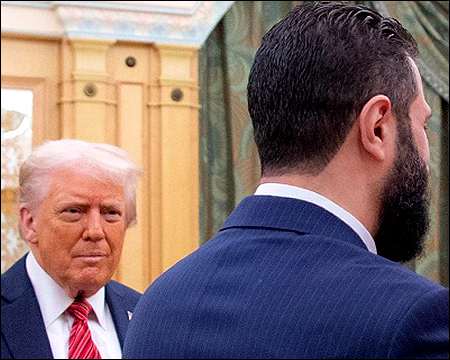
Last week, Trump met with Sharaa in Riyadh. Following their talks, the White House confirmed that the president made sanctions relief contingent on several conditions, including security cooperation and political reforms.
The Syrian Foreign Ministry welcomed the announcement, describing it as “a constructive gesture to address the humanitarian and economic burdens borne by the Syrian people.” The ministry emphasized its preference for diplomacy and mutual respect in future dealings with other nations.
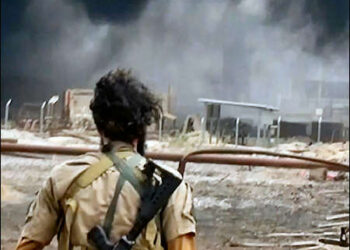
Most U.S. sanctions against Syria date back to the civil conflict that erupted in 2011 under former President Bashar al-Assad. Assad was ousted in December by factions loyal to Sharaa, who now leads a transitional authority recognized by several neighboring states.
The newly permitted entities under the license include Syrian Arab Airlines, the country’s central bank, multiple public sector oil and energy firms, and prominent institutions such as the Four Seasons Damascus.
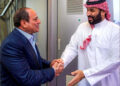
Officials said the decision followed regional discussions, particularly with Saudi Arabia, a longtime U.S. ally. Trump reportedly decided to lift some sanctions following a recommendation from Saudi Crown Prince Mohammed bin Salman during bilateral meetings in the kingdom.
Analysts note that while the new license removes some barriers, many elements of the broader sanctions regime remain. Washington continues to maintain financial restrictions tied to Syria’s historic designation as a state sponsor of terrorism and its ongoing role in regional conflicts.
The impact of the lifted restrictions on international aid organizations and investors will depend in part on how other countries respond and whether political stability can be maintained in the areas under Sharaa’s administration.
Ahmed al-Sharaa, also known as Abu Mohammed al-Golani, has a background that includes affiliations with al-Qaeda and ISIS. He later founded the al-Nusra Front, which was initially linked to al-Qaeda before rebranding as Hayat Tahrir al-Sham (HTS).
(With files from Reuters)
Copyright © 2025 iKurd.net. All rights reserved
Related posts:
 Stealing Syria
 The Islamic State of Syria? (Al Dawla al-Islamiya fi al-Sham)
 Syria: Revisiting The Caesar Torture Victim Photographs
 Syria: A ‘Caliphate’ by Any Other Name — Would Smell the Same
 Business with ISIS – Updated
 The Resurrection (Ba’ath) Party – Before the Iran-Iraq War
 Turkey: The Psychological War Against the Kurds Through the PKK – Part I
 Sabotaging Syria
 Trump meets Sharra, vows to lift sanctions on Syria
 Syria: The Hijacking of the Arab Spring: From ISIS to Hayat Tahrir al-Sham