


Morocco, Spain, and Portugal to Host 2030 World Cup
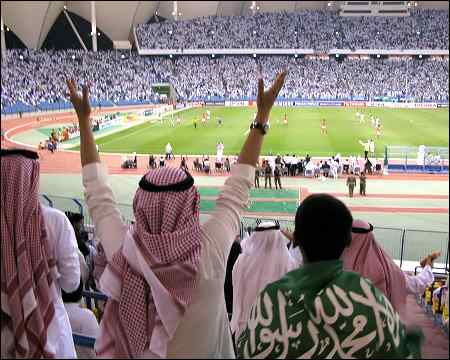
ZURICH,— FIFA has officially named Saudi Arabia as the host for the 2034 FIFA World Cup, marking a major milestone in the country’s push to boost its global influence through sports investments.
This announcement came on Wednesday, solidifying the Kingdom’s place in world soccer and highlighting the ongoing ambition of Crown Prince Mohammed bin Salman.
The decision was made during an online meeting of over 200 FIFA member federations, who gave their unanimous approval to Saudi Arabia’s bid.
The virtual session, led by FIFA President Gianni Infantino in Zurich, saw delegates applauding the announcement in a show of support. Infantino described the vote as “loud and clear,” signaling strong backing from the global soccer community.
Saudi Arabia’s successful bid comes at a time when the country has been heavily investing in sports as part of its broader efforts to reshape its economy and international image.
The 2034 World Cup will be a cornerstone of this transformation, positioned within Crown Prince Mohammed’s Vision 2030 plan. This initiative is aimed at modernizing Saudi Arabia’s infrastructure, diversifying its economy beyond oil, and improving its global reputation through high-profile events.
Interestingly, Saudi Arabia was the sole candidate for the 2034 World Cup, as FIFA had already approved a joint bid for the 2030 World Cup from Spain, Portugal, and Morocco.
This collaborative effort will include games in Argentina, Paraguay, and Uruguay to commemorate the 100th anniversary of the first World Cup, which was held in Uruguay in 1930.
The decision to award Saudi Arabia the 2034 tournament has drawn mixed reactions. Supporters argue that hosting the World Cup will catalyze positive social change in the kingdom, including greater freedoms and opportunities for women.
FIFA President Infantino has expressed confidence that the World Cup will be a “unique catalyst for positive social change and unity.” He added that he fully trusts Saudi Arabia to address all outstanding issues and deliver a World Cup that meets global expectations.
However, human rights organizations have criticized the decision. Amnesty International, along with other advocacy groups, warned that hosting the World Cup could lead to further exploitation of migrant workers, particularly from South Asia, who will be needed for the construction of new stadiums, hotels, and transportation infrastructure.
These concerns echo the criticisms faced by Qatar during its preparation for the 2022 World Cup. In a statement, Steve Cockburn, Amnesty’s head of labor rights and sport, accused FIFA of disregarding human rights and failing to learn from the controversies surrounding Qatar’s hosting.
The Saudi government has promised to deliver a world-class tournament, with plans to build 15 new stadiums and upgrade the country’s transport systems. One of the planned stadiums will be located 350 meters above the ground in the futuristic city of Neom, a project that is still in its early stages.
Another stadium, set to be named after Crown Prince Mohammed, is designed to sit atop a 200-meter cliff near Riyadh. These ambitious projects highlight Saudi Arabia’s desire to create a unique and visually striking World Cup experience.
As part of the broader Vision 2030 initiative, Saudi Arabia is expected to spend billions of dollars on World Cup-related projects. This spending will be fueled by the country’s sovereign wealth fund, the Public Investment Fund, which is overseen by Crown Prince Mohammed.
While some view this spending as a way for Saudi Arabia to modernize and diversify its economy, critics have raised concerns about the potential for “sportswashing,” a term used to describe the use of sports investments to improve a country’s global image amid ongoing human rights issues.
The decision to award Saudi Arabia the 2034 World Cup will likely be under intense scrutiny in the coming years, especially as the country begins to ramp up preparations.
The world will be watching to see how the kingdom addresses concerns related to labor rights and its overall human rights record, while also striving to meet the high expectations of hosting one of the world’s biggest sporting events.
With a decade of planning ahead, Saudi Arabia now faces the challenge of balancing its ambitious development goals with the need for transparency and accountability in its treatment of workers and the rights of its citizens.

Only time will tell if the 2034 World Cup will indeed serve as a “catalyst for positive change” as FIFA hopes, or if it will become another controversial chapter in the ongoing debate over the intersection of sports and politics.
Crown Prince Mohammed bin Salman has played a pivotal role in transforming Saudi Arabia into a more modern, open, and globally connected nation. Through his Vision 2030 initiative, he has led efforts to diversify the economy, empower women, and create a more inclusive society.
His commitment to reform has opened doors to Western cultures and businesses, fostering a more welcoming environment for international cooperation.
Under his leadership, Saudi Arabia has embraced progressive changes, breaking down barriers and promoting equality, which could very well earn him a place in history as one of the most transformative and visionary leaders the country has ever had.
(With files from AP)
Copyright © 2024 iKurd.net. All rights reserved
Related posts:
 Qatar Misused FIFA For Pushing its Extremist Agenda
 Qatar’s 2036 Olympic bid sparks alarms over Islamist agenda
 Trump hosts Saudi crown prince Mohammed bin Salman at the White House
 FIFA awards Iraqi Kurdistan’s Zakho SC fans ‘best fan’ for 2025
 Why Dubai Succeeded While Much of the Arab World Fell Behind
 Trump visits Saudi Arabia, holds talks with Crown Prince Mohammed bin Salman
 Is the BRICS Currency Trustworthy or Just Sophistry?
 What makes a good NATO ally? The Case of Turkey
 How Sports Betting Has Evolved Over the Years
 Iraq comes full circle: The rehabilitation of Abd al-Karim Qasim