

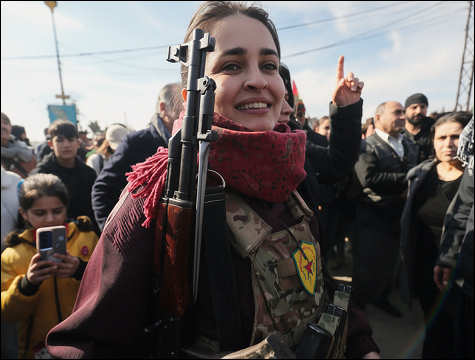
HASAKA,— Syria’s Islamist government and Kurdish forces of Syrian Kurdistan (Rojava), formerly known as the Syrian Democratic Forces SDF, reached a new ceasefire on Tuesday following days of rising military pressure in the northeast and renewed talks over the future of Kurdish-run areas.
The deal came after Syrian government troops moved additional forces into Hasaka province and Kurdish fighters pulled back from Al-Hol camp, home to thousands of people with ties to the Islamic State, including foreign women and children.
The Syrian defence ministry said the ceasefire would last four days starting Tuesday evening. Kurdish officials confirmed they were committed to the truce and said their forces were ready to move forward with implementing a broader political agreement announced earlier this week.
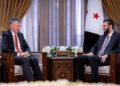
That agreement was revealed on Sunday by interim President Ahmed al-Sharaa and Kurdish forces commander General Mazloum Abdi.
It outlines plans to integrate the Kurds’ de facto autonomous administration in Rojava into the Syrian state, a major change after years of Kurdish self-rule in the north and east of the country.
The SDF, once controlled large areas of north and east Syria seized from Islamic State fighters with support from a United States-led coalition.
Those territories included Raqa and Deir Ezzor provinces, which are largely Arab-majority regions.
In recent weeks, Kurdish forces withdrew from both provinces following a government military escalation that began earlier this month in Aleppo, Syrian officials said.
Sharaa’s Islamist forces removed longtime ruler Bashar al-Assad from power in 2024. Since then, the new authorities have sought to extend state control across Syria and rebuild international relations, including ties with Washington.
US President Donald Trump voiced support for Sharaa on Tuesday, describing him as a leader capable of enforcing control.
Separately, US envoy Tom Barrack said the original role of the SDF as the primary ground force against Islamic State had largely ended.
He said Damascus was now willing and positioned to take responsibility for security duties, including detention centers and camps holding Islamic State suspects.
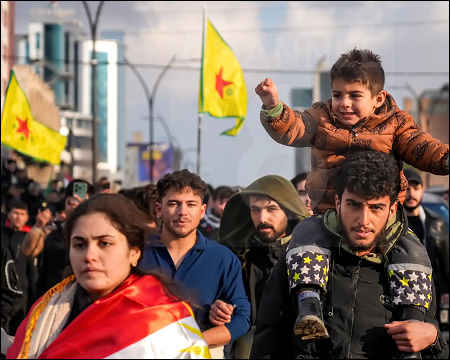
Syria’s presidency announced a new understanding with Kurdish leaders over Kurdish areas of Hasaka province. The statement said Kurdish representatives were given four days to hold consultations and prepare a detailed plan for integration.
It added that if the plan is finalized, government forces would not enter the city centers of Hasaka and Qamishlo or Kurdish villages in the surrounding areas.
In Hasaka city, Kurdish forces continued patrols as residents showed support. Women and elderly people were seen carrying weapons alongside fighters manning checkpoints.
A Kurdish fighter identified as Shahine Baz told AFP that the forces had pledged to protect residents.
In Qamishlo, another key Kurdish city in Syrian Kurdistan, 55-year-old Hasina Hammo was seen holding a Kalashnikov rifle and said Kurdish forces would not surrender their areas.
Earlier Tuesday, Kurdish officials said their forces were compelled to withdraw from Al-Hol camp and redeploy near northern cities facing what they described as increasing threats.
Camps and prisons run by Kurdish authorities in northeast Syria hold tens of thousands of people accused of links to Islamic State, nearly seven years after the group’s territorial defeat.
Al-Hol is the largest of these facilities. Its director, Jihan Hanan, said in December that the camp housed more than 24,000 people, including thousands of foreign nationals.
Kurdish authorities have repeatedly urged countries to repatriate their citizens, but only limited numbers have returned.
The Syrian defence ministry said it was ready to assume responsibility for Al-Hol camp and all Islamic State detainees.
General Abdi urged the international coalition to continue protecting detention facilities. He said Kurdish forces had withdrawn to predominantly Kurdish areas and that protecting those areas was a red line.
Trump said in an interview with the New York Post that he had helped stop a prison break involving European jihadists in Syria.
His comments followed accusations by the Syrian government army that the Kurds released Islamic State detainees from Shadadi prison. Kurdish officials said they lost control of the prison after an attack by government forces.
On Monday, the SDF called on Kurds inside Syria and abroad to join what it described as resistance efforts. Kurds are spread across Syria, Iraq, Iran, and Turkey.
In Turkey, the banned Kurdistan Workers’ Party, or PKK, said it would never abandon Syria’s Kurds.
Clashes broke out Tuesday along the Syria-Turkey border between police and pro-Kurdish protesters angered by the Syrian military operation in Rojava.
Dozens of Kurds living in Iraqi Kurdistan also traveled toward Syria following the call.
Nadia Murad, the Iraqi Yazidi survivor of sexual slavery by Islamic State fighters, criticized what she described as the international community’s abandonment of Syria’s Kurds, adding her voice to growing concern over the latest developments.
(With files from AFP)
Copyright © 2026 iKurd.net. All rights reserved.
Related posts:
 Business with ISIS – Updated
 Syria’s Massacres of Christians, Alawites, Druze, and Shi’as…
 The Resurrection (Ba’ath) Party – Before the Iran-Iraq War
 Turkey: Nato’s Islamic State Member
 Syria: A ‘Caliphate’ by Any Other Name — Would Smell the Same
 Sabotaging Syria
 US begins transfer of Islamic State prisoners from Syria to Iraq
 After Kurdish pullout, volatile security blocks UN at Syria IS camp
 Syrian Kurdish forces “compelled to withdraw” from ISIS al-Hol camp: statement
 The SDF–Damascus deal: A gamble over keys to Kurdish homeland