

US moving up to 7,000 Islamic State IS detainees from Syria to Iraq
HASAKA, Syrian Kurdistan,— The United States said on Wednesday it had begun an operation that could lead to the transfer of thousands of Islamic State detainees from Syria to Iraq, as tensions rose between Syrian government Islamist forces and Kurdish forces despite a recently announced ceasefire.
The operation was disclosed one day after Washington signaled that its long-standing partnership with Syrian Kurdish forces had largely reached its end.
US officials said their focus has shifted toward supporting Syria’s Islamist-led authorities as they seek to expand state control following more than a decade of conflict.
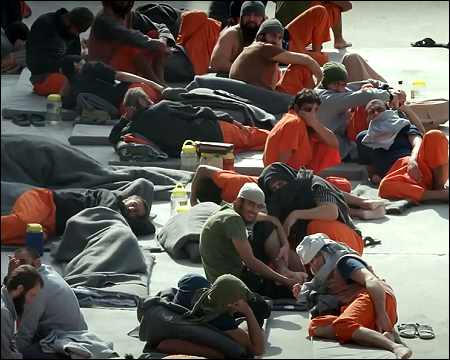
US Central Command said the mission started with the relocation of 150 Islamic State fighters and is expected to involve up to 7,000 detainees currently held in Syria.
In a statement, the command said the goal was to ensure that suspected militants remain in secure detention facilities under tighter control.
Aaron Zelin, a senior fellow at the Washington Institute for Near East Policy, wrote on X that the move indicated concerns within the US military about the stability of current detention arrangements inside Syria.
The announcement came as Syrian army units entered the Al-Hol camp in Hasaka province on Wednesday, shortly after Kurdish forces withdrew from the area. The camp houses relatives of Islamic State members, including women and children from dozens of countries.
Kurdish-led Syrian Democratic Forces SDF, backed for years by the US-led coalition, played a key role in defeating Islamic State territorially in Syria in 2019.
During the campaign, Kurdish forces captured wide areas of land and detained roughly 12,000 suspected Islamic State fighters. Among them were up to 3,000 foreign nationals from more than 50 countries.
Tens of thousands of their family members were later placed in camps across northeastern Syria.
More than 21,000 Kurdish men and women fighters lost their lives during battles against the Islamic State group and Syrian Islamist mercenary factions backed by Turkey.
In recent days, Damascus has taken control of large parts of territory previously administered by Kurdish authorities in northern and eastern Syria.
These developments followed an understanding reached over the weekend between the Syrian government and Kurdish leaders.
The agreement outlines the integration of Kurdish-run administration of Syrian Kurdistan into the state structure and transfers responsibility for Islamic State prisoners to the central government.
Despite a ceasefire announced on Tuesday, both sides accused each other of violating the truce.
Syria’s defense ministry said a drone operated by Kurdish SDF forces struck an arms factory discovered by government troops in Hasaka province. The ministry said the explosion killed seven soldiers and described the incident as a serious breach of the ceasefire. Officials added that 11 people had been killed since the truce took effect.
Kurdish authorities denied responsibility for the blast. In a statement, they said the explosion resulted from an accident during the movement of ammunition by Islamist factions aligned with Damascus.
The Kurdish administration said it remained committed to the ceasefire, which is scheduled to end on Saturday evening.
The Kurdish side also accused government forces of carrying out several attacks after the truce was declared, including an incident near the Kurdish city of Kobane that reportedly killed a woman.
Kobane, located near the Turkish border, became a symbol of Kurdish resistance after Islamic State was driven out of the city in 2015.
Inside Al-Hol camp on Wednesday, government fighters opened a large metal gate and moved into the area while others stood guard. Women and children walked between rows of tents as government forces secured positions.
Residents of the camp said they were uncertain about what would happen next. Umm Sadek, a 33-year-old woman wearing a full-face niqab, told AFP that she hoped the new authorities would treat camp residents with leniency.
She said she had no connection to Islamic State.
Another resident, Ibrahim Ibrahim, 18, said he had lived in the camp since he was 10 years old. He told AFP he wanted to leave the camp, find work, and support his family.
Al-Hol is located in a remote desert area of Hasaka province and holds around 24,000 people. Among them are about 6,200 women and children from roughly 40 nationalities. A smaller number of foreign families are held in the nearby Roj camp.
Foreign security analysts say a significant portion of the families are hardline followers of the Islamic State group. They are believed to keep the group’s influence alive inside the camp by enforcing strict religious practices and educating their children along the same lines, creating what analysts describe as a long-term security risk.
Elsewhere in Raqa province, families gathered and waited for information about relatives detained in Al-Aqtan prison, where Islamist government forces were deployed earlier this week.
On Tuesday, Syria’s interior ministry said 120 Islamic State members escaped from Shadadi prison in Hasaka province. Later, the ministry said security forces had arrested 81 of those who fled.
Syria’s presidency announced on Tuesday that an understanding had been reached with Kurdish authorities over the future of Kurdish areas in Hasaka province, often referred to as Syrian Kurdistan.
The statement said Kurdish leaders were given four days to hold consultations and prepare a detailed plan for integration.
If the plan is finalized, government forces will not enter the city centers of Hasaka and Qamishlo or Kurdish villages, the presidency said.
Analysts said Kurdish forces in Rojava Kurdistan are unlikely to allow Islamist militias aligned with Damascus to enter predominantly Kurdish areas, despite the ongoing negotiations.
(With files from AFP | Agencies)
Copyright © 2026 iKurd.net. All rights reserved.
Related posts:
 Business with ISIS – Updated
 Sabotaging Syria
 Turkey: Nato’s Islamic State Member
 The Resurrection (Ba’ath) Party – Before the Iran-Iraq War
 Syria: Revisiting The Caesar Torture Victim Photographs
 Syria: A ‘Caliphate’ by Any Other Name — Would Smell the Same
 Syria: The Truth Lies Buried beneath an Edifice of Lies
 Anfal – The Black Stain on Iraqi History Spreads
 Stealing Syria
 Syria: The Triumph of Terrorism