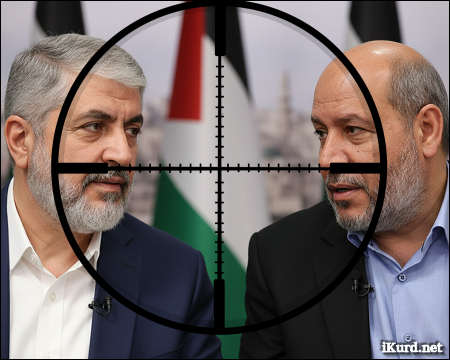
JERUSALEM,— If Israel failed to kill Hamas leaders in an airstrike on Qatar this week, it would succeed next time, the country’s ambassador to the United States said Wednesday, after the attack raised fears it could derail ceasefire efforts in Gaza.
“We have put terrorists on notice, wherever they may be. We will pursue them, and we will destroy those who seek to destroy us,” Ambassador Yechiel Leiter told lawmakers during remarks at the U.S. Capitol.
The comments followed Tuesday’s Israeli airstrike on Doha, the capital of Qatar, aimed at Hamas political leaders. The attack came just a day after Hamas claimed responsibility for a shooting near Jerusalem that killed six Israeli civilians at a bus stop.
American officials described the strike as a unilateral Israeli action that undermined U.S. diplomatic goals.
Qatar has been serving as a mediator in ongoing negotiations to halt the Gaza conflict, and the operation in Doha drew immediate concern from Arab and Western capitals.
According to The Wall Street Journal, U.S. President Donald Trump had a heated phone call with Israeli Prime Minister Benjamin Netanyahu following the strike. Trump reportedly warned Netanyahu that striking Hamas figures inside Qatar was not a prudent move.
The timing of the operation was particularly sensitive, as it coincided with the fifth anniversary of the Abraham Accords, which normalized relations between Israel and several Muslim-majority states.
Speaking at an event marking the anniversary, Leiter sharply criticized Qatar’s role.
“What is Qatar doing if not financing and supporting terrorism by playing host to Hamas, the same group whose gunmen murdered six innocent people waiting at a bus stop in Jerusalem?” Leiter said.
The United Nations Security Council delayed its scheduled Wednesday meeting until Thursday at Qatar’s request so that Prime Minister Sheikh Mohammed bin Abdulrahman al-Thani could participate.
Speaking to CNN, al-Thani said Doha is weighing its response and discussing options with regional partners. Asked whether Qatar might close Hamas’ political office, he said the government was “reassessing everything.”
“We are in very detailed conversation with the United States government and need to determine the way forward,” al-Thani added.
Hamas said five of its members were killed in the strike, including the son of Khalil al-Hayya, the group’s senior negotiator and a top figure in its political bureau. Hamas leaders said the movement’s senior leadership survived.
The incident has spurred fresh diplomacy across the Arab world, as leaders sought to assess the implications for negotiations over a possible truce.
Netanyahu has pressed for what he calls an “all-or-nothing” agreement requiring Hamas to release all hostages at once and agree to lay down arms.
Hamas’ October 7, 2023, attack on Israel killed 1,200 people, mostly civilians, and led to 251 people being taken hostage, according to Israeli figures. Israel’s subsequent offensive in Gaza has left more than 64,000 dead, most of them identified as Hamas fighters, according to observers.
Despite international criticism, Netanyahu has vowed to continue expanding Israeli operations against Hamas and its regional allies, saying the campaign is necessary to secure Israel’s future.
Qatar has long faced accusations of acting as a financial lifeline for Islamist movements and extremist groups across the Middle East.
The small Gulf monarchy, shaped by its rigid Salafi Muslim ideology, has been tied to Hamas, the Muslim Brotherhood, al-Qaeda affiliates, and even the so-called Islamic State group. Critics say Doha’s rulers have repeatedly provided money, weapons, and political cover to some of the most dangerous organizations in the region.
For years, Western and Arab officials have warned that Qatar operates as a sponsor of terrorism under the guise of diplomacy. Billions of dollars have reportedly flowed from Doha to groups such as Hamas and the Muslim Brotherhood, fueling violence from Gaza to Cairo.
Qatar’s state-funded broadcaster, Al Jazeera, has given a platform to radical clerics who openly glorify suicide bombings against Americans, Europeans, and Israelis.
Qatar’s reach into regional conflicts has been extensive. Reports from intelligence and security agencies have linked Doha to the transfer of advanced weapons and cash to Islamist militias in Syria and Libya. Its backing of the Taliban in Afghanistan further underscores its pattern of enabling groups committed to violent jihad.
The Gulf states closest to the danger took decisive action. In 2017, Saudi Arabia, the United Arab Emirates, Bahrain, and Egypt imposed a sweeping blockade on Qatar.
The four nations accused Doha of bankrolling terrorism, destabilizing Arab neighbors, and aligning itself with Iran, Saudi Arabia’s chief rival. The embargo crippled Qatar’s regional standing and exposed the depth of distrust among its neighbors.
Although the blockade was formally lifted in January 2021, the fundamental accusations remain unresolved.
Critics argue that Qatar continues to present itself as a mediator while maintaining covert links to hardline Islamist movements. Its financial networks, propaganda platforms, and political maneuvers, they say, have made it a persistent destabilizing force in the Middle East.
(With files from Reuters | Agencies)
Copyright © 2025 iKurd.net. All rights reserved
Related posts:
 Why Israel’s attack on Hamas in Doha outraged Qatar?
 The Resurrection (Ba’ath) Party – Before the Iran-Iraq War
 Internal Revolt Against Hamas in Gaza Was Already Underway
 Israel strikes Hamas leadership in Qatar
 The War of Attrition on Lebanon
 Will Turkey be next after Israel hits Hamas in Qatar?
 Israel marks October 7 anniversary of Hamas deadly attack
 A Root Cause Review of the Israeli-Hamas Conflict
 Qatar’s 2036 Olympic bid sparks alarms over Islamist agenda
 Qatar ends role in Gaza ceasefire mediation, tells Hamas to leave the country