


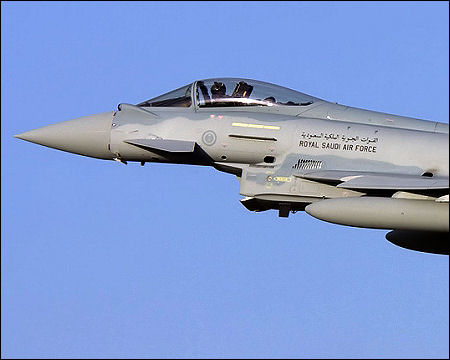
RIYADH,— Saudi fighter jets struck targets tied to Tehran-backed Shi’ite militias in Iraq during the war with Iran, while retaliatory attacks were also launched from Kuwait into Iraq, several sources familiar with the matter told Reuters.
The military actions formed part of a wider campaign across the Gulf that remained out of public view during a conflict that started with U.S. and Israeli attacks on Iran and later spread across the Middle East.
Reuters spoke with three Iraqi military and security officials, one Western official and two people briefed on the developments, including one source in the United States.
The Saudi attacks were carried out by Saudi air force jets against militia positions linked to Iran near Saudi Arabia’s northern border with Iraq, according to the Western official and one person briefed on the matter.
The Western official said some attacks took place around the April 7 ceasefire between the United States and Iran.
The strikes targeted locations used to launch drones and missiles toward Saudi Arabia and other Gulf countries, the sources said.
Iraqi sources, citing military assessments, said rocket attacks were launched at least twice from Kuwaiti territory into Iraq.
One series of attacks struck militia positions in southern Iraq in April.
Several fighters were killed and a facility used by the Iran-backed Kataib Hezbollah militia for communications and drone operations was destroyed, the Iraqi sources said.
Reuters could not confirm whether the rockets fired from Kuwait were launched by Kuwaiti forces or the U.S. military.
The U.S. military declined to comment. Kuwait’s information ministry and the Iraqi government did not immediately respond to requests for comment.
A Saudi foreign ministry official said Riyadh favored de-escalation, restraint and reduced tensions to maintain regional security and stability, but did not specifically address the reported attacks inside Iraq.
A spokesperson for Iraq’s Kataib Hezbollah did not immediately respond to a request for comment.
Reuters reported Tuesday that Saudi Arabia also launched strikes inside Iran during the conflict in response to attacks on the kingdom.
It was the first known case of Riyadh striking Iranian territory. Three people familiar with the matter also said the United Arab Emirates carried out similar attacks inside Iran.
Telegram channels linked to militias published statements during the war claiming responsibility for attacks on targets in Gulf states, including Saudi Arabia and Kuwait.
Continuous attacks from Iraq pushed Saudi Arabia and Kuwait to take a harder position against the militias, which command large numbers of fighters and maintain missile and drone arsenals.
Kuwait summoned Iraq’s representative three times during the conflict to protest attacks crossing the border and the storming of the Kuwaiti consulate in Basra on April 7. Saudi Arabia also summoned Iraq’s ambassador on April 12 to protest attacks.
Relations between Iraq and Gulf Arab states have long been marked by distrust. Tensions worsened in 1990 after Iraqi President Saddam Hussein invaded Kuwait and fired Scud missiles toward Saudi Arabia.
The U.S.-led invasion of Iraq in 2003 increased concerns among Gulf states by strengthening Shi’ite political groups and armed factions linked to Tehran, turning Iraq into an important part of Iran’s regional network.
Gulf governments have repeatedly accused Baghdad of failing to control armed groups, which operate with broad independence and have carried out attacks across borders.
A diplomatic agreement between Iran and Saudi Arabia brokered by China in 2023 raised hopes for regional stability.
The outbreak of war, however, placed pressure on those efforts and drew Gulf countries deeper into a conflict they had tried to avoid.
Two Iraqi security officials and a government security adviser said Saudi Arabia and Kuwait warned Baghdad through diplomatic channels in March to stop rocket and drone attacks carried out by pro-Iranian groups against Gulf states.
Iraqi forces said they intercepted planned attacks, including the seizure of a rocket launcher west of Basra intended to target Saudi energy facilities.
Four Iraqi security sources and one person briefed on the developments said Iran-backed militias continue flying surveillance drones along Iraq’s borders with Kuwait and Saudi Arabia, collecting intelligence for Iran.
“They are gathering information on what has been damaged and what remains operational. They are preparing for another strike soon,” the person briefed on the matter said.
(With files from Reuters)
Copyright © 2026 iKurd.net. All rights reserved.
Related posts:
 Saddam Hussein’s Enemies: Paving the Road to the Invasion of Iraq
 Saddam Hussein was a Friend to the West
 The Resurrection (Ba’ath) Party – Before the Iran-Iraq War
 Iraq: Revenge and Corruption
 The Suffocation of Iraq Kurdistan
 Iran’s Grip on Kirkuk
 Iraq – The Cynical Swindle
 Business with ISIS – Updated
 Iraq: A State of Surveillance – Databases, Tracking And Corruption
 The Mustashar and the Jash – A View from the Position of ‘Iraqi National Unity’ on the ‘Descendants of Treason’