

The Dissolution of the SDF Is a Continuation of the Implementation of the January 29, 2026 Agreement
Shakhawan Shorash | Exclusive to iKurd.net
If a people faces the threat of annihilation, and resistance becomes suicidal, reaching an agreement and accepting a limited achievement is better than facing annihilation and losing the country. Just as a reminder, what changed the situation by 180 degrees was the return of Trump.
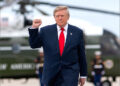
When Donald Trump was reelected as President of the United States in 2024, one of the dangers was that Rojava would be left to Turkey, just as he had wanted in 2018, when he wanted to hand all of it over to Turkey. That ended with the massacre and occupation of Afrin. Unfortunately, what the Kurds feared came to pass.
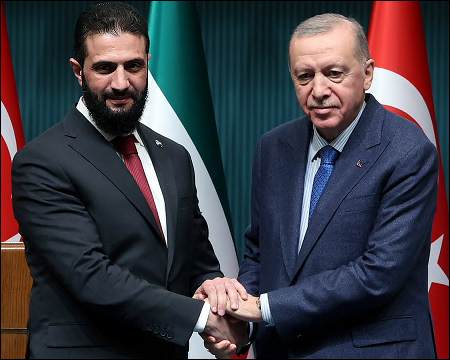
Erdoğan has political experience and knows how to attract Trump to his side. They have family and business connections, and the Trump Towers in Istanbul were built through Turkish business interests. What Erdoğan wanted was opened up to him, and through this opportunity he drew up a new plan, as he had done in 2018. He reached an agreement with Trump and Israel on removing the Assad regime, supported their Islamist terrorists, brought their terrorist leader Ahmed al Sharaa, known as Abu Mohammed al Golani, and made him President of Syria.
From the beginning, the objective of Turkey, and of Syria with Turkey’s support, was to destroy Rojava’s self-administration. As before, the primary enemy of these Islamic terrorists was the Kurdish self-administration in Rojava. Under the name of a united and terror free Syria, they reached an agreement with Trump, and he gave the green light for the attack. Trump then turned his back on his Kurdish allies, and through Tom Barrack, the Kurds were asked to dissolve themselves or face an attack.
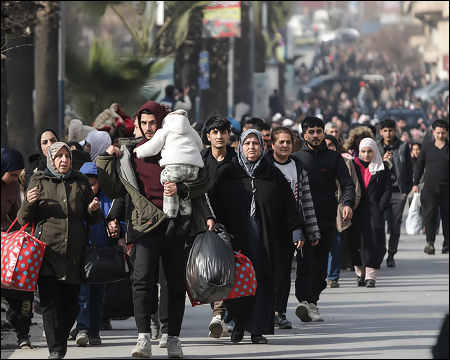
The United States, Turkey, Saudi Arabia, and Qatar backed Golani, and launched attacks against the Kurds. Rojava, which had lost thousands of people in the war against ISIS, had military strength, ideas and ideology, and field commanders. They made the decision to defend themselves to the last bullet. Kurds in the diaspora poured into the streets and demanded protection for the Kurdish people. The decision to resist caused some Kurdish friends and allies in Israel and the West to take action and prevent war and massacres against the Kurds.

In short, the United States committed its greatest betrayal against the Kurds of Rojava when it turned its back on those who had shed their blood in defense of humanity, while supporting those who had committed massacres against civilians and were opposed to freedom and democracy. This was despite the fact that the United States itself had designated them as terrorists and had offered rewards for killing them. Europe’s role was very weak. They remained passive and watched this betrayal of the Kurds unfold before their eyes.
The people of Rojava, the Kurds and other minorities, had self-administration. Now this self-administration is gone and has been brought to an end. The loss of self-administration and a progressive political system, and the reduction of their achievements to the possibility of education in the Kurdish language and the protection of their armed forces within the ranks of the Syrian army, are the minimum achievements. It is painful to watch this decline and defeat, but it was better than annihilation and the Arabization of the country.
The Kurdish nation does not possess the power of the regional and global superpowers. Therefore, when the greatest superpower stood against the Kurdish people, it was impossible to choose the path of suicide. The balance of power shifted, and Turkey’s path toward achieving its objectives was paved.
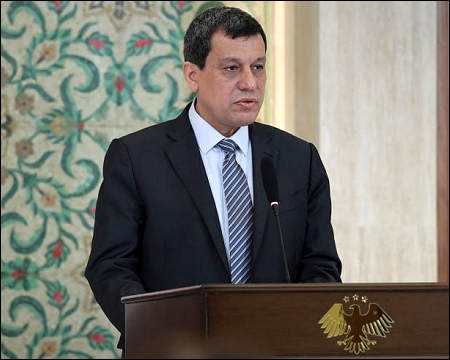
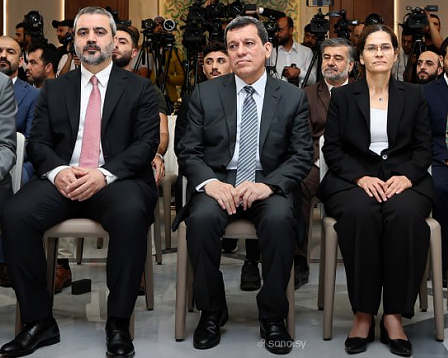
General Mazloum Abdi, in his statement, refers to the completion of the integration of the SDF forces into the Syrian army. According to reports, those forces will remain intact and only their name will be changed. If this is the case, it is a positive development. If the protection of the Kurdish areas is entrusted to those same forces, the importance and role of those forces will remain essentially the same.
He also emphasizes the right to education in one’s mother tongue in schools in the Kurdish areas and refers to the Syrian President’s promise regarding this matter.
If the right to education in one’s mother tongue is incorporated into the constitution, rather than remaining merely a promise, it will undoubtedly become firmly established and will not easily be removed. But if it remains only a promise by the President, there is reason for concern, because Golani himself, or future Syrian leaders, could later withdraw from that commitment.
Mazloum emphasizes the vision of a future Syria as a Syria of peace and coexistence. He says:
“The Syria we want to build is a Syria for all its peoples and components, Arabs, Kurds, Syriacs, Assyrians, Turkmen, and others. A united and peaceful Syria that protects the rights and dignity of all its citizens and provides a better future for future generations.”
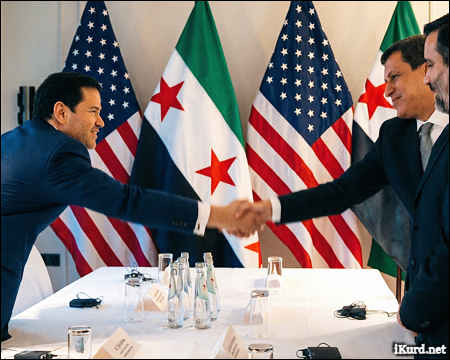
In reality, achieving this Syria, a Syria that belongs to all the peoples of Syria and in which their rights as citizens and minorities are protected, will be difficult.
First, Syria is ruled by a nationalist Islamist regime that is opposed to the rights of minorities.
Second, Turkey, which supports the Syrian government, is opposed in every way to any concept related to the rights of peoples as minorities.
Third, Syria is a weak and dependent country that relies on foreign money and has a fragile economy. If it does not follow the wishes of Turkey, Qatar, and Saudi Arabia, they will cut off their support.
Fourth, Syria is internally divided and is under the influence of extremist Islamist groups, just as the Islamists are opposed to the rights of the Kurdish nation and other nations.
Fifth, the regime and the Islamist groups are opposed to freedom and human openness, and they do not believe in human rights. Therefore, unfortunately, the Syria that Mazloum wants is very difficult to achieve.
In addition, the possibility of backtracking and the imposition of authoritarian rule remains very real.
Nevertheless, the Kurds in Rojava have taken some important initial steps. Previously, the existence of a Kurdish homeland in Syria was not acknowledged, education in Kurdish was prohibited, and Kurds had no rights.
Now, the existence of the Kurds and their language in Syria is being acknowledged. If this recognition becomes part of the constitution, it will become firmly established and will not easily disappear.

Rojava’s society has become more politically aware, has human resources, and has developed progressive ideas. These things cannot easily be erased. This readiness must be built upon and protected for future opportunities.
Unfortunately, what is happening is a continuation of the division of Kurdistan and an attempt to assimilate the Kurds into the imposed states. It is also a continuation of the injustices of the past that emerged after the Treaty of Lausanne in 1923.
This is what Turkey insists upon and sells to the public under the guise of protecting the rights of Kurds in neighboring countries. Turkey wants what it has achieved in Syria to be imposed, in some form, on the Kurds in neighboring countries as well, under the false concept of protecting Kurdish rights.
Shakhawan Shorash, BA and Master of political science from Southern University of Denmark and University of Copenhagen. A freelance writer concerning human right, genocide, ethnic conflicts, democratization and similar subjects. Shorash is a long-time contributing senior writer for iKurd.net, See below.
The opinions are those of the writer and do not necessarily represent the views of iKurd.net or its editors.
A Kurdish version of this article is available in Awene Newspaper.
Copyright © 2026 iKurd.net. All rights reserved.
Related posts:
 Business with ISIS – Updated
 What makes a good NATO ally? The Case of Turkey
 Turkey: Nato’s Islamic State Member
 The Resurrection (Ba’ath) Party – Before the Iran-Iraq War
 Turkey: The Psychological War Against the Kurds Through the PKK – Part I
 Syria: A ‘Caliphate’ by Any Other Name — Would Smell the Same
 Martyrs for Millionaires: The Black-Market Politics behind the Theft of Syria’s Oil
 Syria’s Kurds Should Seek a More Trusted Ally Than Trump’s U.S.
 Syria and Kurds strike a deal—will it bring peace or more chaos?
 Hiding in Plain Sight: Turkey’s ISIS Links, Al-Baghdadi’s Last Refuge and the Jihadist-Controlled “Safe” Zone