
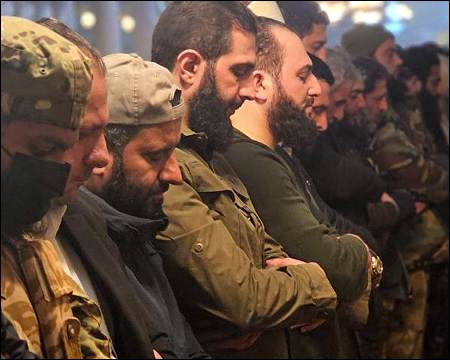
Syria upholds Islamic law in 5-year transition plan
DAMASCUS,— Syria’s newly issued constitutional declaration retains a prominent role for Islamic law in the country’s planned five-year transitional period, which will reportedly safeguard women’s rights and freedom of expression, according to a summary broadcast on state television.
The declaration, which serves as a foundation for the transition, was signed Thursday during a ceremony led by interim President Ahmed al-Sharaa, a Sunni Islamist. Sharaa, who played a key role in a swift offensive that removed Bashar al-Assad from power in December, has promised an inclusive leadership approach during this interim period.
Syrian Kurds strongly criticized the declaration, arguing that it does not adequately represent the country’s ethnic and religious diversity.
Under the new framework, Islamic jurisprudence is designated as “the main source” of legislation, differing slightly from the previous constitution which referred to it as “a main source.” This adjustment signals a stronger emphasis on Islamic principles in the country’s legal structure.
“We have established Islamic jurisprudence as the primary source of legislation,” a committee member explained in the summary read during the signing. “This jurisprudence is a valuable asset that must be preserved.”
The declaration includes provisions that aim to ensure women’s rights, including the right to education, the right to participate in the workforce, and political rights. It also guarantees freedom of expression, media, and the press.
Experts say that, in its interpretations, Islamic law does not recognize women’s rights as they are seen in international human rights standards. Critics contend that women are often treated as subordinate to men within these frameworks, with religious texts viewed as equating women to less-valued entities in society.
“We hope that this marks the beginning of a new chapter for the Syrian people toward reconstruction and development,” Sharaa said during the signing ceremony.
In a statement made in February, Sharaa indicated that Syria could hold its next presidential election within four to five years.
Al-Sharaa, also known as Abu Mohammed al-Golani, has a history of involvement with Islamist extremist groups. He was initially a member of al-Qaeda and later joined ISIS before founding the al-Nusra Front. The al-Nusra Front was originally affiliated with al-Qaeda but later rebranded as Hayat Tahrir al-Sham (HTS).
Sharaa has faced significant challenges, particularly following violent sectarian clashes along Syria’s coastal region, which have been attributed to fighters affiliated with his government. He established the committee responsible for drafting the declaration less than two weeks ago.
Syria’s previous constitution, adopted in 2012, was suspended in January as the country embarks on its transitional phase.
The semi-autonomous Kurdish-led administration in Syrian Kurdistan continues to operate under a secular, decentralized governance system, emphasizing gender equality, direct democracy, and environmental responsibility.
(With files from Reuters | Agencies)
Copyright © 2025 iKurd.net. All rights reserved
Related posts:
 Syria: A ‘Caliphate’ by Any Other Name — Would Smell the Same
 Syria: The Triumph of Terrorism
 Stealing Syria
 Business with ISIS – Updated
 The Resurrection (Ba’ath) Party – Before the Iran-Iraq War
 The Islamic State of Syria? (Al Dawla al-Islamiya fi al-Sham)
 Syria: Revisiting The Caesar Torture Victim Photographs
 Kurds sharply criticize Syria’s constitutional declaration signed by Sharaa
 Syria: The Truth Lies Buried beneath an Edifice of Lies
 Hostages to Jihad – Austin Tice, The Long Missing American in Syria – Part One