

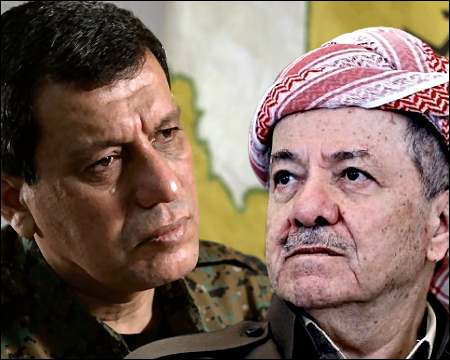
Why did the people of Iraqi Kurdistan support Rojava? If the Barzanis ruled Rojava, they would not have that support.
Sara Hussein | Exclusive to iKurd.net
After an attack on Syrian Kurds by Syrian Islamist government forces in January 2026, Kurds from Iraqi Kurdistan, Europe, and North America rallied in support of Syrian Kurdistan (West Kurdistan or Rojava). The widespread solidarity demonstrates the strength of Kurdish identity and unity across borders.
Over the past decade, the Kurdish Autonomous Administration in Syrian Kurdistan has been a model of self-rule. Its leaders have emphasized governance, equality, and justice, while building a society grounded in education, security, and women’s rights.
The administration’s credibility comes from its focus on serving the people rather than personal gain.
Leaders who prioritize wealth, property, and business interests, turn a blind eye to corruption, or hold foreign passports as a safety net to flee in times of danger would never have received such broad support from Kurds in Iraq or abroad.
The commitment of Syrian Kurdish leaders and citizens commands respect. Many young women have risked their lives alongside men to defend their homeland, showing courage and equality.
By contrast, leadership in Iraqi Kurdistan, particularly the ruling Barzani family, prioritizes personal wealth, luxury, security, property, family, and party loyalty over public welfare.

The Barzanis and their political allies, including the Talabanis, must understand that the people will not support them as long as they focus on their own interests rather than serving the community.
Leaders who are always prepared to escape the region in dangerous situations with American, British, or Saint Kitts and Nevis passports lose respect and trust among the population.
The consequences of such leadership were evident after the 2017 controversial independence referendum, organized by the Barzanis. When Iraqi forces reclaimed disputed territories, including the oil-rich city of Kirkuk, the Kurdish population did not protest or demonstrate. They blamed the ruling families for the loss and refused to support leaders they no longer trusted.
Even so, the Barzanis played a role in supporting Syrian Kurdistan internationally, using their political influence to lobby Western governments and raise awareness.
Iraqi Kurdish leaders have much to learn from the example of Syrian Kurdish governance in Rojava, where men and women work together hand in hand to build a just and inclusive society.
Sara Hussein, a Kurdish writer living abroad, she focuses on politics, culture, and religion. She is a contributing writer for iKurd.net.
The opinions are those of the writer and do not necessarily represent the views of iKurd.net or its editors.
Copyright © 2026 iKurd.net. All rights reserved
Related posts:
 The Resurrection (Ba’ath) Party – Before the Iran-Iraq War
 The Mustashar and the Jash – A View from the Position of ‘Iraqi National Unity’ on the ‘Descendants of Treason’
 Business with ISIS – Updated
 Iraqi Kurdistan: The Emperors’ New Clothes
 Iraqi Kurdistan – “Sold Out!” – Part II
 Biggest media and political lies in Iraqi Kurdistan in 2025
 Why do the Barzanis hide their women? Hidden in the shadows
 Martyrs for Millionaires: The Black-Market Politics behind the Theft of Syria’s Oil
 The Suffocation of Iraq Kurdistan
 Anfal – The Black Stain on Iraqi History Spreads