Syrian Kurds renew push for autonomy as talks with Damascus stall
QAMISHLO,— Kurdish authorities in Syrian Kurdistan again urged for a decentralized form of governance on Sunday, pressing their call for local self-rule days after Damascus firmly rejected the idea.
The latest statement from the Autonomous Administration came amid ongoing political deadlock with Syria’s central government over integrating Kurdish-led institutions into the national framework.
The administration repeated its appeal for a new governing structure that would include democratic representation, gender equality, and protection for all ethnic and religious groups.
In March, General Mazloum Abdi, commander-in-chief of the Kurdish-led Syrian Democratic Forces (SDF), , the de facto army of the Autonomous Administration in Rojava, and Syria’s interim President Ahmed al-Sharaa signed an agreement aimed at incorporating Kurdish institutions into the national system.
However, disagreements over military control and governance have delayed its implementation.
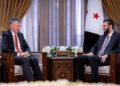
General Abdi, met with al-Sharaa again on Wednesday, with a U.S. diplomatic delegation present.
Following the talks, Damascus restated its refusal to consider federalism or autonomy, and called for Kurdish forces to merge into the state military structure.
“The centralized system has created long-term instability and denied local communities their rights,” said a statement from the Kurdish authorities. “We are committed to helping build a new, unified Syria—one that is decentralized and inclusive.”
The Kurdish region, which spans a large area in Syria’s north and northeast including major oil and gas fields, has operated under self-administration since 2018.
Kurdish forces, backed by a U.S.-led coalition, played a decisive role in defeating the Islamic State group in Syria.

U.S. Special Envoy to Syria Tom Barrack acknowledged the Kurdish military contributions but said future negotiations would have to involve direct coordination with Damascus. He said, “the only future path for them is Damascus.”
Following Barrack’s remarks, a senior Kurdish official expressed appreciation for U.S. and French involvement in Syria’s political process but voiced concern over the tone of recent criticism directed at Kurdish-led authorities.
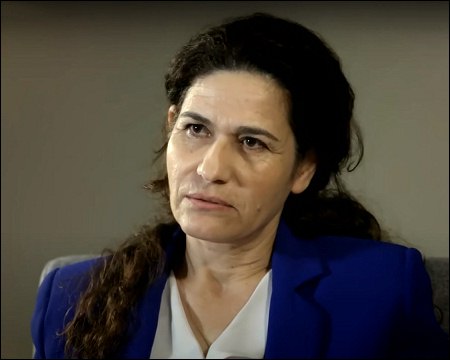
Ilham Ahmad, co-chair of foreign relations for the Democratic Autonomous Administration of North and East Syria (DAANES), said Sunday the support from both nations had been vital but cautioned against inflammatory language that could undercut ongoing efforts.
“We value the continued engagement of the United States and France in advancing a political settlement in Syria and promoting inclusive dialogue among Syrians,” Ahmad said in a post on social media platform X. “At the same time, we are deeply troubled by the growing use of hostile rhetoric and public accusations of betrayal by official institutions.”
Ahmad did not directly name Barrack in her remarks, but the U.S. envoy’s comments have triggered backlash among Kurdish activists and supporters on social media.
“We expect a constructive approach that encourages cooperation rather than fuels division,” she added.
The Kurdish-led forces expelled ISIS from its last holdout in Baghouz in 2019. Since then, about 12,000 suspected Islamic State fighters have remained in detention in Kurdish-controlled prisons.
According to Kurdish sources, over 21,000 fighters from their ranks died during battles against ISIS and Turkish-backed armed groups.
The Autonomous Administration, officially established in 2018, governs the region through a system that promotes local democracy, secular governance, and gender equality. It has been widely recognized for advancing women’s participation in politics and local decision-making, with women holding key roles in both civil and military institutions.
(With files from AFP | Agencies)
Copyright © 2025 iKurd.net. All rights reserved
Related posts:
 The Resurrection (Ba’ath) Party – Before the Iran-Iraq War
 Business with ISIS – Updated
 Betrayal by the Rogue State of America – The Bull in the China Shop
 Syria: Revisiting The Caesar Torture Victim Photographs
 Syria: A ‘Caliphate’ by Any Other Name — Would Smell the Same
 Sabotaging Syria
 Stealing Syria
 The Islamic State of Syria? (Al Dawla al-Islamiya fi al-Sham)
 What makes a good NATO ally? The Case of Turkey
 Syria: The Truth Lies Buried beneath an Edifice of Lies