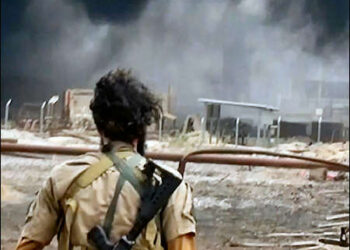


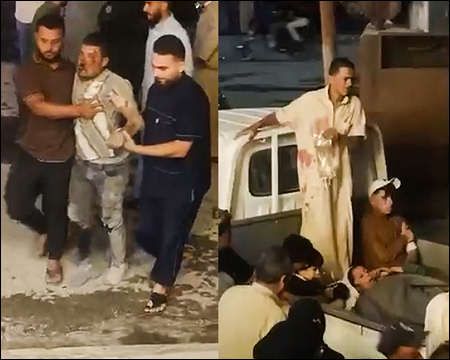
QAMISHLO,— Seven civilians, including five women and two children, were killed Saturday in government bombardment in Syrian Kurdistan, the Kurdish region in northern Syria, according to the Syrian Observatory for Human Rights.
The strike occurred in the village of Umm Tina in the Deir Hafer area of Aleppo province, where clashes had broken out between Syrian government Islamist militias and Kurdish-led forces.
The Britain-based Observatory said Syrian army personnel carried out the shelling.
Rami Abdel Rahman, who heads the group, told AFP the death toll marked the worst single day of violence in northern Syria in several months. The Observatory relies on a network of sources inside Syria.
The Kurdish-led Syrian Democratic Forces, or SDF, control broad areas of north and northeast Syria under a semi-autonomous administration. That administration oversees oil and gas fields and relies on the SDF as its military arm.
On Saturday, the Observatory reported armed clashes involving drones and heavy weapons after government forces struck SDF positions near Deir Hafer.
The SDF accused pro-Turkey Islamist mercenary factions aligned with Damascus of launching drone attacks and artillery fire, saying civilian homes were deliberately targeted. It also confirmed the toll of seven civilians dead.
The SDF has received backing from a U.S.-led coalition and played a key role in defeating the Islamic State group in Syria. The campaign ended the militants’ territorial control in 2019.
Despite an agreement announced in March between Damascus and the SDF to integrate the Kurdish administration’s military and civilian structures into the central government, implementation has stalled. The Kurdish side has demanded decentralization, a proposal that the Syrian government has rejected.
Syria’s interim President Ahmed al-Sharaa earlier this month said negotiations with the SDF were progressing but acknowledged there had been delays in putting the deal into practice. He said authorities were trying to avoid new conflict.
The Autonomous Administration in northeast Syria was formally established in 2018. Its governing model is based on democratic confederalism, emphasizing gender equality, secularism, environmental sustainability, and grassroots participation. The structure has drawn attention for expanding women’s roles in local government and decision-making.
Political analyst Henase Karim told iKurd News that there will be no integration of the Syrian Democratic Forces or their institutions into Damascus’ structures unless the Sharaa government recognizes minorities in Syria within the constitution and accepts a decentralized system.
She said the Kurdish, Druze, Alawite, Christian, and other communities must be guaranteed political recognition before any agreement can move forward.
“I cannot imagine that the secular SDF system, which includes thousands of women, could ever be merged with the Islamic militias loyal to Sharaa,” Karim said. She added that such groups view women as having no rights, forcing them to wear the hijab and remain confined to their homes.
According to Karim, thousands of foreign Islamist fighters, including former members of the Islamic State and the al-Nusra Front, are now operating as part of the Syrian government’s forces.
(With files from AFP | Agencies)
Copyright © 2025 iKurd.net. All rights reserved
Related posts:
 Stealing Syria
 Syria: A ‘Caliphate’ by Any Other Name — Would Smell the Same
 Business with ISIS – Updated
 Syria’s Kurds say attack by gov’t Islamist forces kills several fighters
 Syria: Revisiting The Caesar Torture Victim Photographs
 The Resurrection (Ba’ath) Party – Before the Iran-Iraq War
 Sabotaging Syria
 Syria’s Sharra symbolically declares Kurdish a “national language”, seen as “political game”
 Syria: The Hijacking of the Arab Spring: From ISIS to Hayat Tahrir al-Sham
 Syria: The Triumph of Terrorism