

Syria moves military reinforcements east of Aleppo
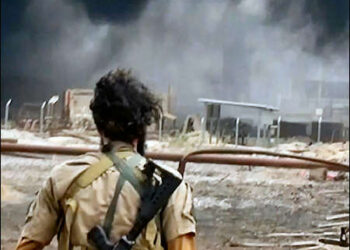
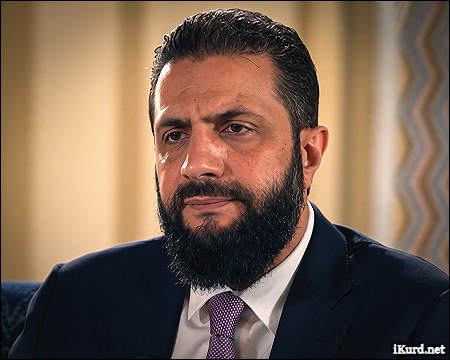
DAMASCUS,— Syria’s interim leader, Ahmed al-Sharaa, called on Wednesday for Kurdish forces to join the central government as reinforcements moved into areas east of Aleppo following deadly clashes in the city.
Syria’s Islamist government has been trying to extend its control over regions that remain under Kurdish administration since the fall of former President Bashar al-Assad a year ago.
Despite a March agreement aimed at integrating the Kurdish-led administration in Syrian Rojava Kurdistan, into the central government, progress has stalled.
Fighting between Kurdish forces and government Islamist militias has erupted in some areas, showing the deal has not been fully implemented.
In a TV interview aired by Syrian state media, Sharaa said that protecting Kurds requires them to be part of Syria’s central institutions.
“The Syrian state represents a major asset for them,” he said, according to excerpts from an interview originally recorded by the Iraqi Kurdish channel Al Shams, which broadcasts in Arabic.
Observers and analysts say Sharaa’s claims of “protecting the Kurds” are misleading. Critics point out that he is directly responsible for the 2025 massacres that killed thousands of civilians from Syria’s Druze and Alawite communities.
As the de facto ruler of Syria, Sharaa does not recognize minority rights when drafting the constitution, forming the interim government, or selecting members of the frozen parliament.
Kurdish communities make up a significant portion of Syria’s population, yet Sharaa’s actions suggest his stated goal of protection is a pretext to extend control rather than ensure safety.
Sharaa’s militias, who call themselves the army, warned civilians in the region to stay away from Kurdish military positions. They also said a humanitarian corridor would open Thursday morning and remain in place until the afternoon.
The United States, which has long backed Kurdish forces while also recognizing Syria’s new authorities, urged all sides to avoid steps that could increase tensions.
Admiral Brad Cooper, head of U.S. Central Command, called for restraint..
But political analyst Henase Karim told iKurd.net that the U.S. calls for restraint, rather than a direct warning, are seen as a green light for Sharaa to push Kurdish forces further east.
Sharaa accused the Kurdish-led Syrian Democratic Forces of resisting efforts to unify Syrian territory. “Washington is explicitly promoting Syrian unity and giving Syria a chance to rebuild,” he said.
On Tuesday, Syrian state television released a statement with a map designating a large area east of Aleppo as a “closed military zone.”
The statement ordered all Kurdish armed groups to withdraw east of the Euphrates River. Images published by the state news agency SANA showed reinforcements moving to the area from Latakia province, with additional troops arriving from Damascus.
Both sides reported occasional clashes overnight. Kurdish officials said government militias bombed civilian facilities in Deir Hafer, including a bakery and post office, warning of “wider confrontation and serious consequences for civilians and infrastructure.”
AFP reported intermittent shelling on the town’s outskirts, which the military source said targeted Kurdish positions.
The SDF controls large parts of Syria’s north and northeast, including oil-rich areas captured during the civil war and the fight against Islamic State.
On Monday, Damascus accused the SDF of sending reinforcements to Deir Hafer, prompting the government to send its own forces. Kurdish officials denied moving troops and blamed the government for attacks.
Elham Ahmad, a senior Kurdish official in Rojava Kurdistan, accused Sharaa’s militias of preparing for another offensive and violating the March integration deal.
The government recently seized full control of Aleppo city, capturing the Kurdish neighborhoods of Sheikh Maqsud and Ashrafiyeh, and relocating fighters to Kurdish-held areas in the northeast. Over 150,000 civilians, mostly Kurds, flee the Kurdish neighborhoods in Aleppo to Syrian Kurdistan.
Government Islamist militias accused by human right groups of abuse, and killings of Kurdish civilians.
In his TV interview, Sharaa linked the SDF to the PKK, citing the Qandil mountains in Iraqi Kurdistan as a base. Analysts say the claim is unfounded.
Sharaa was formerly a senior figure in al-Qaeda and ISIS and previously wanted by the United States, which has offered a $10 million bounty for his capture.
Turkey, a key backer of Damascus and considered a major decision-maker in Syrian affairs, views the SDF as an extension of the PKK and a threat along its southern border.
Omar Sheikhmoos, an Iraqi Kurdish politician, stated in an interview with Channel 8 that some fighters within the so-called Syrian army are not under the command or control of the Syrian government.
According to Sheikhmoos, these fighters work directly for Turkey’s intelligence agency (MIT), with the aim of undermining national unity and acting against the country’s institutions.
Despite last year’s announcement by the PKK to end armed conflict and destroy its weapons, Ankara continues to target armed Kurdish groups in Syrian Kurdistan.
The situation in Aleppo remains tense as government militias press eastward, Kurdish officials warn of further civilian harm, and international powers call for calm.
(With files from AFP | Agencies)
Copyright © 2026 iKurd.net. All rights reserved.
Related posts:
 Sabotaging Syria
 The Resurrection (Ba’ath) Party – Before the Iran-Iraq War
 Business with ISIS – Updated
 Stealing Syria
 Syria: A ‘Caliphate’ by Any Other Name — Would Smell the Same
 Syria: Revisiting The Caesar Torture Victim Photographs
 Syria: The Hijacking of the Arab Spring: From ISIS to Hayat Tahrir al-Sham
 Hostages to Jihad – Austin Tice, The Long Missing American in Syria – Part One
 Damascus, Kurdish SDF agree to de-escalate after Aleppo clashes
 Turkey: Nato’s Islamic State Member