


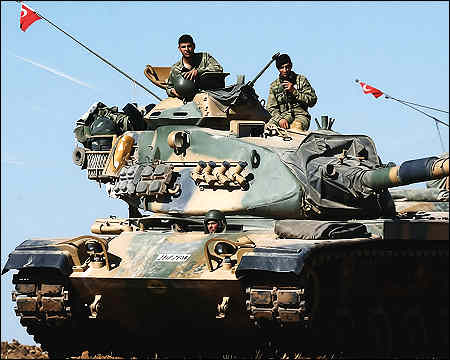
It is time for the Turkish State to end the illegal occupation and deforestation of the Autonomous Region in Kurdistan-Iraq!
Omar Sindi | Exclusive to iKurd.net
Up until now, the Turkish state falsely claimed that it is fighting the Kurdistan Workers’ Party (PKK), which has military bases in this part of the Kurdistan region. The de facto leader, Abdullah Ocalan, who is still in a Turkish prison, along with his cult party, the PKK, unilaterally renounced armed struggle and declared their trust in the illusion of Turkish democracy and in making peace with the Turkish state.
However, Turkish President Recep Tayyip Erdogan’s government has not taken any meaningful step toward reconciliation.
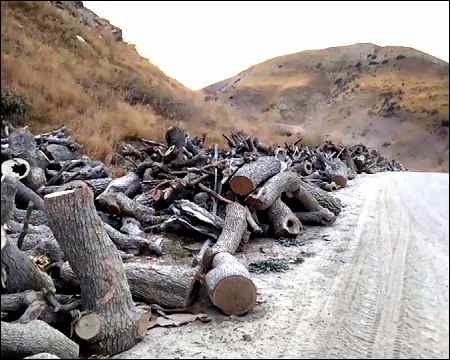
Under the guise of fighting the PKK, Turkish forces have committed environmental crimes, including deforestation and illegal logging operations in this pristine area. They have not allowed people to go back to villages or rebuild their villages, severely impairing the environment and causing socioeconomic degradation, including soil erosion, loss of biodiversity, and increased carbon emissions.
The Turkish army, along with its auxiliary forces known as the Jash or “Village Guards,” (köy korucular) continues to expand deeper into this Kurdish region. Many innocent people have lost their lives under the Turkish state’s illegal occupation in this region. Turkish forces are committing mass deforestation in one of the most pristine Kurdish areas of Iraq.
The deforestation being committed by the Turkish state will have catastrophic effects on the region’s ecosystem and greater environmental consequences for the Middle East at large. This area contributes to the water resources of the Tigris–Euphrates Basin, which are vital sources of drinking water.
Since the beginning of recorded history, this region has been preserved as a habitat for many different species of insects, plants, and animals such as mountain goats, wolves, bears, foxes, squirrels, mountain leopards, honey bees, as well as many types of birds, such as hawks and eagles, and the list goes on.
This illegal occupation is against international law. The international community should impose economic sanctions on the Turkish state for its unjust acts and misguided policies.
However, the Turkish occupation of this region in Kurdistan-Iraq does not appear to be of great concern to either Baghdad or Erbil. The people of Iraq should raise their voices against Turkish occupation and deforestation in this part of Kurdistan and demand reparations for the war and environmental destruction by this warmongering state. Turkey increased its defense spending by over 17% compared to the previous year.
If Iraq can bring its political order into cue, it is economically capable of forcing Turkey to end its occupation and to release the water it has withheld, all the way to the southern marshes of Iraq, which have suffered from environmental catastrophe.
In 2024, according to social media sources, trade between Turkey and Iraq exceeded fifteen billion dollars. Meanwhile, the Turkish state continues to build dams along the Euphrates River and Tigris River. “A 2023 hydro-economic model estimated the average annual hydropower revenue for a specific set of Turkish dams on the upper Euphrates Basin at six hundred and twenty dollars.” If the Turkish government refuses to abide by this, Iraq has other countries it can trade with.
The frightening reality of political polarization and instability in the Middle East and beyond reveals that the root causes of the chaos lie with the Turkish state and the Iranian clerical regime in Tehran. The colonial ambitions of President Erdogan’s so-called “neo-Ottoman” expansionist policy and the Iranian clerical “Shia Crescent,” stretching from the mouth of the Persian Gulf to the Mediterranean Sea, have for decades fueled political turmoil and exhausted regional economies.
These regimes exploit crises and remain major obstacles to genuine social stability. They are parts of non-veridical social stability.
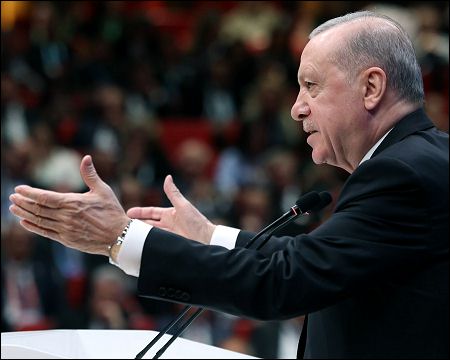
President Erdogan, his AKP Party, and Devlet Bahceli, the head of the far-right Nationalist Movement Party (MHP), should bear in mind that Israeli Prime Minister Benjamin Netanyahu’s coalition government and military actions significantly reduced Iranian influence, rule, and weakened hegemony in the region, which caused the regime of Bashar Assad’s dynasty to fall and significantly weakened Lebanon’s Hezbollah.
This outcome is considered a military defeat for Iran in both Syria and Lebanon. That perilous action is not for the Turkish state’s expansionist policy. This pathway is not for President Erdogan’s ambitious statute of “neo-Ottoman” ambitions.
Approximately four hundred thousand Turkish people live in Northern Cyprus, which has its own self-declared government recognized only by Turkey. However, more than forty million Kurds live across the Middle East, yet from the Turkish state’s standpoint, they should have neither an independent state nor even autonomy, nor even the right to express themselves as a Kurdish nation.
After World War I, Syria was forcibly assembled against the wishes of Kurds in northeastern Rojava Kurdistan, as well as the Alawites and Druze, by British and French colonial powers seeking to serve their interests in the region. President Erdogan of Turkey claims to be a strong defender of Syria’s territorial integrity, but this statement should be considered as realpolitik and disingenuous.
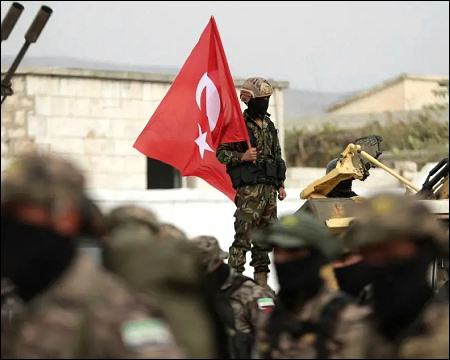
About 20,000 Turkish troops are occupying Syria, assisting jihadist militants/terrorists inside Syria against Kurds, Alawites, and Druze. If President Erdogan truly cared about Syrian sovereignty, he should return the Turkish province of Hatay (Alexandretta) to Syria.
In 1939, it was detached from Syria through a deceitful election deal between the French government and the Turkish state. The question remains: what would Ahmed Sharaa tell President Erdogan about Alexandretta’s fate? Shame on those Arab states that relentlessly fund and assist Turkey’s expansionist policy. They should remember Djemal Pasha’s brutal crackdown on Arab nationalists in 1915.
Turkey is a NATO member. NATO is an alliance of democratic nations, yet it tolerates Turkey’s undemocratic policies both internally and externally. Now, Turkey is on the verge of purchasing the Eurofighter Typhoon jets in a deal worth billions of dollars with many European governments. That deal will likely silence many critics of Turkey’s policies.
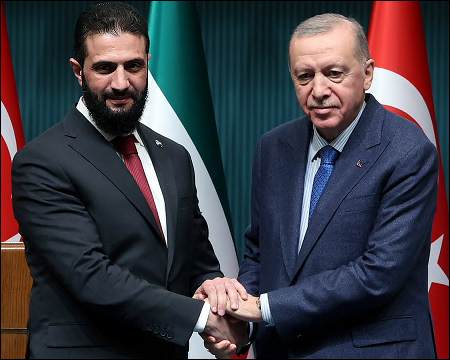
For President Erdogan and Ahmad al-Sharaa, it seems acceptable that jihadists who entered Syria should become Syrian citizens to carry out violent policies against Druze, Alawites, and Kurds, serving as “cannon fodder” for Erdogan’s regional ambitions in Libya, Nagorno-Karabakh, and elsewhere. Yet the Kurdish people of Rojava are prohibited from even defending themselves with the help of their brethren from the other parts of Kurdistan. That is blatant hypocrisy.
President Erdogan may think that, because of his special relationship with U.S. President Donald J. Trump, he can continue advancing his perilous policies and skulduggery operation projects throughout the Middle East and beyond.
Erdogan is a warmonger who is intolerant of tolerance and threatens the region through military invasions and interventions. Turkish troops are present in Iraq, Syria, Libya, Somalia, Sudan, the Persian Gulf region, and Cyprus, and have militarily supported Azerbaijan against Armenia in the Nagorno-Karabakh war.
Nothing is improbable or impossible. Many unpredictable changes can occur in the world. For example, Saddam Hussein in Iraq, Muammar Gaddafi in Libya, and the Bashar Assad dynasty in Syria—many others thought their rule would last forever, yet when time came, they were gone.
Another example: “On January 6, 2021, the United States Capitol in Washington, D.C., was attacked by a mob of supporters of President Donald Trump in an attempted self-coup, two months after his defeat in the 2020 presidential election” (Wikipedia).
Many political pundits predicted that Trump was politically finished, yet in 2025, he became the 47th president of the United States. Many experts, political pundits, and writers predict or think that the Middle East is on the verge of geopolitical change.
However, the international community most likely will not support a major boundary shift in the Middle East at this time. The borders imposed on Kurdistan remain unjust, unfair, brutal, undemocratic, and illegitimate as they are, etc. They are one of the root causes of the denial of the Kurdish nation as a coherent people.

In 2017, under the leadership of then-President Massoud Barzani, the Kurdish autonomous region in Iraq held a referendum seeking independence, but it received no international support. Perhaps in the future, the international community will support autonomy or a confederal system that ensures minority rights within the existing boundaries of the state. Any change to the Middle East map would not be an easy shift and would likely bring chaos, war, and bloodshed.
The primary impute (blame) should fall on Sir Mark Sykes, the British diplomat; François Georges-Picot, the French diplomat; and Gertrude Margaret Lowthian Bell, the British writer, traveler, political officer, and colonial adviser to the British Empire on Middle East and Levant issues. “She spent much of her life exploring and mapping the Middle East, who participated in both the 1919 Paris Peace Conference and the 1921 Cairo Conference, which helped decide the territorial boundaries and governments of the post-war Middle East as part of the partition of the Ottoman Empire” (Wikipedia).
They pursued their colonial interests in the region, disregarding the rights of the Kurdish people, and dividing up their land. Responsibility also lies with the authoritarian regimes of the Middle East, which have ignored the suffering of their people and ruled through an iron fist.
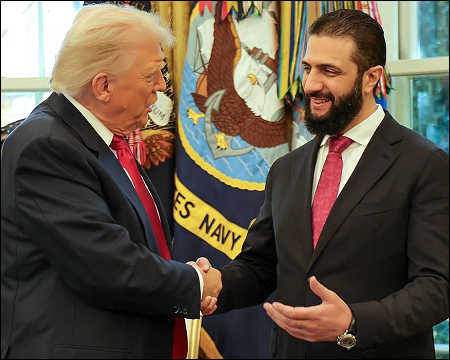
These colonial-era states were built on false foundations, with hereditary rulers imposed by foreign powers. They were not based on democratic institutions. The enduring chaos of the region stems from chauvinistic policies and entrenched authoritarianism. On Syrian President Ahmed Sharaa’s visit to the White House: Will he reform from Islamic jihadist autocracy to democratic liberalism? It is too soon to predict his deeds or accomplishments, but time will tell what trajectory his rule will take.
If future border changes occur, part of the blame will also rest with the heads of these authoritarian regimes, whose failure to build democratic systems and uphold checks and balances has perpetuated corruption, crushed dissent, and concentrated power in the hands of rulers and their families.
It’s time to end these misguided policies of centralized authorities. It’s time to break the chains of illegal and illegitimate borders in the Middle East. It’s time to redraw the outdated, fake, and unjust boundaries imposed upon Kurdistan.
Omar Sindi, a senior writer, analyst and columnist for iKurd.net, Washington, United States.
The opinions are those of the writer and do not necessarily represent the views of iKurd.net or its editors.
Copyright © 2025 iKurd.net. All rights reserved
No Thanks to Afforestation ‘Turkey plants thousands of seedlings in Erbil’, Iraqi Kurdistan!
Related posts:
 Business with ISIS – Updated
 The Resurrection (Ba’ath) Party – Before the Iran-Iraq War
 What makes a good NATO ally? The Case of Turkey
 Turkey: Nato’s Islamic State Member
 Interview with Kurdish hostage, Huseyin Baybasin
 Iraqi Kurdistan – “Sold Out!” – Part II
 “ISLAMBUL”
 Turkey: The Psychological War Against the Kurds Through the PKK – Part I
 Martyrs for Millionaires: The Black-Market Politics behind the Theft of Syria’s Oil
 Iraq – The Cynical Swindle