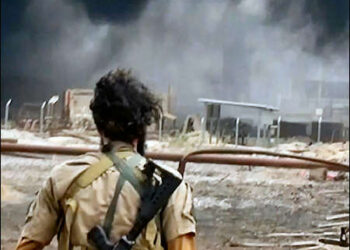


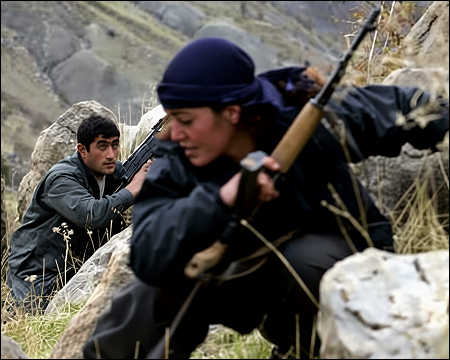
TEHRAN,—Kurdish armed groups attempted to cross into Iranian Kurdistan (Rojhelat), from neighboring Iraqi Kurdistan (Bashur), during recent unrest inside Iran, three sources with direct knowledge of the situation told Reuters.
The sources, who spoke on condition of anonymity, included a senior Iranian official. They said the attempted crossings took place in recent days following a crackdown on anti-government protests against the Islamic regime.
The sources said Turkey’s intelligence agency (MIT) warned Iran’s Islamic Revolutionary Guard Corps IRGC, about Kurdish fighters crossing the border. The warning was delivered in recent days, the sources said.
The Iranian official said IRGC forces clashed with the Kurdish fighters after detecting their movement. He said the fighters were seeking to create instability in Iranian Kurdistan and take advantage of the protests.
The Islamic Revolutionary Guard Corps is an elite military force and has been involved in suppressing previous periods of unrest in Iran.
Despite beginning peace talks with PKK after the group laid down its arms, Turkey considers Kurdish PKK militants operating in Iraqi Kurdistan to be “terrorists” and has warned in recent days that any foreign intervention in Iran would escalate regional crises.
The Iranian official said the fighters were dispatched from Iraqi Kurdistan and from Turkey Kurdistan (Bakur Kurdistan).
He added that Iran has asked those countries to stop the transfer of fighters and weapons into Iranian territory.
A rights group said at least 3,000 people have been killed in recent days during a crackdown on protesters opposing Iran’s clerical rule. The group said the protesters have been urged on by the United States, which has threatened to intervene.
Several Kurdish armed groups, including PJAK, Komala and KDPI, have been in conflict with the Iranian government for decades.
PJAK, or Partiya Jiyana Azad a Kurdistane, has said that women make up about half of its members. The groups are seeking greater autonomy for areas inhabited by ethnic Kurds in Rojhelat Kurdistan.
The armed Kurdish groups are spread along a 60-kilometer border with the neighboring Iraqi Kurdistan region.
Since the establishment of the Islamic regime in 1979, Kurdish areas in Iranian Kurdistan have been subjected to rules and laws described as discriminatory across social, political and economic fields.
Kurds in Iran face restrictions related to religious, economic and cultural rights. Parents have been banned from registering babies with certain Kurdish names. Religious minorities that are mainly or partially Kurdish have been targeted by measures described as stigmatizing and isolating.
Kurds have also faced discrimination in access to employment, housing and political rights. These conditions have contributed to poverty and further marginalization.
Estimates indicate that more than 12 million Kurds live in Iranian Kurdistan.
(With files from Reuters | Agencies)
Copyright © 2026 iKurd.net. All rights reserved.
Related posts:
 Business with ISIS – Updated
 What makes a good NATO ally? The Case of Turkey
 Kurds seek self-rule regardless of U.S. action on Iran: PJAK
 The Assassination of Abdurrahman Ghassemlou: No Friends but the Mullahs?
 The Suffocation of Iraq Kurdistan
 Turkey: Nato’s Islamic State Member
 The Resurrection (Ba’ath) Party – Before the Iran-Iraq War
 The Mustashar and the Jash – A View from the Position of ‘Iraqi National Unity’ on the ‘Descendants of Treason’
 Kurdish PJAK rebels say ready to resist Iran, await uprising in Rojhelat
 Sabotaging Syria