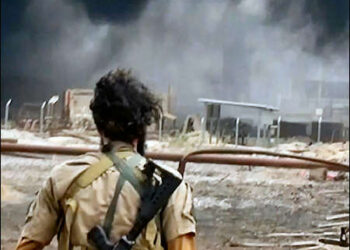

SULAIMANI, Iraqi Kurdistan,— Several Kurdish-Iranian opposition groups based in Iraqi Kurdistan announced on Sunday the creation of a new political alliance aimed at removing Iran’s Islamic republic from power and pursuing Kurdish self determination.
Five exiled organizations operating from camps and rear bases in Iraqi Kurdistan said in a joint statement that they had formed what they called the Coalition of Political Forces in Iran Kurdistan (CPFIK).
The groups said the move was intended to strengthen their role in what they described as a political crisis inside Iran.
The statement said the Islamic republic “has lost all political legitimacy but unfortunately remains in power.” The alliance listed its main objectives as the struggle to overthrow Iran’s ruling system and to secure self determination for Kurds.
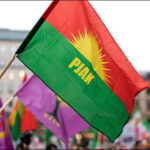
The coalition includes the Kurdistan Free Life Party (Partiya Jiyana Azad a Kurdistane), known as PJAK, the Komala of the Toilers of Kurdistan party, the Khabat Organization of Iranian Kurdistan, the Democratic Party of Iranian Kurdistan, or PDKI, and the Kurdistan Freedom Party (PAK).
On March 4, 2026, the Komala Party of Iranian Kurdistan, led by Abdullah Mohtadi, confirmed its joining of the CPFIK, bringing the total number of parties in the alliance to six.
The groups said they back anti government protests that have taken place across Iran. They also called for coordinated political and field efforts between Kurdish parties, civil society actors and other opposition forces throughout the country.
Iraq’s autonomous Kurdistan region, which includes areas referred to as Iraqi Kurdistan, hosts several Kurdish-Iranian factions. These groups have repeatedly faced cross border strikes from Iran.
The interior ministry of the Kurdistan region said it would not permit any party to use its territory against neighboring states.
The ministry said it would not allow any party to use the Kurdistan region as a base for actions against neighboring countries.
In late December 2025, protests broke out in Iran over economic hardship linked to sanctions. The unrest spread nationwide and turned into anti government demonstrations. Authorities responded with a crackdown that left thousands dead.
Last month, the Kurdish groups in exile called for a general strike in support of those protests.
In 2022, Iran carried out deadly military strikes on Kurdish-Iranian militant groups based in Iraqi Kurdistan. Tehran accused them of fueling protests that followed the death in custody of Kurdish-Iranian woman Jina Mahsa Amini.
Iranian-Kurdish groups, most of which are armed and have often followed socialist ideas, have long been monitored by Tehran. While they have largely avoided armed operations in recent years, they continue political activities from exile.
Kurds are widely described as one of the largest stateless peoples in the world. In Iran, they form one of the main non Persian ethnic minority communities.
PJAK, which began armed operations in 2004, says it seeks to create semi autonomous Kurdish regional entities or a Kurdish federal system inside Iran. The group has more than 3,000 armed members, and about half of them are women.
PJAK is considered one of the most active Kurdish organizations in Iranian Kurdistan. It is part of the Kurdistan Democratic Confederation, known as KCK, an umbrella alliance of Kurdish groups led by an elected executive council.
The KCK is politically linked to militants of the Kurdistan Workers Party, or PKK, which operates in Turkish Kurdistan and other areas.
Since coming to power in 1979, Iran’s Islamic government has put in place policies that critics say discriminate against Kurds in Iranian Kurdistan across social, political and economic life.
Kurds in Iran face limits on the exercise of religious, economic and cultural rights. Parents are not allowed to register certain Kurdish names for their children.
Religious minorities that are largely or partly Kurdish have been subjected to measures that, according to rights advocates, are intended to stigmatize and isolate them.
Kurds also encounter barriers in access to jobs, adequate housing and political participation. These restrictions have contributed to deep and persistent poverty, further pushing Kurdish communities to the margins.
More than 12 million Kurds are estimated to live in Iranian Kurdistan.
(With files from AFP | Agencies)
Updated March 5, 2026.
Copyright © 2026 iKurd.net. All rights reserved.
Related posts:
 The Resurrection (Ba’ath) Party – Before the Iran-Iraq War
 Kurds seek self-rule regardless of U.S. action on Iran: PJAK
 The Assassination of Abdurrahman Ghassemlou: No Friends but the Mullahs?
 Kurdish PJAK rebels say ready to resist Iran, await uprising in Rojhelat
 The Suffocation of Iraq Kurdistan
 What makes a good NATO ally? The Case of Turkey
 Israel backing Kurdish plans to seize Iran border areas: sources
 The Mustashar and the Jash – A View from the Position of ‘Iraqi National Unity’ on the ‘Descendants of Treason’
 PJAK invited again to Iran Freedom Congress in London
 Komala Party of Iranian Kurdistan joined newly formed CPFIK alliance